November 24th, 2011 by Toni Brayer, M.D. in Research
No Comments »

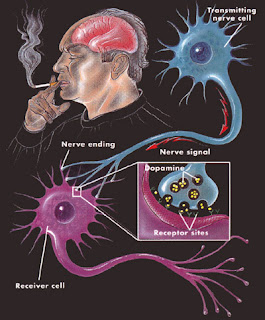 I live on the West Coast, where it is rare to see a smoker. Because it is not socially accepted, smokers are not out in the open. They lurk behind buildings to take a smoke break at work and I don’t even own an ashtray for friends because none of my friends smoke. But San Francisco isn’t the rest of America. In 2010 there were 45.5 million Americans who smoke, with men smoking more than women. Tobacco remains the single largest preventable cause of death and disease in the United States. Each year approximately 433,000 people die of smoking-related illness.
Here are some more stats on American adult smokers. The highest prevalence is American Indians/Alaska Natives (31.4%) followed by whites (21%). Smoking incidence decreases with increasing education and improved economics. By region, the Midwest has the most smokers in Oklahoma, Arkansas, Mississippi, Louisiana, Kentucky, Ohio and West Virginia (22-27%). That is huge.
California and Utah have the lowest percentage of adult smokers at Read more »
*This blog post was originally published at EverythingHealth*
November 19th, 2011 by Toni Brayer, M.D. in Research
No Comments »
 Low back pain is one of the most common conditions to affect humans. More than 80% of Americans experience low back pain at some time in their lives and “chronic” pain is on the rise as people live longer and get heavier. Numerous studies have shown that doctors and patients underutilized exercise as a treatment for chronic back and neck pain even though it has been shown to be effective. A new study was published in the Annals of Internal Medicine that showed yoga to be an effective treatment for chronic low back pain.
The study authors took two groups of patients and compared yoga to usual care for chronic or recurrent low back pain. All patients received a back pain education booklet, but the study group also received Read more »
*This blog post was originally published at EverythingHealth*
November 13th, 2011 by Toni Brayer, M.D. in Research
No Comments »
 Remember the 1991 Gulf War between the United States and Iraq (aka: “Operation Desert Storm”)? A new study has been published in the American Journal of Epidemiology that assessed the health status of 5,469 deployed Gulf War veterans compared to 3,353 non deployed veterans. At 10 year follow up, the deployed veterans were more likely to report persistent poor health. The measures were functional impairment, limitation of activities, repeated clinic visits, recurrent hospitalization, perception of health as fair or poor, chronic fatigue syndrome illness and post-traumatic stress disorder.
From 1995 to 2005, the health of these veterans worsened in comparison to the veterans who did not deploy to the Persian Gulf. A study done in the United Kingdom that compared Gulf War veterans to UN peacekeepers who served in Bosnia and other non-deployed Gulf War soldiers found Read more »
*This blog post was originally published at EverythingHealth*
November 6th, 2011 by Toni Brayer, M.D. in Health Tips
No Comments »

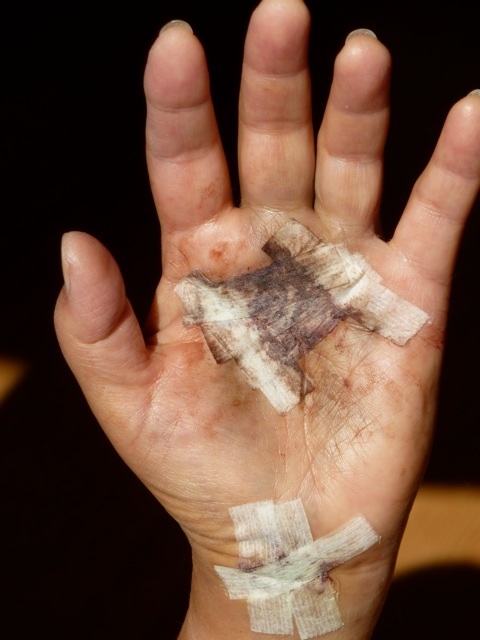
Immediately Post-op Carpal Tunnel release
Carpal Tunnel Syndrome (CTS) is common and is the result of the median nerve becoming squeezed or “entrapped” as it passes through the wrist down into the palm of the hand. Because this is a sensory nerve, the compression causes tingling, burning and itching numbness in the palm of the hand and fingers. A different nerve goes to the little finger and the lateral half of the 4th finger so the sensation there would feel normal. There is often a sensation of swelling even though there is rarely any true edema that can be seen in CTS.
The symptoms of Carpal Tunnel Syndrome usually start at night when people sleep with flexed wrists. As it progresses, the tingling and numbness can be felt on and off during the day. It can cause decreased grip strength and weakness in the hands.
CTS can be worsened by medical conditions like rheumatoid arthritis, diabetes, pregnancy or wrist trauma. Women are three times more likely to develop CTS than men, and it is rare in children. Most of the time no cause is found. The space that the median nerve traverses is very tiny and it doesn’t take much to compress the nerve. Even small amounts of tissue swelling such as occurs in pregnancy can cause severe symptoms.
The treatment for Carpal Tunnel Syndrome starts with Read more »
*This blog post was originally published at EverythingHealth*
October 31st, 2011 by Toni Brayer, M.D. in News
No Comments »
 Both in the United States and around the globe there is a mismatch between needed medical care and the doctors who can provide it. Most physicians are located in urban areas where there are hospitals, teaching schools, lab and Xray and specialists to deal with most every medical condition. Rural areas in the United States lack these resources and patients either do without, or must travel far to be seen. In developing countries there may be no services at all for hundreds of miles. That is where telehealth can play a huge role in bringing medicine to the people.
The “In-touch” robot is one technology that can work all over the world. Through a simple lap-top computer a doctor can Read more »
*This blog post was originally published at EverythingHealth*


 I live on the West Coast, where it is rare to see a smoker. Because it is not socially accepted, smokers are not out in the open. They lurk behind buildings to take a smoke break at work and I don’t even own an ashtray for friends because none of my friends smoke. But San Francisco isn’t the rest of America. In 2010 there were 45.5 million Americans who smoke, with men smoking more than women. Tobacco remains the single largest preventable cause of death and disease in the United States. Each year approximately 433,000 people die of smoking-related illness.