
February 18th, 2011 by Michael Kirsch, M.D. in Book Reviews, Opinion
Tags: Dr. Michael Kirsch, Healthcare reform, MD Whistleblower, Overtreated, Overtreatment, Shannon Brownlee, Too Much Medicine, U.S. Healthcare System
No Comments »

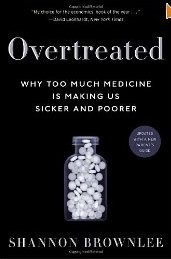 My daughter, Elana, home from college on winter break, offered me a book to peruse from one of her classes. She correctly suspected that her father, the MD Whistleblower, would enjoy reading a book authored by a whistleblower pro.
The book, “Overtreated: Why Too Much Medicine Is Making Us Sicker and Poorer” by Shannon Brownlee should be required reading for first year medical students, who have not yet acquired views and habits that promulgate excessive medical care and treatment. For those of us already in practice, this book should be a required element of board recertification.
Brownlee understands the medical system well and describes a culture of excess, conflicts of interests, absence of universal quality control mechanisms and fractured and disorganized care with no one in charge of a particular patient. She presents some chilling anecdotes of medical tragedies that have occurred at our most prestigious medical institutions. And she introduces us to reform leaders who understand the system’s inherent deficiencies and their proposals to remedy them.
Brownlee states that explanations for waste in the healthcare system include:
- Cost of a gargantuan bureaucracy
- Medical malpractice fear and defensive medicine
- Incentives for patients with medical insurance to overutilize care
- Rising medical costs
The most important cause, she argues, is unnecessary medical care, which costs the nations hundreds of billions of dollars and exposes patients to the risk of harm from medical complications. She writes, “If overtreatment were a disease, there would be a patient advocacy group out there raising money for a cure.” Read more »
*This blog post was originally published at MD Whistleblower*
February 14th, 2011 by RamonaBatesMD in Better Health Network, Book Reviews
Tags: Biography of the Human Heart, Bottom Of My Heart, Cardiology, Dr. Pauline Chen, Dr. Ramona Bates, Dr. Thomas Amidon, Heart-Love Connection, Medical Language, Medicine and Metaphors, Metaphorical Heart, Metaphorical Power of the Heart, NPR, Physical Heart, Real Human Heart, Red Heart Symbol, Science and Medicine, Stephen Amidon, Story of the Human Heart, Sublime Engine, Suture For A Living, Valentine's Day
No Comments »

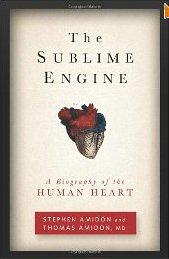 Listening to NPR on Saturday morning I caught part of Scott Simon’s interview with brothers Stephen Amidon and Thomas Amidon, M.D. discussing their book “The Sublime Engine: A Biography of the Human Heart.” The interview touched on the story of the human heart in science and medicine, history, and culture:
It turns out that the classic red heart symbol we see almost everywhere around Valentine’s Day doesn’t look much like a real human heart at all.
“Of all the theories about where that symbol comes from, my favorite is that it is a representation of a sixth century B.C. aphrodisiac from northern Africa,” says Stephen Amidon…”And I kind of like that history because it sort of suggests that early on, people sort of understood the connection between love and the heart.”
Words and how we use them were the focus of Dr. Pauline Chen’s interview by WIHI host Madge Kaplan this past Thursday, February 10th, “A Legible Prescription for Health“:
On this edition of WIHI, Dr. Chen wants to spend some time talking about language, especially the words doctors use with one another when describing patients; the unintended barriers created the more doctors and nurses don protective, infection-protecting garb; the mounting weight of patient satisfaction surveys; and more.
Back to the NPR interview on the human heart as a “sublime engine,” the authors don’t feel that as our advances in surgical techniques become commonplace that the heart will lose any of its cultural and metaphorical significance. Read more »
*This blog post was originally published at Suture for a Living*
February 2nd, 2011 by PJSkerrett in Book Reviews, Health Tips
Tags: 2010 Dietary Guidelines for Americans, American Heart Association, Beth Israel Deaconess Medical Center, Boston Children's Hospital, Brigham and Women's Hospital, Dietary Recommendations, Dr. David Ludwig, Dr. George Blackburn, Dr. Walter Willett, Food and Nutrition, Harvard Health Blog, Harvard Health Publications, Harvard Heart Letter, Harvard Medical School, Harvard School of Public Health, Harvard University, Healthy Eating, Heart Health, HHS, High Blood Pressure, Hypertension, Kathy McManus, Obesity, Overweight, PJ Skerrett, Salt Consumption, Sodium Intake, U.S. Department of Agriculture, U.S. Department of Health and Human Services, USDA
No Comments »

 There isn’t much new in the latest iteration of the “Dietary Guidelines for Americans.” Three years in the making, the 2010 guidelines (released a tad late, on January 31, 2011) offer the usual advice about eating less of the bad stuff (salt; saturated fat, trans fats, and cholesterol; and refined grains) and more of the good stuff (fruits and vegetables; whole grains; seafood, beans, and other lean protein; and unsaturated fats). I’ve listed the 23 main recommendations below. You can also find them on the “Dietary Guidelines” website.
The guidelines do break some new ground. They state loudly and clearly that overweight and obesity are a leading nutrition problem in the United States, and that a healthy diet can help people achieve a healthy weight. They also ratchet down sodium intake to 1,500 milligrams per day (about two-thirds of a teaspoon of salt) for African Americans and people with high blood pressure or risk factors for it, such as kidney disease or diabetes. But the guidelines also leave the recommendation for sodium at 2,300 milligrams a day for everyone else, a move that the American Heart Association and others call “a step backward.”
Vague language spoils the message
One big problem with the guidelines is that they continue to use the same nebulous language that has made previous versions poor road maps for the average person wanting to adopt a healthier diet.
Here’s an example: The new guidelines urge Americans to eat less “solid fat.” What, exactly, does that mean — stop spooning up lard or Crisco? No. Solid fat is a catchphrase for red meat, butter, cheese, ice cream, and other full-fat dairy foods. But the guidelines can’t say that, since they are partly created by the U.S. Department of Agriculture USDA), the agency charged with promoting the products of American farmers and ranchers, which includes red meat and dairy products. “Added sugars” is another circumlocution, a stand-in for sugar-sweetened sodas, many breakfast cereals, and other foods that provide huge doses of sugar and few, or no, nutrients. Read more »
*This blog post was originally published at Harvard Health Blog*
February 2nd, 2011 by Harriet Hall, M.D. in Book Reviews, Opinion
Tags: Caloric Intake, Cardiovascular Disease, Dr. Harriett Hall, Fatness, Food and Nutrition, Gary Taubes, Low Carb Diets, Low Fat Diets, Metabolism, Obesity, Overweight, SBM, Science Based Medicine, Weight Loss Diets, Why We Get Fat
1 Comment »

 Journalist Gary Taubes created a stir in 2007 with his impressive but daunting 640-page tome Good Calories, Bad Calories. Now he has written a shorter, more accessible book Why We Get Fat: And What to Do About It to take his message to a wider audience. His basic thesis is that:
– The calories-in/calories-out model is wrong.
– Carbohydrates are the cause of obesity and are also important causes of heart disease, type 2 diabetes, cancer, Alzheimer’s, and most of the so-called diseases of civilization.
– A low-fat diet is not healthy.
– A low-carb diet is essential both for weight loss and for health.
– Dieters can satisfy their hunger pangs and eat as much as they want and still lose weight as long as they restrict carbohydrates.
He supports his thesis with data from the scientific literature and with persuasive theoretical arguments about insulin, blood sugar levels, glycemic index, insulin resistance, fat storage, inflammation, the metabolic syndrome, and other details of metabolism. Many readers will come away convinced that all we need to do to eliminate obesity, heart disease and many other diseases is to get people to limit carbohydrates in their diet. I’m not convinced, because I can see some flaws in his reasoning. Read more »
*This blog post was originally published at Science-Based Medicine*
January 31st, 2011 by Bryan Vartabedian, M.D. in Book Reviews, Opinion
Tags: 33 Charts, Anti-Vaccine Movement, Children's Health, Children's Hospital of Philadelphia, Deadly Choices, Dr. Bryan Vartabedian, Dr. Paul Offit, Family Medicine, General Medicine, Immunization, Immunology, Infectious Disease, Pediatrics, Preventive Health, Preventive Medicine, Primary Care, Public Health, Spread Of Disease, Vaccination, Vaccine Advocacy, Vaccine Controversy, Vaccine Education, vaccine safety, Vaccine Truths, Vaccine-Autism Link
No Comments »

 A friend suggested she was tired of hearing about vaccines. Her comment and our subsequent conversation seemed to reflect an important shift in parent sentiment: The conversation about vaccines is beginning to get somewhere.
While much of this was born of the mainstream media’s newfound realization that the vaccine-autism connection was cooked, some of this is due to the tireless work of those like the Children’s Hospital of Philedelphia’s Dr. Paul Offit who get the story right.
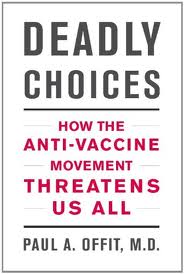
As part of his passionate agenda to expose vaccine truths, he’s published “Deadly Choices: How the Anti-vaccine Movement Threatens Us All” (Basic Books, 2011). For those looking to understand the origins of anti-vaccine sentiment, read this book.
What struck me is the deep history behind the anti-vaccine movement. From Jenner’s smallpox fix to modern-day MMR struggles, Offit draws fascinating corollaries surrounding immunization that seem to defy the generations. Vaccine resistance was not born of Andrew Wakefield, but broader concerns rooted in religion, individual liberty, fear and propaganda. “Deadly Choices” puts the anti-vaccine movement in a historic sequence that reads like good suspense. I couldn’t put it down. Read more »
*This blog post was originally published at 33 Charts*














