June 13th, 2012 by Dr. Val Jones in Health Tips, Opinion, Research
Tags: Daniel Island, Exercise Physiology, Fitness, Flexibility, Injury Prevention, Primal Games, Running, Stretching, The New Primal Games, Yoga
1 Comment »
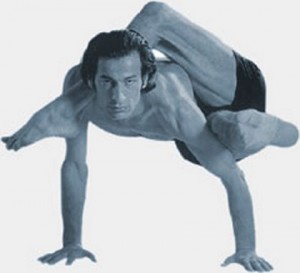 If you’re like me, you probably feel guilty about not making stretching a part of your regular exercise routine. I attributed my history of low back pain to lack of stretching, although when I began practicing yoga last year I experienced no lasting benefits. Stretching was uncomfortable and I saw very little improvement in my flexibility for all my efforts. I eventually gave up after one well-meaning yogi told me that I may just be “genetically incapable” of making much progress. I turned to strength training and running with complete resolution of my back pain – though with a continued inability to bend over and touch my toes or sit cross legged for prolonged periods. Oh well. No traditional Japanese dining for me!
And so it was with great surprise that I read the conclusions from a recent analysis (by Alex Hutchinson, Ph.D.) of the science of stretching. I recommend that you read it for yourself (along with the links to the primary source literature). But I’m going to summarize his findings here:
Q: Does stretching reduce the risk of injuries during exercise?
A: Not that we can prove.
Q: Does stretching help you avoid soreness after exercise?
A: No.
Q: Does stretching make you stronger or faster?
A: No. In fact, there is some evidence that stretching can have the opposite effect. Why? Muscles have spring-like properties, so that when they are stretched out, they become less able to transmit as much force. Imagine the difference between the power of a thick, metal spring and a thin metal spring. Studies have shown that the more flexible you are, the less efficient you are as a runner.
My take away message is that there’s no need to flagellate yourself into stretching if you don’t like it. It really depends on what you need to do with your body – if you’re a gymnast, then stretching will always be a part of your life. If you’re a runner who hates yoga, so be it. You may never win a toe-touching competition, but then again, you can probably crush the Primal Games competition. Wish me luck as I attempt to do just that in two weeks!
January 6th, 2012 by Toni Brayer, M.D. in Research
Tags: Communication, Doctor Patient Relationship, Patient Satisfaction, Physician Ratings, Research, Survey, Time
1 Comment »

 It’s time for some good news! A study that looked at online patient ratings about their physicians from 2004 through 2010 showed that the average physician rating was 9.3 out of 10. That is amazingly high and shows that patients (at least the ones who posted on Dr.Score) are very content with the care they receive from their doctor. Even though some patients will post a nasty comment about the doctor, the overall patient satisfaction is high. Seventy percent of doctors earned a perfect 10.
The survey asked patients to Read more »
*This blog post was originally published at EverythingHealth*
January 5th, 2012 by RyanDuBosar in Research
Tags: Body fat, Calories, Diet, Energy, Excess, food, Journal of the American Medical Association, Metabolism, Obesity, Overconsumption, Protein, Research, Study, Weight Gain, Weight Loss
No Comments »

Consuming excess calories increases body fat, regardless of how many calories come from protein. High-protein diets do affect energy expenditure and storage of lean body mass, just not body fat storage.
To evaluate the effects of overconsumption of low-, normal-, and high-protein diets on weight gain, researchers conducted a single-blind, randomized controlled trial of 25 healthy, weight-stable adults in an inpatient metabolic unit in Baton Rouge, La. Patients were ages 18 to 35 with a body mass index between 19 and 30. The study was headed by George A. Bray, MD, MACP.
After consuming a weight-stabilizing diet for 13 to 25 days, participants were randomized to diets containing 5% of energy from protein (low protein), 15% (normal protein) or 25% (high protein). Only the kitchen staff who supervised participants while they were eating knew the assignments. There was no prescribed exercise, and alcohol and caffeine were restricted.
Patients were Read more »
*This blog post was originally published at ACP Internist*
December 31st, 2011 by ChristopherChangMD in Opinion, Research
Tags: Anesthesia, da Vinci Robot System, Efficiency, ENT, Intuitive Surgical, New Jersey, OSA, Otolaryngology, Robot, Robotic Surgery, Safety, Sedated Endoscopy, Sleep, Sleep Apnea, Surgery
1 Comment »

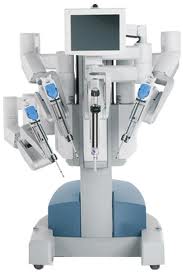 I came across this article the other day regarding use of the daVinci robot to perform base of tongue surgery for obstructive sleep apnea.
For those who don’t know, the daVinci robot system made by Intuitive Surgical is a robotic system whereby the surgeon directs the arms of the robot to perform surgery in difficult-to-access areas of the body.
My feeling is that using a robot to perform sleep apnea surgery is way overkill akin to using a $50,000 sniper rifle to kill an ant on the wall.
Everything the daVinci robot can do can also be done without the robot with equivalent patient outcomes. In fact, Read more »
*This blog post was originally published at Fauquier ENT Blog*
December 30th, 2011 by John Mandrola, M.D. in Opinion, Research
Tags: Cardio, Cardiology, Endurance, Exercise, Extreme race effort, Heart Health, Inflammation, Injury, Iron Man, Marathon, Physical Activity, Right Ventricular Damage, Running, Triathalon, Unhealthy
1 Comment »

It is risky.
Stay fresh. Avoid repeating yourself. Don’t rant. Never preach. These would be the ‘rules’ of supposedly good blogs.
And, of course, doctors that dare to take a stance on health issues risk being perceived as pretentious. I get this.
So it is with trepidation that I write a follow-up to last week’s CW post about right ventricular damage immediately after an extreme race effort. Notwithstanding the pompousness concern, I also wish to avoid being labeled anti-exercise. Few believe more strongly in the healing powers of exercise.
But last Wednesday’s comments (both on the blog, Facebook and here on Dr. Val Jones’ BetterHealth blog) were just too good to let rest.
On the assessment of studies: Read more »
*This blog post was originally published at Dr John M*















