October 28th, 2011 by KerriSparling in Opinion
No Comments »

For a good, long time, I ran higher than usual on purpose because of my focus on the baby and my fear of low blood sugars while I was responsible for her care. In the last few months, I’ve started to lower my blood sugar goals to reclaim a little more control and tighten up that freaking standard deviation.
Which also means that my sensitivity to low blood sugars is tossed out the window once again, along with any whisper of a symptom. (“Pssssst. You’re low.”)
So these lows are starting to creep back into rotation. For a few weeks, it was Read more »
*This blog post was originally published at Six Until Me.*
October 12th, 2011 by KerriSparling in True Stories
No Comments »
For the last three days, I was out in San Diego for the Weekend for Women: Celebration of Strength conference, and throughout the course of my quick, two and a half day trip, I met so many inspiring women. And I heard so many inspiring things.
Brandy Barnes, creator of the Diabetes Sisters organization, opened the session by talking about dispelling some of the myths and misconceptions of life with all kinds of diabetes. “Fight the mental battle of making our diabetes management a priority, while juggling the competing forces of jobs, family, friends … we have this all in common.” Everyone in the room was living with type 1, type 2, or LADA (and with one self-proclaimed “Type weird”, Ms. Natalie Sera, who I had the pleasure of meeting and hugging).
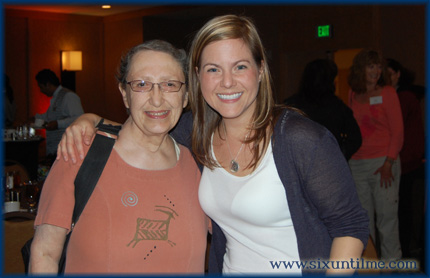
“Lets wrap our arms around them and help them feel like they are part of our sisterhood,” Brandy said, encouraging those who have attended the conferences in the past to reach out to new attendees.
That was the theme of the weekend – reaching out and being there. There were many speakers (and I was very honored to be one of them, on a panel with some fellow insulin pumpers, talking about diabetes and technology), and their topics varied but their messages all contained the common thread of community.
Susan Jung Guzman, Phd and Director of Clinical Services at the Behavioral Diabetes Institute, spoke about Read more »
*This blog post was originally published at Six Until Me.*
October 12th, 2011 by Paul Auerbach, M.D. in Health Tips, Research
No Comments »

There were no real surprises for me in the article entitled “Television Viewing and Risk of Type 2 Diabetes, Cardiovascular Disease, and All-Cause Mortality” by Anders Grøntved and Frank B. Hu that appeared in the Journal of the American Medical Association (JAMA 2011;305(23):2448-2455). As stated in the abstract: “Prolonged television (TV) viewing is the most prevalent and pervasive sedentary behavior in industrialized countries and has been associated with morbidity and mortality. However, a systematic and quantitative assessment of published studies is not available.”
The authors performed an analysis of eight previously published studies to determine the association between TV viewing and risk of type 2 diabetes, fatal or nonfatal cardiovascular disease, and all-cause mortality.
The risk of all-cause mortality appeared to increase with TV viewing duration of greater than Read more »
This post, Risk Of Type 2 Diabetes And Cardiovascular Disease: Don’t Be A Couch Potato, was originally published on
Healthine.com by Paul Auerbach, M.D..
October 6th, 2011 by KerriSparling in Opinion
2 Comments »
 Two weeks ago, I attended my third year at Kru Research’s ePatient Connections conference, and every year, I’m amazed at how many different industry people show up and showcase their impressive efforts … but how few patients. But this year, there were a lot of patients. Lots as in “more than five.”
For a conference with “ePatient” in the title, it was good to finally see more than just a handful of ePatients in the audience. (And this is thanks, largely in part, to the ePatient Bill of Rights project that took place on September 19th, across the hall from the SXSH event). And it wasn’t just a handful of diabetes patients – there were many health conditions well-represented at these events. For me, it was nice to talk about the universal issues that people with chronic illnesses face, instead of drifting around in the bubble of diabetes. I like stepping outside of our comfortable space and learning about what others are living with. I need that exposure to other types of patients … keeps me thinking globally.
Part of the panel discussion Read more »
*This blog post was originally published at Six Until Me.*
September 28th, 2011 by Stanley Feld, M.D. in Health Policy, Opinion
No Comments »

I have opposed Medicare’s use of claims data to evaluate the quality of medical care. Quality medical care is the goal that must be achieved. However, no one has described the measurement of quality medical care adequately.
Physicians recognize when other physicians are not performing quality medical care. Physicians recognize when another physician is just testing and performing procedures to increase revenue.
These over testing physicians are a small minority of physicians in practice.
Quality medical care is not about doing quarterly HbA1c’s on patients with Diabetes Mellitus. Quality medical care is about helping patients control their blood sugars so their HbA1c becomes normalized. It is about the clinical and financial results of treatment.
The clinical and financial results depend on both patients and physicians. Patients must be responsible for Read more »
*This blog post was originally published at Repairing the Healthcare System*












