When a person performs cardiopulmonary (heart and lung) resuscitation (CPR), it is sometimes recommended to provide rescue breathing. This is certainly the case when the primary cause of the victim’s difficulty relates to failure to breathe adequately, such as with a drowning episode. When CPR first arrived on the landscape, laypersons were trained to perform mouth-to-mouth breathing (for adults) or mouth-to-mouth and nose breathing (for infants and small children).
Following growing concern about transmission of diseases from blood and body fluids, laypersons were introduced to using masks or something similar to allow them to provide breathing assistance (“artificial respiration,” “artificial ventilation,” “rescue breathing,” etc.) to non-breathing persons. Masks have been used for decades by professional rescuers for ventilating patients, often in conjunction with the use of bags in a “bag-valve-mask” configuration. The valve between the mask and bag provides for one-way flow and prevents the backwash of vomitus, blood, liquid from the lungs, or other fluids that might diminish the effectiveness of the technique.
A number of excellent masks and face shields are available on the market for rescuers to be able to (relatively) safely blow air into a victim’s lungs. One example is Read more »
Just admit it: Deep in your heart you’ve always wanted to be an emergency medical technician, if at least for a few moments. If you’re located in San Ramon Valley, California, you can now live that dream: The local fire department has released an iPhone app that will alert you of any emergency activity in the area.
The well thought-out application will send out a push notification to users who have indicated that they are proficient in CPR whenever there is a cardiac emergency nearby. In addition, the closest public-access automated external defibrillator (AED) is located by the app. Current response status of dispatched units are shown and incident locations are pinpointed on an interactive map. There’s even a log of recent incidents including a photo gallery. For the old-school ham and scanner lads, it’s possible to listen in on live emergency radio traffic. The app is available for free.
I’ve internalized all the dogma of medicine, for good and bad.
When I was an EMT, green as a twig in an ER, I learned the basics: For any wound with hair employ the razor, and get the hair away from the laceration so the doc could do a good closure.
So, employment week #3: Eyebrow laceration? Shaved that sucker clean off. ER doc freaked out, and I learned some medical dogma: Don’t shave eyebrows, they don’t grow back. Heard it later, too — all the way through training, in fact. Read more »
*This blog post was originally published at GruntDoc*
The Sudden Cardiac Arrest Foundation has held a “You Can Save a Life” video awareness contest, in which participants were invited to submit videos that raise awareness of cardiopulmonary resuscitation (CPR) and automated external defibrillators (AEDs). The 2010 grand prize winner is “Paramedic Rap” by 911 Emergency ROCKsponse, a college team that uses humor to get your attention about sudden cardiac arrest:
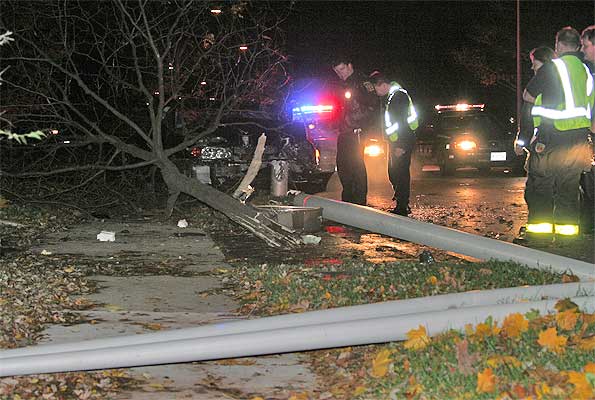
I was about to leave work a few nights ago when EMS was dispatched to a 10-50, which is a motor vehicle accident.
Enough years in emergency care and that tone makes your radar, but doesn’t create much of a blip. Many of those crashes have EMS arrive, only to discover no injuries. Some have patients transported, with minor problems that lead to their speedy evaluation and discharge from our ER. A few have serious, life-threatening injuries. They take all our speed, skill and attention to save life and limb. And often, require transfer to other facilities.
But this last call was none of those. Around 1AM the radio traffic crackled back to dispatch (which we could hear in the emergency department): “Probable Signal Nine.” Signal Nine means the victim is dead at the scene. Not “Dead On Arrival” (DOA) at the hospital, but no hospital necessary.
I knew the paramedics were finished when they asked dispatch to call for the coroner. And my heart sank a little. For all that a multi-trauma is work, I’d rather do it anytime than have someone die, and someone learn of the death. Read more »
*This blog post was originally published at edwinleap.com*
Latest Tweets from @DrVal
Could not authenticate you.
Better Health Audio
Featured Audio
Healthy VisionTM with Dr. Val: Safe Contact Lens Wear and Care
It’s no secret that doctors are disappointed with the way that the U.S. healthcare system is evolving. Most feel helpless about improving their work conditions or solving technical problems in patient care. Fortunately one young medical student was undeterred by the mountain of disappointment carried by his senior clinician mentors…
I am proud to be a part of the American Resident Project an initiative that promotes the writing of medical students residents and new physicians as they explore ideas for transforming American health care delivery. I recently had the opportunity to interview three of the writing fellows about how to…
I m often asked to do book reviews on my blog and I rarely agree to them. This is because it takes me a long time to read a book and then if I don t enjoy it I figure the author would rather me remain silent than publish my…
When I was in medical school I read Samuel Shem s House Of God as a right of passage. At the time I found it to be a cynical yet eerily accurate portrayal of the underbelly of academic medicine. I gained comfort from its gallows humor and it made me…
I am hesitant to review diet books because they are so often a tangled mess of fact and fiction. Teasing out their truth from falsehood is about as exhausting as delousing a long-haired elementary school student. However after being approached by the authors’ PR agency with the promise of a…



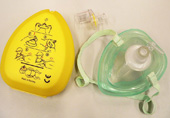 When a person performs cardiopulmonary (heart and lung) resuscitation (CPR), it is sometimes recommended to provide rescue breathing. This is certainly the case when the primary cause of the victim’s difficulty relates to failure to breathe adequately, such as with a drowning episode. When CPR first arrived on the landscape, laypersons were trained to perform mouth-to-mouth breathing (for adults) or mouth-to-mouth and nose breathing (for infants and small children).

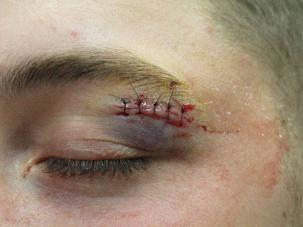 I’ve internalized all the dogma of medicine, for good and bad.