May 6th, 2010 by PhilBaumannRN in Better Health Network, Health Policy, Opinion, Research
No Comments »

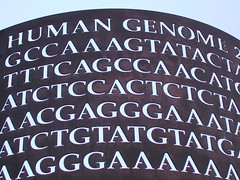
As the costs of sequencing our DNA shrink and the roles of digital media in our lives expand, we will need to understand who (or what) controls the ownership, access and use of our genomic information.
From state regulation to Google to Facebook, who controls the acquisition, transmission and replication of our genomic information and material will become an important battle in the 21st century. Read more »
*This blog post was originally published at Phil Baumann*
March 25th, 2010 by Berci in Better Health Network, Opinion, Research
No Comments »

 As I’m doing my PhD in clinical genomics, I’m really interested in the connection between the Internet and medicine. I was happy when Pathway Genomics, one of the newest direct-to-consumer genetic companies, offered me a free genetic test.
After an interview I did with them, I sent my saliva sample back and 3-4 weeks later, I received an email that my results were ready. This is my experience and the things I found interesting. As I got a free test from Navigenics a year ago, I plan to compare these services. I was very interested in the service of Pathway Genomics because of what they analyze:
1) Sampling: It was quite an easy process with only a few papers to fill (though it’s always hard to solve FedEX issues from Europe) and clear instructions. A video about a patient showing the whole process in 1-2 minutes, including saliva collection and filling out the paperwork, would be useful.
2) Preparations: I liked that I had to complete a questionnaire focusing on my lifestyle and patient history (Your Environment and Lifestyle, The Shape You’re In, and You and Your Family). As family history is the best genetic test out there, so it’s important to use that data while analyzing genetic results. Though, I couldn’t calculate my BMI (couldn’t use kg and centimeter) and the family history application wasn’t working for me. Read more »
*This blog post was originally published at ScienceRoll*
November 9th, 2009 by Hsien-Hsien Lei, Ph.D. in Better Health Network, Opinion
No Comments »

 A little over two years ago, I confessed that I was “just a little scared of genetic testing.” I have two young children and almost every day I see traits in them that I’m pretty sure they inherited from me whether via genes or behavior. If you’re a parent, I’m sure you can imagine that there’s a lot of self-blame going on in our house.
So when it comes to genetic testing, I should want to know but I don’t. At least not right this minute. Haven’t I got enough to worry about?
From Middletown Journal’s month-long series on the battle against cancer – Many with cancer gene don’t want to know. Read more »
*This blog post was originally published at Eye on DNA*
October 26th, 2008 by Dr. Val Jones in Expert Interviews
1 Comment »
 |
|
Dr. Armstrong
|
Genetic testing is all the rage. Thousands of tests are now available over the Internet, costing people anything from $60 to $3000 per test. While some DNA sequences are fairly well understood (like the BrCA gene or the chromosomal anomaly that causes Down’s Syndrome), most of them are only loosely associated with specific diseases and health outcomes. Experts agree that one day we’ll have a better understanding of the complex interplay of multiple gene sequences, but that day is still far off.
A recent post at GigaOM (h/t to KevinMD ) was critical of genetic testing in general, noting its potentially prohibitively expensive consequences:
Somewhere between 10 and 50 percent of autopsies reveal diseases other than the one that killed the patient. If consumers test themselves, then tell their doctors, the medical system could wind up treating 50 percent more diseases than it does today — even those that wouldn’t have killed the patient.
I interviewed Dr. Joanne Armstrong, senior medical director for Aetna, and assistant professor of obstetrics and gynecology at Baylor College of Medicine in Houston, Texas, about the current state of genetic testing. To listen to the full conversation, please click here.
Dr. Val: First of all, could you tell me a little bit about your work, and what got you interested in genetics in the first place?
Dr. Armstrong: I am the head of the Women’s Health division of Aetna, and about 8 years ago when BrCA testing (the test for predisposition to breast and ovarian cancer) became widely available, I began thinking about the educational initiatives that needed to support this testing. I knew that it would become part of mainstream medical practice and wanted to make sure that patients understood the tests and what to do about them.
Dr. Val: In your view, what are some legitimate and appropriate genetic tests?
Dr. Armstrong: There are about 1200 genetic tests available now, and most of them are not medically appropriate or clinically valid. Read more »