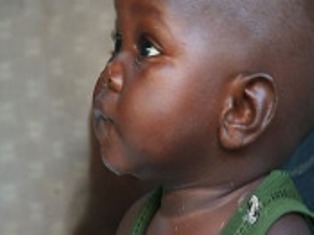
Both in the United States and around the globe there is a mismatch between needed medical care and the doctors who can provide it. Most physicians are located in urban areas where there are hospitals, teaching schools, lab and Xray and specialists to deal with most every medical condition. Rural areas in the United States lack these resources and patients either do without, or must travel far to be seen. In developing countries there may be no services at all for hundreds of miles. That is where telehealth can play a huge role in bringing medicine to the people.
The “In-touch” robot is one technology that can work all over the world. Through a simple lap-top computer a doctor can Read more »
Partners in Health is building a state-of-the-art teaching medical facility in Mirebalais in Haiti’s underserved Central Plateau.
My niece Annie helped design the waste and water treatment systems of the project as part of her engineering internship with Northeastern University, and will be joining the Partners in Health group upon graduation. It’s so inspiring to see this wonderful project coming to fruition and to know that she’ll be part of it.
My friend and fellow medblogger Jan Gurley has participated in two mission trips to Haiti this year. On her blog she describes the shocking living conditions that she encountered, including a new outbreak of cholera. Cholera can kill a person in as few as three hours by causing the body to loose all its fluid through the intestines.
Fluid replacement is the key to surviving cholera, though plain water lacks the electrolytes necessary for sustaining life. With just four bottle caps of sugar and one bottle cap of salt in half a liter of water, you can create lifesaving oral rehydration therapy. No need for Gatorade — Dr. Gurley shows you how in this video (please pass it on):
She’s tweeting her medical mission in Haiti. So tragic are the unmet medical needs of these people. From Doc Gurley:
Saw an alone 9-month-pregnant 19 yr old. No birth kit, no string for the cord, no plan for who would be with her. Gave supplies+discussed how to ask helper to wash hands. Nothing sharp&clean for cord so gave scalpel. Acted out birth, w/handwashing.
Also saw woman with overwhelming postpartum uterus infection. Someone used hands at delivery to pull out pieces of placenta.
Saw 14yrold girl w/months of excruciating pain, mass in her lower belly, wasting. Ruptured appy? Tumor? Left her w/ narcotics, antibiotics.
Also, women do not have menstrual protection supplies:
I’ve been asked, if there are no pads, what do women use? In the cases I saw, one used a page of a magazine & another a dinner napkin.
God bless you, Doc Gurley, and the members of your team for all you’re doing. What can we do to help?
*This blog post was originally published at tbtam*
FilmAid International provides the children of Haiti what many doctors can’t bring earthquake survivors — a moment to forget about the pain and suffering the last six months has brought. Dr. Jon LaPook reports.
It’s no secret that doctors are disappointed with the way that the U.S. healthcare system is evolving. Most feel helpless about improving their work conditions or solving technical problems in patient care. Fortunately one young medical student was undeterred by the mountain of disappointment carried by his senior clinician mentors…
I am proud to be a part of the American Resident Project an initiative that promotes the writing of medical students residents and new physicians as they explore ideas for transforming American health care delivery. I recently had the opportunity to interview three of the writing fellows about how to…
I m often asked to do book reviews on my blog and I rarely agree to them. This is because it takes me a long time to read a book and then if I don t enjoy it I figure the author would rather me remain silent than publish my…
When I was in medical school I read Samuel Shem s House Of God as a right of passage. At the time I found it to be a cynical yet eerily accurate portrayal of the underbelly of academic medicine. I gained comfort from its gallows humor and it made me…
I am hesitant to review diet books because they are so often a tangled mess of fact and fiction. Teasing out their truth from falsehood is about as exhausting as delousing a long-haired elementary school student. However after being approached by the authors’ PR agency with the promise of a…



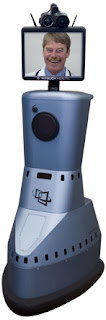 Both in the United States and around the globe there is a mismatch between needed medical care and the doctors who can provide it. Most physicians are located in urban areas where there are hospitals, teaching schools, lab and Xray and specialists to deal with most every medical condition. Rural areas in the United States lack these resources and patients either do without, or must travel far to be seen. In developing countries there may be no services at all for hundreds of miles. That is where telehealth can play a huge role in bringing medicine to the people.