November 14th, 2009 by Gwenn Schurgin O'Keeffe, M.D. in Better Health Network, Health Tips
No Comments »

I opened a fortune cookie the other day, expecting it to say something relatively nonsensical or meaningless, only to have it read:
“Money is not everything. You can buy a doctor but not heath.”
This fortune tells the story of more people than most of us can count, including ourselves at times. All too often we fall into trap of thinking that the more we spend on health the healthier we will become. Not true. In fact, good health is a state of mind and need not cost more than time for exercise, time to give ourselves the R&R we need to nurture our souls, the price of food to eat for proper weight and overall good health, and the occasional co-pay for our primary care physician and needed prescriptions.
We can toss money at vitamins, pricey health clubs, personal trainers, diets, alternative health treatments, doctors, second opinions, medications, prescription and nonprescription, as many people do, but those things can’t get us healthy. More times than not, they only produce the facade of good health. Read more »
*This blog post was originally published at Dr Gwenn Is In*
April 19th, 2009 by Dr. Val Jones in Health Policy, News
7 Comments »
I just got back from a blog workshop at the Canyon Ranch Institute in Tucson, co-led by yours truly and the lovely and charming Kerri Morrone Sparling of SixUntilMe. We had a wonderful time with the locals, acquainting them with social media terminology, and teaching them how to blog and Tweet. We were also immersed in their culture, which largely meant that I lectured (for the first time in my physician career) in yoga pants, and enjoyed small portions of food rich in fruits and vegetables.
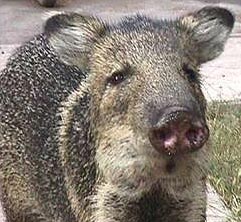
A Javelina
Despite the arid, inhospitable environment, the Arizona desert is teeming with life. Quail, rabbits, lizards, javelinas, humming birds and woodpeckers, bob cats and coyotes – all roam around freely near adobe homes nestled between flowering cacti. The extraordinary liveliness of the desert takes the casual visitor by surprise, and the variety of scrubby plants, aloes, and cacti of every imaginable shape, size, and pricklyness is a horticulturalist’s dream.
Since I was on east coast time, I was willing to participate in the 6:30am speed walks in the desert each morning. The lovely landscape inspired reflectiveness in the walkers, though I was somewhat distracted by the roaming hoard of javelinas (very large peccaries who resemble wild boars, smell like skunks, are virtually blind, and live to eat flowering plants). The javelinas had new babies with them – described by one Canyon Rancher as “footballs with legs.”
In between workshop lectures, Kerri and I were treated to some spa services – (regular readers know that I’m a huge fan of massages) which were welcome respites from our very busy work lives. But best of all, we got to spend some time with Dr. Richard Carmona (who attended our workshop), and we discussed how social media could be the key to inspiring behavior modification in Americans who need to eat more healthily and get more exercise.
As beautiful as the Canyon Ranch is, the healthy lifestyle it promotes won’t reach beyond its own walls if they don’t engage people in ways that fit their budgets and time constraints. Now that 70% of Internet users are engaged in social media, and Facebook, Twitter, blogs, and online support groups are growing exponentially, there’s never been a better time to find ways to reach people with disease prevention messages and strategies. As Washington gears up to support preventive health initiatives as part of healthcare reform, innovative non-profits like the Canyon Ranch Institute can play an important role in helping us get America back on track in terms of weight management and fitness. Online communities like SparkPeople or the Canyon Ranch Institute could be one avenue for change.
Of course, if you can afford to vacation in Arizona, the place itself has a calming, therapeutic effect. If that’s not in the cards for you, you can still emulate the lifestyle in your own javelina-free environment. As I take my regular walks back in DC, I’ll be sure to remember those cute little footballs with legs, and wear yoga pants as often as possible during future lectures (if the NIH looks at me quizzically next month during my NLM presentation, I’ll just blame Rich Carmona).
March 22nd, 2009 by RamonaBatesMD in Better Health Network
1 Comment »
This isn’t really plastic surgery related, but considering that I am always trying to get patients to get more active or to remain active, then maybe it is. I like to tell my patients that I have the easy part, they have the hard part of maintaining the results. This is especially true for the liposuction or abdominoplasty patients where keeping their weight in line is an issue to outcome in years to come.
There is a new article published in Circulation: Journal of the American Heart Association earlier this week which looked at different types of exercise after a myocardial infarction (MI).
The authors, Dr Margherita Vona et al, did a controlled trial using 209 patients who were referred to cardiac rehabilitation after having an MI. These patients were then randomly assigned to one of four groups: aerobic training, resistance training, both combined, or no exercise.
The researchers looked at flow-mediated dilation (improve blood vessel function) at baseline after 4 weeks of exercise, and then again one month after stopping training. The flow-mediated dilation more than doubled with exercise, from about 4% to about 10% in all three exercise groups. Those in the no exercise group had a small increase from the baseline 4% to about 5%.
The benefits of physical activity did not last when the activity ended. Within a month of no exercise, the flow-mediated function returned to baseline levels.
The important finding of this study is as Dr Vona said, “Long-term adherence to training programs is necessary to maintain vascular benefits on endothelial function.”
Exercise / physical activity has to be like “brushing your teeth”. It needs to be something that you do regularly and not just once or this week, but for life.
It is not important which physical activity you choose to do, it is important that you do it. It is important that you continue to be physically active on a regular basis.
Source
“Effects of different types of exercise training followed by detraining on endothelium-dependent dilation in patients with recent myocardial infarction”; Circulation 2009; DOI: 10.1161/CIRCULATIONAHA.108.821736; Vona M, et al
**This blog post was originally published at Suture For A Living.**














