February 5th, 2009 by Dr. Val Jones in Health Policy, Opinion
No Comments »
Merrill Goozner has been speculating about who will be nominated as the new Secretary of HHS. He reviewed his most likely candidates (David Cutler or David Blumenthal), and threw in a “dark horse” potential nominee: Ken Thorpe (whom I’ve interviewed several times on this blog and spent time with during Obama’s inauguration ceremony).
Tommy Thompson told me that the nominee is likely to be a current or former democratic governor (such as Kathleen Sebelius or Howard Dean).
But I’ve been pondering the “long shot” question and think that Goozner may have missed a more obvious choice – someone who works with Ken Thorpe at the Partnership to Fight Chronic Disease: former Surgeon General Dr. Richard Carmona.
Here are the 10 reasons why Richard Carmona would be a smart choice for Secretary of HHS (in random order):
1. He was confirmed by the senate as Surgeon General in 2002 and lived under their scrutiny during his term of service, meaning he has no hidden secrets, tax or nanny problems likely to embarrass Obama and could be confirmed rapidly – perhaps in under a week.
2. He has forged extensive good relationships with both parties over the course of his tenure as Surgeon General and is known internationally.
3. He has been the CEO of a large, public health system (including hospitals, Medicare and Medicaid clinics, nursing homes, and emergency medical systems in Arizona).
4. He has been a paramedic, nurse, and physician and understands the healthcare system from the inside out.
5. He has a track record of leadership in prevention, preparedness, health disparities, health literacy, global health and health diplomacy. He has worked on both sides of the aisle, including assisting Senator Kennedy with issues of disability and socio-economic determinants of health.
6. He is Hispanic, which adds additional diversity to the Obama leadership team.
7. He has experience managing local, state and federal health programs, including significant experience in immigration and border health issues.
8. He demonstrated competency and leadership as manager of the US Public Health Service of over 6000 uniformed public health officers both nationally and internationally.
9. He has extensive military experience, and is a combat-decorated Vietnam veteran. He maintains a strong relationship with military surgeons general and the department of defense.
10. The fact that he is a political independent might actually provide a middle ground for parties with differing agendas in health reform.
Is point number 10 a deal breaker? It may be, but Obama could look farther and do much worse. And while the clock is ticking and credibility is paramount (as Maggie Mahar wrote, “Reform needs to be overseen by someone who is perceived as being above suspicion—purer than Caesar’s wife”) I think the Obama/Biden team needs to take a closer look at Dr. Carmona. He’s actually the most experienced, low risk candidate under discussion – and could truly hit the ground running at HHS. And wouldn’t it be nice to have a physician who is also a health policy expert with advanced managerial experience at the head of the healthcare reform table?
February 4th, 2009 by Dr. Val Jones in Audio, Expert Interviews, Health Policy
No Comments »
 Many Americans have been surprised and disappointed by Senator Tom Daschle’s withdrawal as HSS Secretary nominee. I asked Tommy Thompson, former Governor of Wisconsin and the 7th U.S. Secretary of Health and Human Services, what he made of this. You may listen to our full conversation by clicking on the podcast arrow, or read a shortened summary below. Enjoy.
[Audio:http://blog.getbetterhealth.com/wp-content/uploads/2009/02/tommythompsondaschle.mp3]
Dr. Val: Tom Daschle’s withdrawal as HHS Secretary nominee has been a real shock for most people. Some are saying that without Daschle’s influence, healthcare reform will take a back seat to other economic priorities this year. What do you think?
Thompson: I don’t think that will happen because we’re in such dire need of reform that even without Tom Daschle there’s going to be a tremendous transformation of the healthcare system this year. Two healthcare bills are already undergoing the legislative process, and one is ready to be signed into law – the expansion of SCHIP, the insurance plan to cover poor children. The second bill involves the expansion of COBRA, which allows unemployed individuals to buy in to their previous employer’s health insurance plan.
But beyond this, the new stimulus package has 20 billion dollars set aside for health IT infrastructure – to create an electronic medical record for all Americans and beef up broadband access. There will also be a lot of money set aside for preventive health initiatives – to help Americans become healthier so they won’t need as many medical services.
Of course, Senator Kennedy is pushing for a “play or pay” plan modeled after Massachusetts’ law. There will be a lot of pressure to get this done quickly due to his ailing health. So you can bet your bottom dollar that the healthcare system that we know today is going to be changed so considerably that I doubt if you’ll recognize it a year from now.
Dr. Val: Do you have any idea who might replace Tom Daschle as HHS Secretary nominee?
Thompson: I’ve been hearing a lot of names. Governor Kathleen Sebelius from Kansas is very much in the running. Howard Dean’s name has also come up. Overall I do think it will be a governor or former governor who gets the position.
Dr. Val: What sort of person would have the skills for the job?
Thompson: I think a governor is the ideal person for the job because they already have experience running both state and federal programs – both initiating and managing them.
Dr. Val: Do you think that being a physician could be an advantage as well?
Thompson: There are so many physicians in the department that I don’t believe that being a physician adds or detracts from the position. Being the Secretary of HHS is an administrative position and although doctors have many skills, I’m not sure that running a large agency of over 67,000 employees with a budget of over 600 billion dollars is something that most doctors have the experience to do well.
Dr. Val: Do you think Daschle made the right choice to withdraw?
Thompson: Tom Daschle is a friend of mine. I think he’s an honorable person and I think he would have made an outstanding Secretary of HHS. I’m sorry he’s withdrawn, but the debate about his taxes was splashy enough to be affecting the stimulus bill and diverting attention from it. So I think overall it was probably the right thing to do.
Dr. Val: What’s the most important thing for the American people to know about the Daschle case?
Thompson: They should know that there is no double standard between people in power and those not in power. All of us are equal in the eyes of the law, and we’re a country of laws, not of men. We’re all responsible for our own personal decisions, and that includes paying our taxes.
***
See KevinMD’s excellent round up of further thoughts about Tom Daschle.
January 5th, 2009 by Dr. Val Jones in Book Reviews
1 Comment »
 Well this is really exciting! Thanks to the readers and judges at Medgadget.com for acknowledging my blog for a 2008 Blog Award in the category of Health Policy and Ethics. (This blog won the “Best New Medical Blog” of 2007 award last year.) This year’s winner will be determined by popular vote, which begins tomorrow. I know that my chances of winning the majority of votes in this category are pretty slim, thanks to Respectful Insolence. I am a huge fan of Orac’s blog and have no doubt that his contributions in this category far exceed mine. Orac is a devoted crusader against pseudoscience and misleading health information. Good luck, Orac – I’m sure you’ll win this one!
December 31st, 2008 by Dr. Val Jones in News, Opinion
3 Comments »
 President-elect Obama and Secretary of HHS designate, Tom Daschle, invited concerned Americans to discuss healthcare reform in community groups across the country. My husband and I hosted one such group at our home in DC yesterday. Although we had been instructed to compile a list of compelling stories about system failures – instead we decided to be rebellious and discuss “what’s right with the healthcare system” and compile a list of best practices to submit to the change.gov website.
The event was attended by a wide range of healthcare stakeholders, including a government relations expert, FDA manager, US Marine, patient advocate, health IT specialist, transportation lobbyist, real estate lobbyist, health technology innovator, Kaiser-trained family physician, medical blogger, and EMR consultant. Here is what they thought was “right” with the healthcare system:
1. Customer Service. Market forces drive competition for business, resulting in increased convenience and customized service. Healthcare consumerism has driven patient-centered innovations that improve quality of life. Examples include convenient walk-in clinics, online scheduling, services available in a one-stop location, and seamless transfer of health information (such as within the Kaiser Health system).
Memorable Quote: “We have a tremendous amount of choice in our system. That’s very good for patients and I hope we never lose it.”
2. Accommodations For People With Disabilities. Kaiser Permanente was cited as an organization that takes special interest in facilitating good patient experiences for vulnerable populations and people with disabilities. For example, extra time is allotted for travel to and from the clinic, and schedules are built with flexibility to accommodate mobility impairments.
Memorable Quote: “Kaiser trains all its staff to be sensitive to people with ethnic, racial, and sexual preference differences. They learn to listen to the patient, and never assume they know what they think or feel.”
3. Specialty Care. So long as a person has health insurance, access to the very best specialists in the world is available in a very democratic fashion to all patients. Several success stories included surgery and follow up for major multiple trauma, and congenital anomaly repair.
Memorable Quotes: “I’m only here today because of the technical skills of a U.S. surgeon who saved my life…” “I’ve traveled all over the world, and I wouldn’t want to get my medical care in any other country.”
4. Social Media. Internet-based tools and social media platforms are leveling the communication “playing field” between providers and patients. People are discussing their care and treatment options with others like them online, as well as socializing with physicians and receiving real-time input on health questions.
Memorable Quote: “On Twitter I have I.V. access to physicians. I asked a health question and within 10 minutes I had 6 physicians answer me.”
5. Access To Allied Health Professionals. Scheduling time with mid-level providers is easy, convenient, and effective. Patients enjoy the ability to access generalist care with nurse practitioners (for example) who provide quality care at a more relaxed pace.
Memorable Quote: “I love my nurse practitioner. She really listens to me and her schedule is much more flexible than physicians I’ve known.”
6. Drug Development For Rare Diseases. The U.S. government offers grants, extended patents, and exclusivity to drug companies willing to develop drugs for rare diseases. This dramatically improves the quality of life for patients who would otherwise have no treatment options.
Memorable Quote: “The FDA recently approved the first drug for Pompe’s disease. Only a few hundred patients in the U.S. have the disease, and yet this life-saving medication was developed for them thanks to government incentives.”
7. Patient Autonomy. The healthcare consumerism movement has replaced medical “paternalism” with care partnership. Patients are seen as consumers with choices and options who must take an active role in their health.
Memorable Quote: “Patient accountability is key to better health outcomes. But they need guidance and decision support… General health literacy is at a sixth grade level.”
8. Health Education. Technology has improved health education dramatically. Patient education about their disease or condition is often facilitated by demonstration of computer-based anatomic models.
Memorable Quote: “I think that doctors are getting much better at communicating with patients in ways they can understand.”
9. Coordination of Care. Some hospitals like the Mayo Clinic do an excellent job of coordinating care. For example, they provide each patient with photos and names of all the physicians, nurses, and specialists who are on their care team. Nurses update the patient’s schedule daily to reflect the tests and procedures anticipated and provide dignity and sense of orientation to the hospital experience.
Memorable Quote: “The Mayo Clinic has gone Facebook.”
10. Democratization of Information & Transparency. Patients have the right to view and maintain all their medical records. They have many PHR options, and may be provided with CDs or thumb drives of their personal radiologic information to take with them to their next provider. Many doctors write their notes with the understanding that the patient will be reading them.
Memorable Quote: “One day soon, hospital stays will no longer occur in a black box. Family members and friends will be invited by the patient to view their daily schedule online, while nurses update planned procedures, events, and meetings. Family members won’t miss the opportunity to meet with the patient’s care team, because it will be on the schedule. MyChart (from EPIC) is working on making this hospital experience a reality at the Mayo Clinic soon.”
***
Thanks so much to all of you who attended. My husband will be preparing a report for the transition team shortly.
November 19th, 2008 by Dr. Val Jones in Announcements, Opinion
4 Comments »
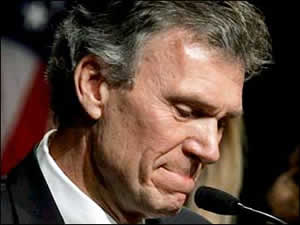
Tom Daschle - Photo Credit: CBS News
I’ve had my eye on Tom Daschle for many months – and attended a healthcare conference in June ’08 in which he was the keynote. I blogged about his ideas previously, but thought it would be valuable to repost them here (h/t to The Healthcare Blog):
Tom Daschle, former Senate Majority Leader from South Dakota, was the keynote speaker at the Fighting Chronic Disease: The Missing Link in Health Reform conference here in Washington, DC. His analysis of the healthcare crisis is this:
US Healthcare has three major problems: 1) Cost containment. We spend $8000/capita – 40% more than the next most expensive country in the world (Switzerland). Last year businesses spent more on healthcare than they made in profits. General motors spends more on healthcare than they do on steel.
2) Quality control. The US system cannot integrate and create the kind of efficiencies necessary. The WHO has listed us as 35 in overall health outcomes. Some people ask, “If we have a quality problem, why do kings and queens come to the US for their healthcare?” They come to the best places like the Mayo Clinic, the Cleveland Clinic, or Johns Hopkins. They don’t go to rural South Dakota. We have islands of excellence in a sea of mediocrity.
3) Access. People are unable to get insurance if they have a pre-existing condition. 47 million people don’t have health insurance. We have a primary care shortage, and hospitals turning away patients because they’re full.
His solutions are these:
- Universal coverage. If we don’t have universal coverage we can’t possibly deal with the universal problems that we have in our country.
- Cost shifting is not cost savings. By excluding people from the system we’re driving costs up for taxpayers – about $1500/person/year.
- We must recognize the importance of continuity of care and the need for a medical home. Chronic care management can only occur if we coordinate the care from the beginning, and not delegating the responsibility of care to the Medicare system when the patient reaches the age of 65.
- We must focus on wellness and prevention. Every dollar spent on water fluoridation saves 38 dollars in dental costs. Providing mammograms every two years to all women ages 50-69 costs only $9000 for every life year saved.
- Lack of transparency is a devastating aspect of our healthcare system. We can’t fix a system that we don’t understand.
- Best practices – we need to adopt them.
- We need electronic medical records. We’re in 21st century operating rooms with 19th century administrative rooms. We use too much paper – we should be digital.
- We have to pool resources to bring down costs.
- We need to enforce the Stark laws and make sure that proprietary medicine is kept in check.
- We rely too much on doctors and not enough on nurse practitioners, pharmacists, and physician assistants. They could be used to address the primary care shortage that we have today.
- We have to change our infrastructure. Congress isn’t capable of dealing with the complexity of the decision-making in healthcare. We need a decision-making authority, a federal health board, that has the political autonomy and expertise and statutory ability to make the tough decisions on healthcare on a regular basis. Having this infrastructure in place would allow us the opportunity to integrate public and private mechanisms within our healthcare system in a far more efficient way.
What do I think of this? First of all, I agree with much of what Tom said (especially points 2-7) and I respect his opinions. However, I was also very interested in Nancy Johnson’s retort (she is a recently retired republican congresswoman from Connecticut).
Nancy essentially said that any attempt at universal coverage will fail if we don’t address the infrastructure problem first. So while she agrees in principle with Tom Daschle’s aspirations and ideals, she believes that if we don’t have a streamlined IT infrastructure for our healthcare system in place FIRST, there’s not much benefit in having universal coverage.
As I’ve always said, “equal access to nothing is nothing.”
I also think of it this way: imagine you own a theme park like Disney World and you have thousands of people clamoring at the gates to enter the park. One option is to remove the gates (e.g. universal coverage) to solve consumer demand. Another option is to design the park for maximal crowd flow, to figure out how to stagger entry to various rides, and to provide multiple options for people while they’re waiting – and then invite people to enter in an orderly fashion.
Obviously, this is not a perfect analogy – but my opinion is that until we streamline healthcare (primarily through IT solutions), we’ll continue to be victims of painful inefficiencies that waste everyone’s time. It’s as if our theme park has no gates, no maps, no redirection of crowd flow, no velvet-roped queues, and the people who get on the rides first are not the ones who’ve been waiting the longest, but the “VIPs” with good insurance or cash in the bank. It’s chaotic and unfair.
Quite frankly, I think we could learn a lot from Disney World – and I hope and pray that next year’s healthcare solution is not simply ”remove the gates.”
What do you think?