November 3rd, 2011 by Medgadget in Research
No Comments »

 Medtronic received the go-ahead to begin an at-home U.S. trial of its Low Glucose Suspend technology that aims to prevent hypoglycemia by automatically stopping basal insulin delivery when measured glucose reaches a critically low level.
The pump technology is already available in Europe on the company’s Paradigm Veo insulin pump.
This is the second phase of the ASPIRE (Automation to Simulate Pancreatic Insulin REsponse) study, following the completion of the in-patient clinical study. ASPIRE is a multi-center, randomized, pivotal in-home study being conducted at multiple investigational centers to determine the safety and efficacy of the Low Glucose Suspend feature in the sensor-augmented MiniMed Paradigm insulin pump. Medtronic’s newest continuous glucose sensor, the Enlite™ sensor, will be tested as part of the overall system.
ASPIRE will compare Read more »
*This blog post was originally published at Medgadget*
November 3rd, 2011 by Dinah Miller, M.D. in Opinion
No Comments »


 Next week, it will be my turn to write our article for the Clinical Psychiatry News website. Over there, we try to have our writing more specifically aimed at an audience of psychiatrists. I’m going to be writing an article on Siri and the Psychiatrist….in honor of my new iPhone 4s and the “personal assistant” function named Siri. Okay, I’m obsessed. Everyday, I find new things it can help me with. Today, I asked it, “What’s the meaning of life.” What, you don’t ask your cell phone the finer existential questions? Siri answered, “All available evidence suggests chocolate.” Wow! How old is Liza Minelli? 65 years, 7 months, 20 days. Calculate a tip? No problem. Convert Celius to Fahrenheit? A cinch. And she takes dictation. “Siri, please text Patient A Read more »
*This blog post was originally published at Shrink Rap*
October 31st, 2011 by Toni Brayer, M.D. in News
No Comments »

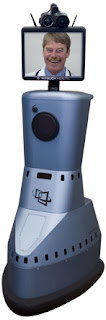 Both in the United States and around the globe there is a mismatch between needed medical care and the doctors who can provide it. Most physicians are located in urban areas where there are hospitals, teaching schools, lab and Xray and specialists to deal with most every medical condition. Rural areas in the United States lack these resources and patients either do without, or must travel far to be seen. In developing countries there may be no services at all for hundreds of miles. That is where telehealth can play a huge role in bringing medicine to the people.
The “In-touch” robot is one technology that can work all over the world. Through a simple lap-top computer a doctor can Read more »
*This blog post was originally published at EverythingHealth*
October 29th, 2011 by ChristopherChangMD in Opinion, Research
3 Comments »

 24 years old female presents with several week history of progressive stomach pains, substernal chest discomfort, heart palpitations, loss of appetite, headache, insomnia, and growing lump sensation in her throat. Physical exam was essentially normal.
Can this previously healthy female have suddenly developed reflux, globus, paroxysmal supraventricular tachycardia, brain tumor, and throat cancer with possible overlying thyroid disorder? Or perhaps has she contracted some other horrific mystery disease?
Maybe…
But maybe none of the above…
What if I told you she will be giving a doctoral dissertation for her Master’s next week for which she is ill-prepared given a recent breakup with her boyfriend of 5 years and a growing distaste of her school classmates who have been less than supportive.
In other words, Read more »
*This blog post was originally published at Fauquier ENT Blog*
October 22nd, 2011 by Medgadget in News
1 Comment »

Christie Medical Holdings’ has announced the VeinViewer Flex, the first portable offering in the company’s VeinViewer line. The new device’s reduced size and battery operation make it possible to use VeinViewer technology in home care settings and blood centers for the first time.
The VeinViewer technology projects an image of a patient’s blood vessels directly onto the skin in real time by detecting their location using near-infrared light, and is used to aid in needle placement.
From the press release: Read more »
*This blog post was originally published at Medgadget*















