October 23rd, 2009 by admin in Better Health Network, Quackery Exposed
No Comments »

By Dr. Joseph Albeitz
Some of our more astute readers may have noticed that we are paying influenza slightly more attention than other topics of late. That’s because this situation is new, rapidly changing, and covers more areas of science and medicine than one can easily count. It’s also a subject about which the general public and media are keenly interested. This is an outstanding learning and teaching opportunity for us as a professional community. Unfortunately, it is also fertile ground for confusion, fear, and misinformation, and a playground for those who would exploit such things.
Mercola.com is a horrible chimera of tabloid journalism, late-night infomercials, and amateur pre-scientific medicine, and is the primary web presence of Joseph Mercola. Unfortunately, it is also one of the more popular alternative medicine sites on the web and as such is uncommonly efficient at spreading misinformation. I am not a fan, and have addressed his dross in the past. Read more »
*This blog post was originally published at Science-Based Medicine*
July 20th, 2009 by Dr. Val Jones in Expert Interviews, Opinion
No Comments »
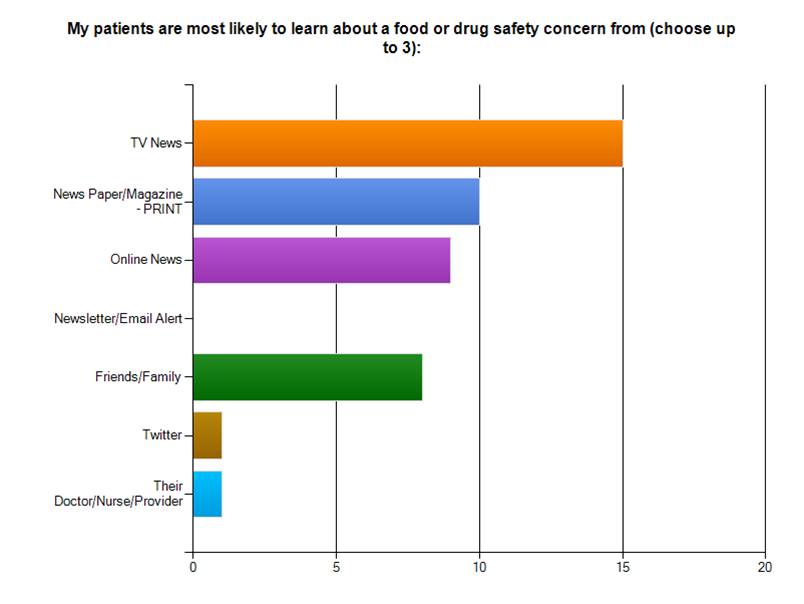
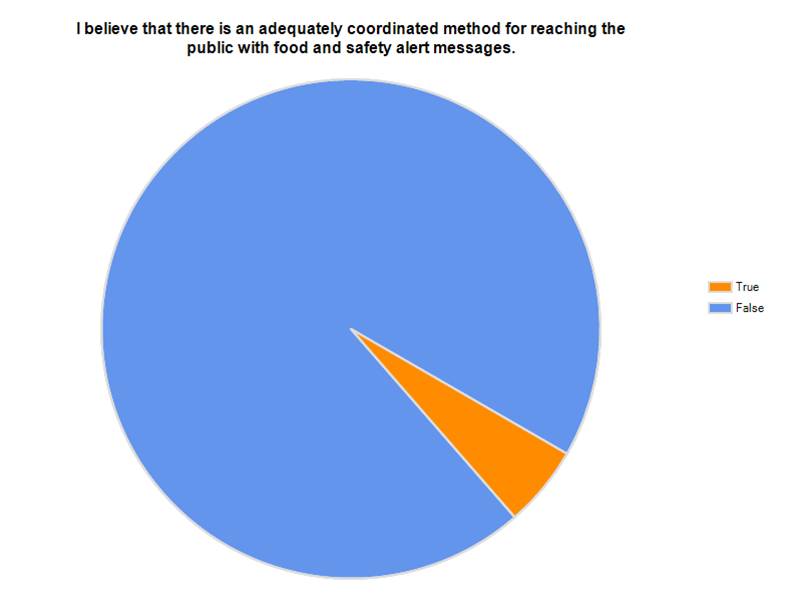
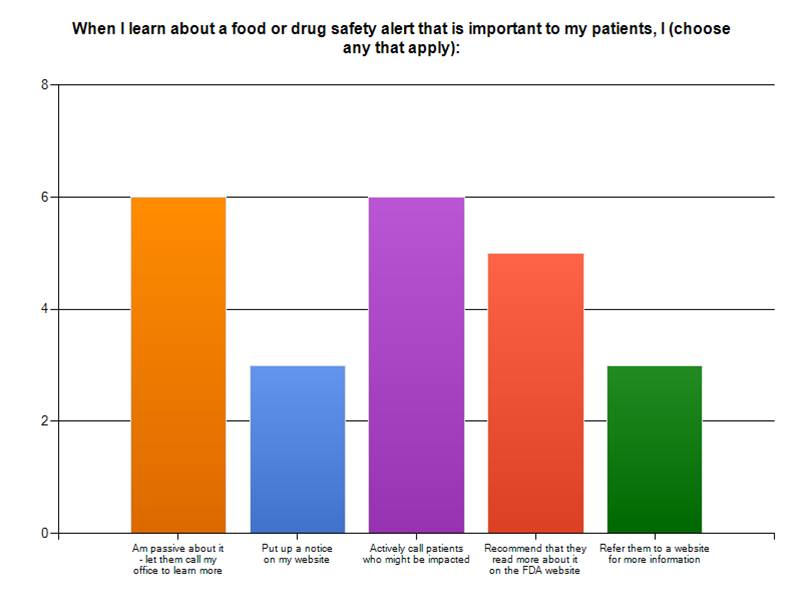
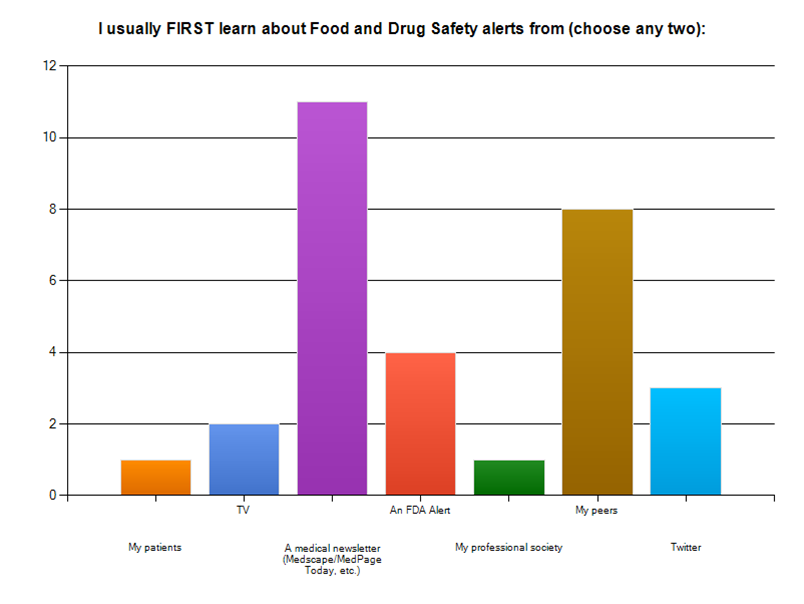
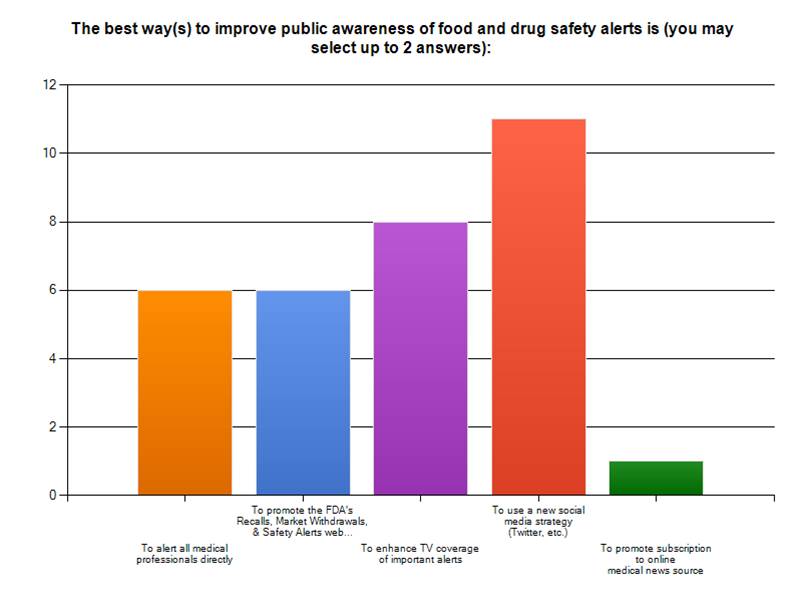
I recently created a focus group survey of physician bloggers to determine how they (and their patients) typically receive food and drug alerts. Twenty people responded. The results to 5 key questions are displayed below.
My most interesting take home messages:
1. Most physicians surveyed first receive drug alerts via eNewsletters from companies like MedPage Today and Medscape. (This is consistent with the large number of page views achieved by these sites/month).
2. Most patients find out about recalls via mainstream media – TV and newspapers.
3. EMRs, ePrescribing tools, coaching programs, and social media networks (like Twitter) are perceived to be the most valuable means of disseminating targeted recall information to the right person at the right time.
May 18th, 2009 by Jonathan Foulds, Ph.D. in Better Health Network
No Comments »

I’ve previously written about what face-to-face smoking cessation services typically do, largely based on my own experience. However, while at the SRNT annual conference I met two Smoking Cessation Advisors working in Lancashire, England who appeared to have a successful service, so thought it worth sharing some of their information.
Jan Holding and Eileen Ward manage a UK National Health Service (NHS) Stop Smoking Service in Lancashire in the north of England. Both are nurses by training and many of the 14 staff providing the treatment have primarily a nursing background. Their service sees around 450 new clients per month (i.e. over 5000 new clients per year). Services are provided at “community sessions” at various locations all over their catchment area, and clients are given their own hand-held record which they keep, and take with them to sessions, enabling them to attend whichever community location suits them at the time. While clients can make scheduled appointments, the service is also flexible, allowing clients to “drop-in” to community sessions without an appointment. Although some initial assessment sessions take place in a group format, most of the sessions are delivered in a one-to-one format via a relatively brief discussion with a smoking cessation advisor. These community sessions often take place in a large community room from 4pm to 8 pm in the evening, with multiple types of services being provided in the same room at the same time at different corners (e.g. initial assessments in one corner, prescribing of varenicline in another, and nicotine replacement therapy in another). It is not uncommon for around 200 clients to attend a single community session.
Clients are frequently encouraged to use NRT prior to quitting smoking (about half do this) and usually use more than one smoking cessation medicine (more than half do). Nicotine replacement therapy is provided via a voucher system requiring either no cost to the client, or just a co-pay (around $10 USD).
The service runs 6 days per week and includes evening sessions, and aims to reduce most of the usual barriers to entering treatment. Their “3 As” approach emphasizes “Accessibility, Availability and Adaptability”. They also specifically try to develop smoking cessation advisors who are passionate about their role, have a positive attitude to the importance of quitting smoking, and are therefore very committed to that work, as well as being knowledgeable about it.
My understanding is that the quit rates at this service are pretty good. But perhaps the best testimony to its success is the fantastic volume of clients who attend…..largely influenced by positive word-of-mouth via other clients. The success of this service reminds us that there isn’t just one way to do it, that all smoking cessation counselors and systems may need to be flexible and adaptable in order to help as many smokers to quit as possible.
For further information on what a smokers’ clinic does, see: What does a tobacco treatment clinic do?
This post, Smoking Cessation Programs: Lessons From The UK, was originally published on
Healthine.com by Jonathan Foulds, Ph.D..
January 7th, 2009 by Dr. Val Jones in Audio, Expert Interviews, Health Policy, News
2 Comments »

Dr. Richard Carmona
Intense debate has broken out across the blogosphere regarding the candidacy of CNN medical correspondent, Sanjay Gupta, for the Office of Surgeon General of the United States. Some argue that he is not qualified for the position, others say that his charisma would be a boon to public health communications. But before we draw conclusions about who’s right for the job, we need to understand what the job entails.
I asked Dr. Richard Carmona, 17th Surgeon General of the United States, to explain the roles and responsibilities of the office. You may listen to our conversation by clicking on the podcast below, or read the summary of our conversation that follows.
[Audio: http://blog.getbetterhealth.com/wp-content/uploads/2009/01/surgeongeneraljob.mp3]
Dr. Val: What is the primary role of the Surgeon General?
Dr. Carmona: It’s the Surgeon General’s responsibility to protect, promote, and advance the health safety and security of the United States. The office of the Surgeon General dates back to 1798, when President Adams passed a law to create the Marine Hospital Service. The lead physician of the service became known as the Surgeon General. The Marine Hospital Service eventually became the US Public Health Service, and the roles and responsibilities of the Surgeon General broadened to include immigration, disaster preparedness (in the case of nuclear and biological warfare), national safety, health prevention, and many complex public health issues that face our nation and the world.
Dr. Val: What sort of experience is appropriate for a candidate of the office of Surgeon General?
Dr. Carmona: A successful candidate for the office of Surgeon General should have deep and broad public health experience, especially as a public health or uniformed military officer. The Surgeon General is given the rank of Admiral, and as such he or she will interface with other Admirals and Generals, and Army and Navy Surgeon Generals, most of whom are career officers with decades of experience in military matters. The Surgeon General must have the wisdom and experience to take on the position of an Admiral and represent our country internationally.
Dr. Val: What does the Surgeon General do on a daily basis?
Dr. Carmona: The Surgeon General is the commander of the US Public Health Service Commissioned Corps, which consists of thousands of officers in hundreds of locations around the world working anonymously to keep our nation and our world safe. The Surgeon General interfaces on a daily basis with the NIH, CDC, SAMHSA, HRSA, and all of the federally related health agencies as well as global health organizations like the World Health Organization, Pan American Health Association, and the American Public Health Association. The Surgeon General provides in-depth analysis of health policy for every cabinet minister, including the Interior, Commerce, and Homeland Security. It’s a very visible, credible, and iconic position.
Dr. Val: What’s the selection process for the office of Surgeon General?
Dr. Carmona: The Surgeon General is nominated by the President of the United States after much due diligence, and under the recommendation of his staff. The candidate is then introduced to the United States Senate. Then the Senate, if they so choose, extends the candidate the privilege of appearing before them for a Senate confirmation hearing. During the hearing they review the candidate’s credentials and ask him or her questions about anything and everything related to the public health of this nation and the world. You’re essentially put in a hot seat, and rightfully so because the Surgeon General is America’s face of public health to the world.
Dr. Val: What should Americans expect of their Surgeon General?
Dr. Carmona: The Surgeon General of the United States needs to remain a non-partisan physician. He or she should always communicate the honest, scientific truth to the American public so that they can make informed decisions about improving their health. Often, that scientific information is not the same as the policy that the President or Congress come out with, because policy is a very complicated process.
The Surgeon General has the largest medical practice in the nation (300 million), and when he or she issues reports, they actually change behavior in our country and the world. The Surgeon General is the true, honest broker of the best science for the people, offered in an a-political fashion. He or she is a patient advocate at the very highest level of government, and is expected to address the most complex health problems that face our nation. There is no more important or influential office that an American physician can hold.













