January 14th, 2010 by Harriet Hall, M.D. in Better Health Network, Opinion, Research
1 Comment »

A recent story on NPR accused the drug manufacturer Merck of inventing a disease, osteopenia, in order to sell its drug Fosamax. It showed how the definition of what constitutes a disease evolves, and the role that drug companies can play in that evolution.
Osteoporosis is a reduction in bone mineral density that leads to fractures. The most serious are hip fractures, which require surgery, have complications like blood clots, and carry a high mortality. Many of those who survive never walk again. Vertebral fractures are common in the osteoporotic elderly and are responsible for dowager’s hump and loss of height. There is also an increased risk of wrist and rib fractures. Read more »
*This blog post was originally published at Science-Based Medicine*
January 9th, 2010 by Peggy Polaneczky, M.D. in Better Health Network, Opinion
1 Comment »

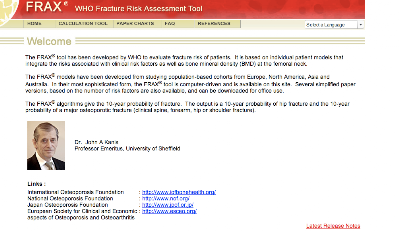
This post is in response to Jane Brody’s recent NY Times article on the FRAX fracture risk calculator. FRAX is a clinical decision tool devised by the World Health Organization that allows physicians to account for the myriad of risk factors, including bone density, to determine a patient’s risk for osteoporotic fracture.
Now about 20 years into the practice of medicine, I have evolved from what they call an “early adopter” of new drugs, through a time of cautious use of new drugs, to what I am now – highly skeptical of most new medications and suspicious of Big Pharma, medical thought leaders and anyone else trying to “educate” me about a disease. I am also disappointed in my medical societies for failing to cut the ties between themselves and industry, but hopeful that we are slowly but finally starting to emerge from of an era of industry-dominated health care and into a time of patient-centered medicine. Read more »
*This blog post was originally published at The Blog that Ate Manhattan*
November 1st, 2008 by Dr. Val Jones in Expert Interviews
2 Comments »

Tanya Altmann, MD
It’s been a little while since I had a “blonde moment” during an expert interview, but this one was pretty funny. I was in the middle of a podcast with Dr. Tanya Altmann, media personality and spokesperson for the American Academy of Pediatrics, about vitamin D – when I thought I heard her say that there were now special formulas of vitamin D for incense.
I knew that Dr. Altmann practiced medicine in Southern California, so I wasn’t terribly surprised about this new method of vitamin delivery. However, I hadn’t heard about vitamin D inhalation previously, so I asked her to explain how this new incense formula worked.
She paused to gather her thoughts and then corrected me: “No, I was saying that there’s a new formula for INFANTS…”
Oh. My bad.
So here’s the rest of our delightful interview. You may want to listen to the podcast, though I did edit out the awkward “incense” section so as not to start a new cult. One doesn’t want to give others too many ideas on the Internet! I hope that Dr. Tanya won’t think less of me for that misunderstanding.
Dr. Val: What is vitamin D, and why do we need it?
Dr. Tanya: Vitamin D is an essential nutrient for your entire body. Although it’s called a vitamin it actually functions as more of a hormone, playing an important role in the immune system. Vitamin D can help to protect people against illness, diabetes, and even cancer, though its role in helping to build strong bones (and protect infants from rickets) is probably its best known attribute.
Dr. Val: Tell me about the new AAP guidelines for infants, children and adolescents. Why did they change?
Dr. Tanya: Based on data collected in several recent research studies, the American Academy of Pediatrics issued new guidelines last month which essentially doubled the recommended daily amount of vitamin D (from 200 to 400 IUs) for infants, children, and adolescents. Historically people were able to get sufficient amounts of vitamin D through sun exposure (the body can create vitamin D when the skin is exposed to sunlight), but now that we need to protect kids from sun’s harmful rays due to future skin cancer risk, vitamin D levels have dropped significantly. Sunscreen, of course, blocks the sun from stimulating the creation of vitamin D in the skin. Read more »
















