October 6th, 2011 by RyanDuBosar in Research
No Comments »

 Health care workers’ fear of flu shots has risen as an issue again.
Refusing flu vaccination has risen among health professionals again and again. And again. And again and again.
Vaccination rates for health care workers stands at 35%, which is “a dismal rate,” according to Margaret C. Fisher, MD, a pediatric disease subspecialist and the medical director of The Children’s Hospital at Monmouth Medical Center. She spoke about vaccinating adults and health care workers at Internal Medicine 2011.
The issue is as annual as the flu itself, and this time, a physician at London’s Imperial College NHS Trust has jumped into the debate, tackling misinformation given within his country’s own health service. He said: “A very interesting question for me is Read more »
*This blog post was originally published at ACP Internist*
October 6th, 2011 by StevenWilkinsMPH in Opinion
No Comments »

Irrational exuberance was a term once used to describe the stock market before the last crash. It also seems an apt description for much of the talk these days about empowered health consumers.

To be sure, patients today have unprecedented access to health information. Patient decision-support tool can be found on just about every provider, payer and self-insured employer website. Consumers can go to any number of websites to find quality data about hospitals, physicians and health plans. Personal health records (PHRs) promise to make our personal health data portable for meaning that all our treating physicians will be “singing off the same song sheet.”
That’s what the industry experts tell us. But what’s really going on? Here I will describe what I see as the top 5 myths about empowered health consumers. Read more »
*This blog post was originally published at Mind The Gap*
October 5th, 2011 by ChristopherChangMD in Research
No Comments »

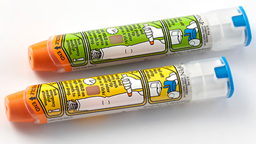 Though one should always use an EpiPen that is not expired, it is better to use an expired EpiPen to treat anaphylaxis than to do nothing at all.
Some Canadian researchers studied expired EpiPen auto-injectors 1 to 90 months past the expiration date.
What they found was that the older the EpiPen, Read more »
*This blog post was originally published at Fauquier ENT Blog*
October 5th, 2011 by Lucy Hornstein, M.D. in Opinion
3 Comments »

I get mail, this from a healthy 20-something reader who’s just moved to a new city:
What’s the difference between doctors listed as Family Practice, Internal Medicine, and General Practice? Also, what are some things I should consider (that I might not already be considering) when finding a primary care physician?
That’s a bit of a loaded question, not because of any bias of mine (perish the thought!) but because each of those terms is used in different ways, by different people, at different times, for different purposes. So here’s the rundown on each of them in turn.
Family Practice
What it’s supposed to mean: Designates a physician who has completed a three-year postgraduate training program in Family Medicine, trained to provide primary care to patients of all ages, presenting with conditions of any organ system, including care of acute conditions and ongoing management of chronic diseases.
What doctors hope people think it means: Read more »
*This blog post was originally published at Musings of a Dinosaur*
October 5th, 2011 by Paul Auerbach, M.D. in Research
No Comments »

Diverticula are small outpouchings that develop at weak points along the wall of the colon (large bowel), probably because of high pressures associated with muscle contractions during the passage of stool. When these sacs become obstructed and/or inflamed (most frequently in middle-aged or elderly individuals), they enlarge and create pain and fever. Usually, the left lower quadrant is involved, because diverticula tend to form in the left-side portion of the colon (descending colon) more frequently than in the right-side portion (ascending colon) or horizontal connecting section (transverse colon). A ruptured diverticulum can cause a clinical picture much like that of a ruptured appendix, with pain in the left side of the abdomen instead of the right side. The victim should seek medical attention, and his diet be limited to clear fluids. Antibiotics (metronidazole, metronidazole combined with doxycycline, amoxicillin-clavulanate, trimethoprim-sulfamethoxazole, cefixime, ciprofloxacin, or cefpodoxime) should be administered if help is more than 24 hours away.
As the population ages, diverticulitis is expected to become more prevalent. In a recent article Read more »
This post, Diverticulitis Expected To Become More Prevalent In An Aging Population, was originally published on
Healthine.com by Paul Auerbach, M.D..












