August 19th, 2011 by Davis Liu, M.D. in News, Opinion
No Comments »

Newsweek has a very provocative and yet incredibly too simplistic piece for the public and patients on its cover story – One Word Can Save Your Life: No! – New research shows how some common tests and procedures aren’t just expensive, but can do more harm than good.
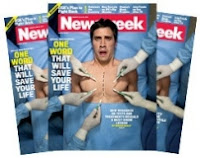 The piece is actually well written and highlights facts that have been apparent for some time. More intervention and treatment isn’t necessarily better. Having a cardiac catheterization or open heart surgery for patients with stable heart disease and mild chest pain isn’t better than diet, exercise, and the prescription medication treatment. PSA, the blood test previously suggested by many professional organizations, isn’t helpful to screen for prostate cancer, even though the value of the test was questioned years ago. Antibiotics for sinus infection? Usually not helpful.
Certainly doctors do bear part of the blame. If patients are Read more »
*This blog post was originally published at Saving Money and Surviving the Healthcare Crisis*
August 19th, 2011 by MotherJonesRN in Research, True Stories
No Comments »

 I wonder how many cups of coffee an average night nurse consumes during their shift. Look, there’s someone we can ask, although it looks like her caffeine buzz is wearing off. Notice the telltale chin to chest head tip that gives sleep deprived nurses away. She may look like she’s charting, but she really is in a twilight sleep.
Working nights isn’t for wimps. Neither is working holidays and weekends. You are always short of help, and BIG things seem to go wrong just as the day shift staff heads out the door. I always thought that I was just paranoid about working the off shifts, but Muhammad Saleem from RN Central sent me some information that validated my observations. I’ve posted their research results below. I’ve lived through a lot of these situations. I’ve seen seasoned nurses nod off at the desk at 3AM because they’ve been working their butts off, and I’ve worked with doctors who don’t answer pages promptly during evening hours and on weekends even though they are on call. I’ve also worked with new residences who are unable to write coherent orders until the third week of their rotation. Sometimes I’ve wondered why more things don’t go wrong in a hospital.
I think their information looks accurate. What do you think? Read more »
*This blog post was originally published at Nurse Ratched's Place*
August 18th, 2011 by AndrewSchorr in Opinion, Research
No Comments »

You heard about it first on Patient Power when, a couple of years ago, we interviewed Dr. Andrew Lowy, oncology surgeon at UC San Diego Medical Center. He explained how some patients with advanced cancer spread in their abdomen could benefit from an open surgery – perhaps as much as nine hours long – where, after snipping out visible cancer – the organs are bathed in heated chemotherapy for 90 minutes. You may recall the story of Jennifer Ambrose, a young mom from suburban Chicago, who developed cancer of the appendix. She tracked down Dr. Lowy after spotting him on the Internet. She traveled to San Diego, had the “hot chemo” procedure, recovered and then went on to have a second child – her “miracle baby.” Today Jennifer remains fine and her story is featured in my book, The Web-Savvy Patient.

Jennifer Ambrose’s Powerful Patient Video
Today Andrew Pollack, reporter for The New York Times, wrote a front page story about Dr. Lowy, hot chemo, and how other medical centers are now picking up on it for other advanced cancers including colon and ovarian. They are even advertising it as one last bit of hope when often there is virtually none. Now, some of the big names in GI cancers are suggesting this approach has merit and may offer longer survival then some super expensive drugs. There’s a debate going on. Read more »
*This blog post was originally published at Andrew's Blog*
August 18th, 2011 by DrWes in Opinion
No Comments »

With the explosion of medical devices to treat various medical ailments in medicine, we have seen significant improvements in quality and quantity of life. An underappreciated consequence of all of these electronic device therapies, however, has been the manpower and expertise required to manage these implanted electronic medical devices long-term.
Problems with electromagnetic interference (EMI) with medical devices are real. Innovations in medicine have come from various portions of the electromagnetic spectrum including analog and digital wireless technology, diagnostic and therapeutic radiation therapy and magnetic resonance imaging. The effects of these technologies on implanted electronic medical devices can vary and specialty physicians, ancillary health care providers, and medical device manufacturers expend significant man-hours managing these potential interference sources and their affects on devices without a single prospective randomized trial to guide us. The sheer number of devices and the many ways that EMI can interfere with these complex devices makes constructing an all-inclusive trial with sufficient number of “events” to compare difficult or nearly impossible. As a result, most of our management recommendations and hospital policies in this regard have been based from literature case reports or personal experience and expertise.
To date, recommendations for minimizing EMI with cardiac implantable electronic devices has Read more »
*This blog post was originally published at Dr. Wes*
August 18th, 2011 by Dr. Val Jones in Book Reviews
No Comments »
 Food Truths, Food Lies, written by family physician Eric Marcotte, M.D., may be the most refreshingly evidence-based diet book of the decade. You will not find a single mention of super-foods, magical berries, or supplement “must-haves” in the entire book. What you will find is the cold, hard truth about why many Americans are overweight, and what it takes to become a healthy eater.
Marcotte writes for the average American – his simple language, matter-of-fact tone, and regular reminders of what the reader has learned, make for a quick and memorable read. Although it’s clear that Marcotte has carefully distilled his dietary advice from the scientific literature, he refrains from burdening the reader with too many footnotes and references. Instead, he has created a kind of Cliff’s Notes of nutrition, having done the “heavy sifting” for us. What remains are the most basic principles underlying all healthy eating, such as:
*You can’t exercise your way to weight loss (i.e. you can’t outrun your own mouth – it’s much easier to eat more calories than you burn) Read more »