July 26th, 2011 by Medgadget in News, Research
No Comments »

Care Innovations, a joint venture between GE and Intel, has released Connect, a service designed to address social isolation in seniors.

Connect software runs on a touch screen device and features social networking, as well as health management and reporting tools. The system has been undergoing a successful user trial at a nursing home in Michigan since last year.
More about Connect from the announcement: Read more »
*This blog post was originally published at Medgadget*
July 26th, 2011 by HarvardHealth in Health Tips, Research
No Comments »

As if people with the combination of high blood pressure and heart disease don’t already have enough to worry about, a new study suggests that common painkillers called nonsteroidal anti-inflammatory drugs (NSAIDs) pose special problems for them.
Among participants of an international trial called INVEST, those who often used NSAIDs such as ibuprofen (Advil, Motrin and others), naproxen (Aleve, Naprosyn, and others), or celecoxib (Celebrex) were 47% more likely to have had a heart attack or stroke or to have died for any reason over three years of follow-up than those who used the drugs less, or not at all. The results were published in the July issue of the American Journal of Medicine.
Millions of people take NSAIDs to relieve pain and inflammation. They are generally safe and effective. The main worry with NSAIDs has always been upset stomach or gastrointestinal bleeding. During the last few years, researchers have raised concerns that Read more »
*This blog post was originally published at Harvard Health Blog*
July 26th, 2011 by Bryan Vartabedian, M.D. in Opinion
No Comments »

I can’t help but think that as time passes we’ll forget about how much medicine has changed with the introduction of the Internet. We’re witnessing a transition that hasn’t been seen in generations. We live with the end result but the memory of how we got here is fading quickly. Like any kind of cultural shift, once we’ve arrived it’s hard to remember what it was like along the way.
How did patients think before the information revolution? And how did it go down when patients began to search? How specifically did information clash with the old model of doctor and patient and how did we deal with it? There are stories here that need to be told. I think the real stories are in the small details of what went down between doctors and patients. But as early adopters, most of us spend our time looking forward, not back. Read more »
*This blog post was originally published at 33 Charts*
July 25th, 2011 by ChristopherChangMD in Research, Video
No Comments »

Many people are already aware of nebulizer treatments to help with breathing during asthma attacks and other pulmonary conditions.
What many people may not be aware of is that such nebulizer treatments can also potentially be used for chronic sinus infections. One of the best known companies offering such treatment is Sinus Dynamics.
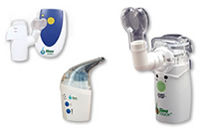 Using one of several different nebulizers, compounded liquid medications (antibiotics and/or steroids) selected by the physician are nebulized/atomized which the patient then breathes into the nasal passages. The small size of the particles allow medication to theoretically move through the tiniest of sinus openings directly onto the infected tissue. Treatments are quick generally lasting 3 – 5 minutes (depending on medication and device). Here’s a video demonstrating how it is used.
Sinus Dynamics™ specifically is contracted by over 14,000 insurance companies across the nation, which means that most patients are able to receive their treatment for little to no cost out of pocket.
Most ENT doctors are already familiar with this product.
Personally, I prescribe Read more »
*This blog post was originally published at Fauquier ENT Blog*
July 25th, 2011 by RyanDuBosar in Research
No Comments »

Smartphones and tablets have reached 80% of physicians across all practice types, locations and years in practice, and 25% of users are “Super Mobile” physicians who use both types of mobile devices. This is far beyond the general population’s 50% adoption of smartphones and 5% adoption of tablets.
QuantiaMd, a free, online learning collaborative, released survey results that showed 44% of physicians who do not yet have a mobile device intend to buy one this year.
While younger physicians have higher adoption rates than older ones, current use of mobile devices by physicians longest in practice is above 60%, the survey showed. Among physicians with 30 years or more of practice, almost 20% already use a tablet device for work, and another 25% say they are extremely likely to do so. Physicians in their second decade of practice use Read more »
*This blog post was originally published at ACP Internist*