July 4th, 2011 by Linda Burke-Galloway, M.D. in News
1 Comment »

 Low cost, prenatal fitness classes. What a progressive thought. The New York City Prenatal Fitness Initiative is a community model that should be replicated on a national scale. A nurse midwife, Marilinda Pascoe and Andrea Bachrach Mata, an aquatic fitness instructor founded a program that offers prenatal water exercise and yoga to low-income pregnant women in North Manhattan and the Bronx at an affordable cost. For 7 weeks, pregnant women will be able to do light aerobics, swim, dance, gentle stretching and exercise for a total cost of $60.00 in a community pool. Not only will these women have fun by releasing endorphins (substances released by the brain that make you feel happy) but they will also be reducing their risks of developing gestational diabetes, obesity and other potential complications. Three weeks ago the program sponsored a community walk and invited pregnant women to participate. Read more »
*This blog post was originally published at Dr. Linda Burke-Galloway*
July 4th, 2011 by Michael Kirsch, M.D. in Opinion
No Comments »

 As of this writing, 5 air traffic controllers have been found asleep at the switch. By the time this piece is posted, several others may have joined the slumber party. Keep in mind, there’s a lot more snoozing in the towers than we’re aware of. We don’t know the denominator here. Our wise reactive government has recently issued orders that airport control towers must not be manned by only one individual. Somehow, prior to NappingGate, our bloated and inefficient government that is riddled with redundancy, thought that one sole guy watching the radar at night was sufficient.
There are some jobs where nodding off poses no risk. Let me test my readers’ acumen on this issue. Which of the following professions would not be at risk if an unscheduled siesta occurred?
- A race car driver
- A congressman
- A circus clown (not to be confused with above listing)
- A lawyer (not to be confused with the above listing)
- A school bus driver
Let’s face it. Some folks on the job simply can’t safely snore their way through it. We don’t want Read more »
*This blog post was originally published at MD Whistleblower*
July 3rd, 2011 by admin in Health Tips
No Comments »

What do slouching, back pain, and a middling forehand or weak shot off the tee have in common? Often it’s a weak core—the girdle of muscles, bones, and joints that links your upper and lower body. Your core gives you stability and helps power the moves you make every day. Whether it’s bending to pick up a laundry basket, swinging a golf club, paddling a kayak, or reaching to pull a vase from the top shelf of a cabinet, a strong and flexible core makes the move more fluid, efficient, and robust. Strong, well-balanced core muscles can also improve your posture and help prevent back injuries. And if back pain does strike, core exercises are usually part of the rehab regimen.
Core Muscles

Click image to enlarge.
Your core is composed of many different muscles in the abdomen, back, sides, pelvis, and buttocks. These muscles work together to allow you to bend, twist, rotate, and stand upright. |
For all these reasons, more and more people are incorporating core exercises into their fitness routines. If you’re among them, or planning to be, it’s critical to pay attention to proper form. Read more »
*This blog post was originally published at Harvard Health Blog*
July 3rd, 2011 by Jeffrey Benabio, M.D. in Health Tips
No Comments »


Life is really simple, but we insist on making it complicated. -Confucius
This is certainly true of sunscreens. “Broad spectrum, UVA, UVB, avobenzone, oxybenzone, parsol, sensitive skin, titanium dioxide, SPF 15, 30, 45, 50, 55, 60, 70, 75, 100, 100+, waterproof, sweatproof, spray, cream, lotion, antioxidant…”
We spend about $700 million in sunscreens every year, and many people don’t have a clue as to what’s good or bad, or a waste of money. The Food and Drug Administration has been meaning to help you out with this problem for a while now. Actually for over 30 years (who says nothing gets done in government?). The F.D.A. has made a final decision on sunscreen labels. They’ve sought to make labels simple and accurate to help you choose the right one:
1. The sunscreen must protect against both UVA and UVB rays; that is, it must be broad spectrum.
2. To be labelled as “protecting against skin cancer,” the sunscreen must be an SPF of at least 15. The labels will likely be capped at SPF 50 because SPFs greater than 50 seem to be of little additional benefit.
3. Sunscreens can no longer be labelled as “waterproof” or “sweat proof,” as neither is physically possible, therefore, rendering the claim “misleading.” Sunscreens will be labelled as effective in water for 40 minutes or 80 minutes which is accurate and much more useful.
This simple system should help consumers make better choices, but some say the F.D.A. didn’t go far enough. They did not comment on the safety of various sunscreen ingredients. They have also not loosened up enough to allow for other sunscreens that are widely used in Europe to be sold here in the U.S.
Do you think the F.D.A was too strict or didn’t go far enough?
Photo: Wandering Magpie, Flickr
*This blog post was originally published at The Dermatology Blog*
July 3rd, 2011 by Toni Brayer, M.D. in Opinion
No Comments »

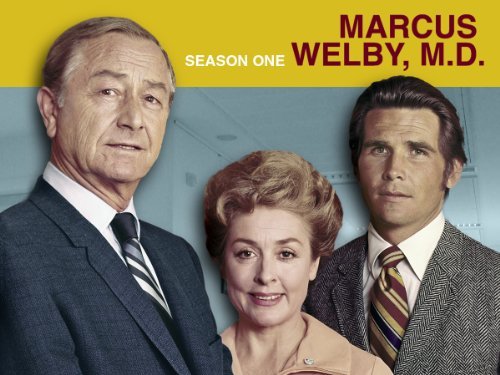
 Close your eyes and think of a doctor. Do you see a Marcus Welby type? A middle aged, smiling and friendly gentleman who makes house calls? Is his cozy office staffed by a long time nurse and receptionist who knows you well and handles everything for you? If that is what you envision, either you haven’t been to the doctor lately or you are in a concierge practice where you pay a large upfront fee for this type of practice. Whether you live in a big city or a rural community, small practices are dissolving as fast as Alka Selzer. Hospitals and health systems are recruiting the physicians, buying their assets (unfortunately not worth much) and running the offices.
Doctors are leaving small practices and going into the protection of larger groups and corporations because of economic changes that have made it harder and harder for small practices to survive. The need for Read more »
*This blog post was originally published at EverythingHealth*


 Low cost, prenatal fitness classes. What a progressive thought. The New York City Prenatal Fitness Initiative is a community model that should be replicated on a national scale. A nurse midwife, Marilinda Pascoe and Andrea Bachrach Mata, an aquatic fitness instructor founded a program that offers prenatal water exercise and yoga to low-income pregnant women in North Manhattan and the Bronx at an affordable cost. For 7 weeks, pregnant women will be able to do light aerobics, swim, dance, gentle stretching and exercise for a total cost of $60.00 in a community pool. Not only will these women have fun by releasing endorphins (substances released by the brain that make you feel happy) but they will also be reducing their risks of developing gestational diabetes, obesity and other potential complications. Three weeks ago the program sponsored a community walk and invited pregnant women to participate. Read more »