June 17th, 2011 by John Mandrola, M.D. in Opinion, True Stories
No Comments »

I walked around the office today with a little extra spring in my step. It felt really good to be a doctor this day.
So when good sensations come, I always look back on why they happened. (Like cyclists do when they have really good legs. Maybe it was that bee pollen?)
But like having good legs on the bike, good sensations in the office come from more than one thing.
Eight hours of sleep?
A morning hug from my best friend, my wife Staci?
Two coffees?
A really good blueberry muffin?
No arrhythmia overnight in the AF ablation patients?
Good thresholds on yesterday’s (evidenced-based) ICD?
Perhaps.
But I felt really springy after being greeted by this… Read more »
*This blog post was originally published at Dr John M*
June 16th, 2011 by John Di Saia, M.D. in Opinion
No Comments »

Reader Question:
All I see online is bad Botox stories. Can this ever be done well? Why is it so popular?
Botulinum toxin injections temporarily paralyze muscles where they injected. While this sounds scary, it can be done to reduce certain facial movements that make people look concerned (the look of consternation,) and older (crow’s feet,etc). As is usually the case in plastic surgery, too much of an otherwise good thing can make people look weird. Just look at Read more »
*This blog post was originally published at Truth in Cosmetic Surgery*
June 16th, 2011 by Glenn Laffel, M.D., Ph.D. in Research
1 Comment »

In recent posts on Web-based and mobile behavioral intervention programs, we reviewed evidence suggesting that social support, in one form or another, can improve participants’ adherence and engagement with the program. That didn’t always mean however, that participants achieved better outcomes as a result. In one study for example, an online community increased engagement with and utilization of a Web-based activity program, but it did not increase participants’ actual activity levels.
 Another study, slightly older than the ones reviewed above, did show that a Web-based program improved outcomes. In this case, the intervention was an online videogame known as Re-Mission. Since I haven’t touched previously on outcome studies for automated lifestyle intervention tools or videogames as an example of such programs, I’ll do that here.
Re-Mission is intended improve medication compliance in teens and young adults with a history of cancer. In the game, players control a nanobot within a 3-dimensional body of a young person that has cancer. Play involves destroying cancer cells and managing chemotherapy-related adverse effects like vomiting and bacterial infections by using antiemetics and antibiotics. The game purports to help users understand Read more »
*This blog post was originally published at Pizaazz*
June 16th, 2011 by RamonaBatesMD in Health Tips
No Comments »

Yesterday, the U.S. Food and Drug Administration released the new rules regarding labeling of sunscreen. The goal is to make it easier for the average person to chose a sunscreen.
The new labels will not be in place until next summer, so you need to be aware.
When the new labels are in place, NO sunscreen will be allowed to be labeled as a SUNBLOCK or as WATERPROOF.
Under the new labeling rules
- Products that have SPF values between 2 and 14 may be labeled as Broad Spectrum if they pass the required test.
- Only products that are labeled both as Broad Spectrum with SPF values of 15 or higher may state that they reduce the risk of skin cancer and early skin aging, when used as directed.
- A warning statement will be required on any product that is not Broad Spectrum, or that is Broad Spectrum but has an SPF between 2 to 14 stating that the product has not been shown to help prevent skin cancer or early skin aging.
In addition to the final rule for sunscreen labeling, the FDA released a Proposed Rule which would Read more »
*This blog post was originally published at Suture for a Living*
June 16th, 2011 by Toni Brayer, M.D. in Health Tips, Research
No Comments »

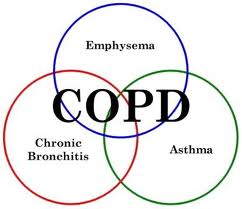 I am frequently extolling the health benefits of Vitamin D because almost weekly there is a new study that correlates high vitamin D levels with reducing some disease. The latest is from the American Journal of Respiratory and Critical Care Medicine and research shows that high doses of vitamin D supplementation improved respiratory muscle strength in patients with Chronic Obstructive Pulmonary Disease (COPD). The patients that did not receive supplemental vitamin D had blood levels of 22.8 compared to 53.8 in the supplemented group. The patients who were supplemented had improved respiratory function, strength and less shortness of breath. It certainly didn’t cure or reverse COPD but the improvement was an encouraging trend in this terrible chronic disease.
In reading about this it got me thinking about COPD and the fact that it is one of the most common reasons for hospitalization and disability in the United States. It is a progressive disease that affects the alveoli (small air sacs that exchange oxygen) and small bronchioles of the lungs. These airways and air sacs lose their elastic quality and become thick and inflamed. Mucus forms and patients become progressively short of breath and eventually need supplemental oxygen just to breathe. COPD is the fourth leading cause of death in the United States.
Did you know that most COPD is caused by Read more »
*This blog post was originally published at EverythingHealth*













