May 19th, 2011 by GarySchwitzer in News, Research
No Comments »

We simply don’t know why more news organizations can’t do an adequate job of explaining the limitations of observational studies – most notably, that they can’t prove cause and effect.
Yes, they can show strong associations. But they can’t prove cause and effect.
NBC Nightly News, as one example recently, inadequately explained the latest suggestion that coffee consumption can lower the risk of prostate cancer. In the anchor lead, Brian Williams framed this as another case of flip-flopping science, lightheartedly talking about what they say about “all those medical studies…if you don’t like the findings, wait for the next study.”
The story seemed puzzled at how the same “lab” 30 years ago reported that coffee was linked to an increase in pancreatic cancer. NBC said the researchers later said they got it wrong. This time – with the prostate cancer link – they say they got it right. Read more »
*This blog post was originally published at Gary Schwitzer's HealthNewsReview Blog*
May 19th, 2011 by KerriSparling in Health Tips, Humor, True Stories
No Comments »

Yesterday I wrote about my wedding, focusing on the parts that meant the most to me: the man I love, our families and friends, the church service, saying “I do,” and dancing ourselves silly at the reception.
But diabetes was a part of my wedding day. We did our best to keep it quiet and unnoticed, though, using several tricky methods. I’m like a diabetes wedding magician … sort of.
First things first: the dress. Wearing an insulin pump is the easiest and least intrusive way for me to take my insulin, and I wasn’t about to go off the pump just for the sake of fashion. My solution? Design a pocket to hold my insulin pump, hidden in my wedding dress. I spoke with the seamstress at Ye Olde Bridal Shoppe and she and I designed something that left the pump accessible, yet hidden.

Even if you were looking for it, the pump pocket was almost impossible to find. Hidden along the seam of my wedding gown, it was held shut with a small piece of velcro. Read more »
*This blog post was originally published at Six Until Me.*
May 19th, 2011 by AndrewSchorr in Health Tips
No Comments »

People generally have a sense there might be information on the Web that can help them when they are worried about their health. They also have a sense there is a LOT of information and some of it may be wrong. All of that is true. What is a strategy to find the good and avoid the bad?
This morning, I chatted with Mike Collins, host of “Charlotte Talks” on WFAE, public radio in Charlotte, North Carolina about The Web-Savvy Patient and some of my “Insider Tips” within. We talked at length about how you can get started looking for health information on the Web.
First of all, if you’re worried about your health, make sure you get an accurate diagnosis, and make sure that diagnosis is specific to you. Don’t be satisfied if your health care team tells you that you have a “thyroid problem.” Find out if it is hyperthyroidism or hypothryroidism. It makes a big difference. If you don’t know what you have you will find yourself wandering all over the Internet, discovering information that won’t be right for you. You might be lead to believe that you have a brain tumor, rather than a migraine induced by monthly hormones or the effects of too much coffee (we know that one here in Seattle!). So rule #1 is know the details of your diagnosis and if you don’t feel confident, recognizing some people are misdiagnosed, get a second opinion to confirm it. Then, and only then, should you start your search online. Read more »
*This blog post was originally published at Andrew's Blog*
May 19th, 2011 by Harriet Hall, M.D. in Health Tips, Opinion
No Comments »

In my recent review of Peter Palmieri’s book Suffer the Children I said I would later try to cover some of the many other important issues he brings up. One of the themes in the book is the process of critical thinking and the various cognitive traps doctors fall into. I will address some of them here. This is not meant to be systematic or comprehensive, but rather a miscellany of things to think about. Some of these overlap.
Diagnostic fetishes
Everything is attributed to a pet diagnosis. Palmieri gives the example of a colleague of his who thinks everything from septic shock to behavior disorders are due to low levels of HDL, which he treats with high doses of niacin. There is a tendency to widen the criteria so that any collection of symptoms can be seen as evidence of the condition. If the hole is big enough, pegs of any shape will fit through. Some doctors attribute everything to food allergies, depression, environmental sensitivities, hormone imbalances, and other favorite diagnoses. CAM is notorious for claiming to have found the one true cause of all disease (subluxations, an imbalance of qi, etc.).
Favorite treatment.
One of his partners put dozens of infants on Cisapride to treat the spitting up that most normal babies do. Even after the manufacturer sent out a warning letter about babies who had died from irregular heart rhythms, she continued using it. Eventually the drug was recalled.
Another colleague prescribed cholestyramine for every patient with diarrhea: not only ineffective but highly illogical.
When I was an intern on the Internal Medicine rotation, the attending physician noticed one day that every single patient on our service was getting guaifenesin. We thought we had ordered it for valid reasons, but I doubt whether everyone benefited from it. Read more »
*This blog post was originally published at Science-Based Medicine*
May 19th, 2011 by VicenteBaosMD in Opinion, Research
No Comments »


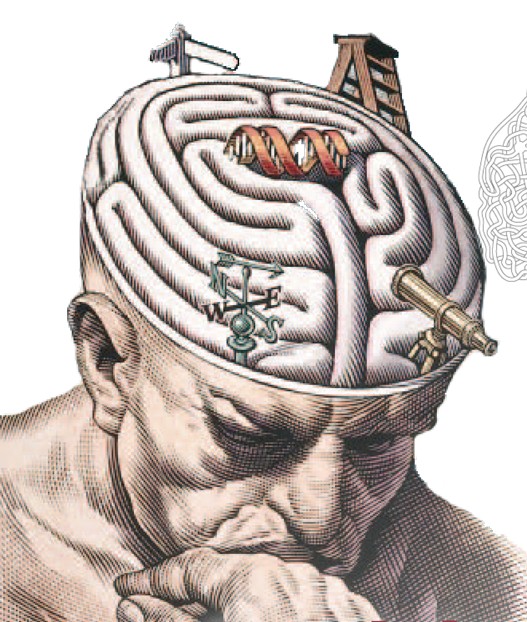
I recently stumbled upon a very interesting editorial opinion in the ‘European Journal of Clinical Pharmacology’: ‘The use of drugs is not as rational as we believe…but it can’t be! The emotional roots of prescribing’, authored by Albert Figueras, from Fundació Institut Català de Farmacologia (Catalonia Institute of Pharmacology Foundation at Vall d’Hebron Hospital, in Barcelona).
Since more than 40 years ago when Archie Cochrane said that “there must be solid scientific evidence behind any statement, decision and prescription made by medical staff”, and all the way until today’s WHO promotion of rational medicine utilization, both developing and industrialised countries have been striving to increase sound knowledge about prescription and thus spread the kind of rational thinking necessary to foster evidence-based medicine in drug use.
Keeping your skills up to date has never been an easy task but nowadays we have newsletters and other Internet tools that can grant any MD state-of-the-art knowledge on any subject he or she may need, accessible anywhere and for any medical speciality. Nevertheless, drug use in the “real world” is far from this high quality. Not only in Spain: it has been noted in France, Greece and other countries that, despite widespread knowledge of risk factors that may cause gastrointestinal toxicity in patients under nonsteroidal anti-inflammatory drugs (NSAID) treatment, there is a massive use of proton-pump inhibitors in individuals that show no significant risk.
Changing well-established drugs for newer, less-known products is not consistent with the need of a well-grounded comparative evaluation. We are not raising concern on the influence of gifts or invitations from pharmaceutical companies. Many doctors really want to make rational decisions… but can’t. Read more »
*This blog post was originally published at Diario Medico*