April 19th, 2011 by Jessie Gruman, Ph.D. in Opinion
1 Comment »

 “Life gives you lemons and you make lemonade…your response to all those cancer diagnoses is so positive, such a contribution!” “Your work demonstrates that illness is a great teacher.” ”Your illness has been a blessing in disguise.”
Well-meaning, thoughtful people have said things like this to me since I started writing about the experience of being seriously ill and describing what I had to do to make my health care work for me. I generally hear in such comments polite appreciation of my efforts, which is nice because I know that people often struggle to know just what to say when confronted by others’ hardships.
But beneath that appreciation I detect a common belief about the nature of suffering from illness in particular, that in its inaccuracy can inadvertently hurt sick people and those who love them.
The belief is that sickness ennobles us; that there is good to be found in the experience of illness; while diseases are bad, they teach life lessons that are good. Read more »
*This blog post was originally published at CFAH PPF Blog*
April 19th, 2011 by Harriet Hall, M.D. in Opinion
1 Comment »

Before we had EBM (evidence-based medicine) we had another kind of EBM: experience-based medicine. Mark Crislip has said that the three most dangerous words in medicine are “In my experience.” I agree wholeheartedly. On the other hand, it would be a mistake to discount experience entirely. Dynamite is dangerous too, but when handled with proper safety precautions it can be very useful in mining, road-building, and other endeavors.
When I was in med school, the professor would say “In my experience, drug A works better than drug B.” and we would take careful notes, follow his lead, and prescribe drug A unquestioningly. That is no longer acceptable. Today we ask for controlled studies that objectively compare drug A to drug B. That doesn’t mean the professor’s observations were entirely useless: experience, like anecdotes, can draw attention to things that are worth evaluating with the scientific method.
We don’t always have the pertinent scientific studies needed to make a clinical decision. When there is no hard evidence, a clinician’s experience may be all we have to go on. Knowing that a patient with disease X got better following treatment Y is a step above having no knowledge at all about X or Y. A small step, but arguably better than no step at all.
Experience is valuable in other ways. First, there’s the “been there, done that” phenomenon. Older doctors have seen more: they may recognize a diagnosis that less experienced doctors simply have never encountered. My dermatology professor in med school told us about a patient who had stumped him: she had an unusual dermatitis of her hands that was worst on her thumb and index finger. His father, also a doctor, asked her if she had geraniums at home. She did. She had been plucking off the dead leaves and was reacting to a chemical in the leaves. The older doctor had seen it before; his son hadn’t. Read more »
*This blog post was originally published at Science-Based Medicine*
April 18th, 2011 by Paul Auerbach, M.D. in Health Tips
No Comments »

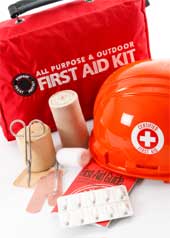 Wilderness medicine folks are often considered to be “gearheads.” That is, we love to try out new outdoor equipment, whether it is for our activities, search and rescue, or personal safety. Improvisation is important, but it’s better to have what you need, particularly if you can pack light and accomplish your mission without unnecessary bulk and weight. There are numerous suppliers of equipment online. From time to time, as I am made aware of these, I will let you know.
Rescue Essentials is a frequent exhibitor at wilderness medicine continuing medical education meetings, and so I have become familiar with their carried product lines.
Importantly, Rescue Essentials carries the complete product line for SAM
Medical Products, which include the SAM Splint series and BlistOBan blister
(prevention) bandages. The company sells equipment for persons who respond to outdoor medicine situations, tactical medics, search and rescue personnel, and wilderness emergency medical technicians.
As a reminder of what a layperson might need to consider carrying in order to be prepared to assist a person outdoors in need of medical attention, here is a list that appears in the 5th edition of Medicine for the Outdoors. From this list, one would select the desired items: Read more »
This post, Emergency Rescue Essentials: The Outdoor Gear You Need, was originally published on
Healthine.com by Paul Auerbach, M.D..
April 18th, 2011 by Dinah Miller, M.D. in Opinion
No Comments »




From time to time, our readers comment that they are distressed with a diagnosis a psychiatrist has given. They’ve met with a doctor, talked for a while (half an hour, an hour, maybe two hours) and based on whatever information the psychiatrist has, a diagnosis is made. Maybe it’s right, maybe it’s not, and maybe the diagnosis will change over time. Some readers have commented that they object to the idea that psychiatrists must assign a diagnosis to be paid, when in fact there is no diagnosis, and they think that’s wrong. The psychiatrist should work for free?
Since I don’t accept insurance, I’m not obligated to make a diagnosis, but if I don’t put one on the statement, the patients won’t get reimbursed. Some tell me that they aren’t submitting psychiatric claims to an insurance company, others don’t have insurance, and many do submit claims. I’m left to wonder why someone with no psychiatric diagnosis would consult a psychiatrist to begin with, especially since some diagnoses (Adjustment Disorder, for example, or Anxiety Not Otherwise Specified) are not particularly stigmatizing. Read more »
*This blog post was originally published at Shrink Rap*
April 18th, 2011 by Medgadget in Research
No Comments »

 A study published in journal Chest has shown that novel intra-sleep pulse oxymetry can be an effective modality in identifying cardiovascular disease risk in patients. In the study, a modified version of Weinmann‘s SOMNOcheck micro oximeter was used to observe pulse wave attenuation, heart rate acceleration, pulse propagation times, as well as respiration-related pulse oscillations and oxygen desaturation episodes. All the collected data was analyzed by an algorithm, and the prognostic results were checked against European Society of Hypertension/European Society of Cardiology (ESH/ESC) risk factor matrix.
Some details from the study abstract: Read more »
*This blog post was originally published at Medgadget*