April 18th, 2011 by admin in Health Tips
1 Comment »


It happens to everyone from time to time: a thorny issue sprouts up, a worry takes root. Soon those roots dig in so deeply and spread so wide that they leave little room for anything else to grow. Worrying, searching for a solution, and forecasting the future move from preoccupation to full-time work.
When that starts to happen, it’s critical to call a timeout, explain stress experts Herbert Benson, MD, and Aggie Casey, the medical editors of Harvard Medical School’s Stress Management Special Health Report. Certain hormones fuel the body’s stress response (also dubbed “fight-or-flight”), speeding breathing and heartbeat, directing extra blood flow to the brain and muscles, perking up the immune system, and triggering other changes that prepare your body to respond to a perceived threat. At times, the stress response is appropriate and necessary, helping us rise to meet physical and emotional challenges. But stress hormones that are triggered too often or stuck in overdrive can fuel worrisome health problems—from headaches and heartburn to high blood pressure and heart disease. Read more »
*This blog post was originally published at Harvard Health Blog*
April 18th, 2011 by RyanDuBosar in Research
2 Comments »

Physicians recommend treatments with higher survival rates for their patients, but they make more mental mistakes when they are the patient and have to choose for themselves.
Psychologists know that when people make decisions for others, they are dispassionate enough to be less swayed by extraneous factors. Even toddlers make less impulsive decisions for others than they do for themselves.
Researchers surveyed general internists and family medicine specialists about two scenarios, each with two treatment alternatives. Both outcomes involved a choice between surviving a fatal illness but with sometimes crippling outcomes. Physicians were randomized to groups in which they imagined themselves as the patient facing the decision, or in which they were recommending an option to a patient. Read more »
*This blog post was originally published at ACP Internist*
April 17th, 2011 by ChristopherChangMD in Health Tips, Video
1 Comment »

The Doctors TV show actually produced a great (and accurate) segment on a relatively new procedure called sialendoscopy. This procedure allows a surgeon to remove a stone that may be blocking your spit gland from draining saliva into the mouth. This is analogous to a kidney stone which blocks urine from draining from the kidney into the bladder resulting in painful swelling of the kidney (causing flank pain).
How does a person know if they have a salivary gland blockage due to a stone? There is a painful swelling located right in front and/or below the ear if the parotid gland is affected, or under the jawbone if the submandibular gland is blocked.
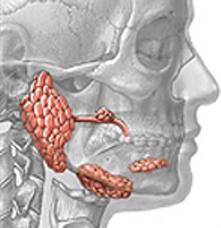
If the blockage persists long enough, it may lead to an infection of the gland itself (sialadenitis). Read more »
*This blog post was originally published at Fauquier ENT Blog*
April 17th, 2011 by Linda Burke-Galloway, M.D. in True Stories
No Comments »

 Olympic winner and motivational speaker, Jim Stovall once said “Integrity is doing the right thing, even when no one is looking.” In September 2009, I wrote about a blog about Carolyn Savage, a 40 year old woman with a poor obstetrical history. Savage married her college sweetheart and had an uncomplicated first pregnancy. However, her second child was born prematurely. She had 4 subsequent miscarriages and ten years later she became pregnant through in-vitro fertilization (IVF). Because the Savages wanted a large family, they tried IVF again. Unfortunately, Savage was impregnated with the wrong embryo. To their credit, everyone rose to the highest level of integrity. The infertility clinic informed the Savage family as soon as the mistake was discovered and then gave them the option of terminating the pregnancy or continuing it. The Savage family then had to inform the rightful parents of the embryo that were not expecting to have a baby any time soon but was now faced with that dilemma. Savage ultimately delivered the baby and then handed it over to its rightful parent, the Morrell family. Read more »
*This blog post was originally published at Dr. Linda Burke-Galloway*
April 17th, 2011 by Elaine Schattner, M.D. in Opinion
No Comments »

Recently Ed Silverman of Pharmalot considers the case of a ghost-written medical text’s mysterious disappearance. The 1999 book, “Recognition and Treatment of Psychiatric Disorders: A Psychopharmacology Handbook for Primary Care,” (reviewed in a psychiatry journal here) came under scrutiny last fall when it became evident that the physician “authors” didn’t just receive money from a relevant drug maker, SmithKline Beecham; they received an outline and text for the book from pharmaceutical company-hired writers.

poster for the X-Files
Now the book’s listing is gone from the website of STI (Scientific Therapeutic Information), the company that provided the authorship “help.” I tried to get a copy of the handbook on Amazon.com, where it’s currently out-of-stock. The book is listed in the Library of Congress on-line catalog: #99015420.
I’m reminded of clinical handbooks I used all the time when I was practicing hematology and oncology. At the hospital, I’d get freebie, small-sized chemo regimen primers that conveniently fit into my white coat pocket. In retrospect, perhaps I didn’t adequately check the authors’ credentials on those mini-book sources. It was too easy to take that information and keep it at hand, literally, especially in the times before we had constant Web access. Read more »
*This blog post was originally published at Medical Lessons*













