March 13th, 2011 by Medgadget in Better Health Network, Research
No Comments »

A team of French anesthesiologists has developed an automatic delivery system of propofol and remifentanil, which they recently tested in a multi-center trial involving 196 surgical patients. The researchers reported in Anesthesia & Analgesia that the system, which uses a Bispectral Index (BIS) monitor as a guide, performed better than manual administration:
We have developed a proportional-integral-derivative controller allowing the closed-loop coadministration of propofol and remifentanil, guided by a Bispectral Index (BIS) monitor, during induction and maintenance of general anesthesia. The controller was compared with manual target-controlled infusion.
The controller allows the automated delivery of propofol and remifentanil and maintains BIS values in predetermined boundaries during general anesthesia better than manual administration.
Abstract in Anesthesia & Analgesia: Closed-Loop Coadministration of Propofol and Remifentanil Guided by Bispectral Index: A Randomized Multicenter Study

*This blog post was originally published at Medgadget*
March 12th, 2011 by Toni Brayer, M.D. in Health Tips, Research
No Comments »

Several studies have shown that women have a higher mortality rate than men if they have a heart attack. A study published in the American Heart Journal helps to explain why. The researchers looked at data from 2,542 women who had a heart attack. Compared to men, the women were older, less likely to be white, and less likely to smoke. They also had more serious health conditions than the men. They had diabetes, high blood pressure (hypertension), congestive heart failure, and chronic obstructive pulmonary disease (COPD).
We’ve known for a long time that women are about 10 years older than men at the time of their first heart attack. The authors believe that the reason women are more likely to die is because of these other conditions that are present. Women in the study were also more likely to receive a blood transfusion and experience gastrointestinal bleeding, strokes, and vascular complications which lead to death.
They didn’t find any gender difference when they controlled for these other conditions. The number of diseased vessels were the same as was the severity of stenosis.
So what does this tell women? The guidelines for longevity and good health haven’t changed: Don’t smoke, control high blood pressure, and make sure your weight is healthy to prevent diabetes and other vascular problems. Stay active. Heart attacks can be prevented by good lifestyle choices.
*This blog post was originally published at EverythingHealth*
March 12th, 2011 by Emergiblog in Book Reviews, Opinion
3 Comments »

 Chocolate and vicodin? No, it’s not the latest Ben & Jerry’s flavor. “Chocolate & Vicodin: My Quest For Relief From the Headache That Wouldn’t Go Away” is the latest book by author, blogger, web designer, and busy woman Jennette Fulda.
I became acquainted with Jennette’s blog during BlogHer 2008, where I had purchased her first book, “Half-Assed: A Weight-Loss Memoir.” When she asked if I would like a copy of “Chocolate & Vicodin” to review, I jumped at the chance.
In “Half-Assed,” Jennette chronicled her journey to a near-200 pound weight loss. Just prior to that book’s release, she began another journey — one whose goal proved elusive. On February 17, 2008, Jennette went to bed with a headache. She still has the headache.
Name a diagnosis, she’s heard of it (brain tumor, dead twin in the brain, etc.) Name a treatment, she’s tried it (meds, massage, marijuana, mint chocolate chip ice cream, etc.) In “Chocolate & Vicodin,” Jennette is on a journey to find relief from chronic headache. Writing in a comfortable style, Jennette has a subtle humor that will have you laughing out loud. Trust me, her description of using marijuana “for medicinal purposes only” will have your beverage of choice coming out your nose! (Cover the book!)
But it will also choke you up. Under the humor, under the crazy e-mails from readers that suggest the crazy remedies, this is a serious story of chronic pain disrupting life. Persistent, excruciating pain and the work of coping with it takes a toll on Jennette, and when it becomes too much you find yourself sobbing with her. Read more »
*This blog post was originally published at Emergiblog*
March 12th, 2011 by Glenn Laffel, M.D., Ph.D. in Better Health Network, Research
1 Comment »

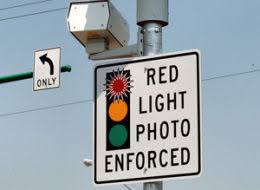 Most people don’t like them. Privacy advocates abhor them. But, really– how many things can you name that save lives AND generate revenues for cash-strapped local and state governments? Red-light cameras are one such item.
A recent study by the Insurance Institute for Highway Safety has shown that red-light cameras saved 159 lives over a four-year period in the 14 large U.S. cities where the study took place. The scientists claimed that more than 800 traffic fatalities would have been prevented during the course of the study if the cameras had been deployed in all large U.S. cities.
The scientists compared fatal car crash rates in U.S. cities with populations of at least 200,000 for two four-year periods: 1992 to 1996 and 2004 to 2008. They excluded cities that had already deployed red-light cameras in the earlier period, and cities that instituted cameras during the later period.
In the 14 cities that used red-light cameras during 2004 to 2008, the rate of fatal red-light running crashes was 35 percent lower than in 1992 to 1996. The crash rate did drop in cities that never deployed camera programs, but only by 14 percent.
Based on these data, the scientists determined that the rate of fatal red-light running crashes was 24 percent lower in cities with cameras in 2004 to 2008 than it would have been had they not deployed the cameras. In fact, the benefits of red-light cameras were actually larger than this. The rate of all fatal crashes at intersections with signals (not just red light running crashes) dropped by 14 percent in cities that deployed red-light cameras, whereas it increased by 2 percent in other cities. Read more »
*This blog post was originally published at Pizaazz*
March 11th, 2011 by John Mandrola, M.D. in News, Opinion
No Comments »

It’s heart wrenching when young athletes die of sudden cardiac death (SCD). Last week the death of Wes Leonard, a Michigan high school star athlete, was especially poignant since he collapsed right after making the game-winning shot. This sort of tragedy occurs about one hundred times each year in America. That’s a lot of sadness. The obvious question is: Could these deaths be prevented? Let’s start with what actually happens.
Most cases of sudden death in young people occur as a result of either hypertrophic cardiomyopathy (HCM), an abnormal thickening of heart muscle, or long QT syndrome (LQTS), a mostly inherited disease of the heart’s electrical system. Both HCM and LQTS predispose the heart to ventricular fibrillation — electrical chaos of the pumping chamber of the heart. The adrenaline surges of athletic competition increase the odds of this chaos. Unfortunately, like heart disease often does, both these ailments can strike without warning.
Sudden death is sad enough by itself, but what makes it even worse is that both these ailments are mostly detectable with two simple painless tests: The ECG and echocardiogram (heart ultrasound). Let’s get these kids ECGs and echos then. “Git ‘er dun,” you might say.
On the surface the solution seems simple: Implement universal cardiac screening of all young athletes. And you wouldn’t be alone in thinking this way. You could even boast the support of Dr. Manny Alvarez of Fox News and the entire country of Italy, where all athletes get ECGs and echos before competing. But America isn’t Italy, and things aren’t as simple as Fox News likes to suggest. Read more »
*This blog post was originally published at Dr John M*