February 3rd, 2011 by ChristopherChangMD in Health Tips, Research
No Comments »

 USA Today published a pretty accurate article regarding the rise of certain head and neck cancers with the increased popularity of oral sex and number of sexual partners.
The factor that creates this link is the human papillomavirus (HPV) which is associated with tonsil and tongue cancer. Alcohol and tobacco use is more highly linked with such oral cancers, but HPV does appear to be an independent risk factor.
A 2007 study in the New England Journal of Medicine found that younger people with head and neck cancers who tested positive for oral HPV infection were more likely to have had multiple vaginal and oral sex partners in their lifetime. Having six or more oral sex partners over a lifetime was associated with a 3.4 times higher risk for oropharyngeal cancer — cancers of the base of the tongue, back of the throat, or tonsils. Having 26 or more vaginal-sex partners tripled the risk. The association continued to increase as the number of partners in either category increased.
Of greater concern is that “French” kissing may also potentially be a mode of transmission.
The good news (if you’re a young non-smoker diagnosed with HPV-positive tumors) is that about 85 percent of non-smoking people with HPV-positive tumors survive. That number drops to 45 or 50 percent in people who smoke and are HPV-negative. Read more »
*This blog post was originally published at Fauquier ENT Blog*
February 2nd, 2011 by Mary Knudson in Health Tips, Opinion
No Comments »

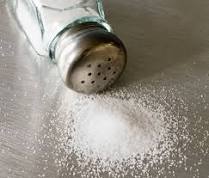 I confess to loving Campbell’s tomato bisque soup. I mix it with 1 percent-fat milk and it’s hot and delicious and comforting, but one of the worst food choices I could make because one cup contains more sodium than I should have in a day. Knowing this, I have already relegated it to an occasional treat. But by the end of this blog post I will do more.
We are overdosing on sodium and it is killing us. We need to cut the sodium we eat daily by more than half. The guidelines keep coming. The U.S. government has handed out dietary guidelines telling Americans who are over 50, all African Americans, people with high blood pressure, diabetes, or chronic kidney disease to have no more than 1,500 milligrams (mg) — or two thirds of a teaspoon — of sodium daily. That’s the majority of us — 69 percent. Five years ago the government said that this group would benefit from the lower sodium and now it made this its recommendation. The other 31 percent of the country can have up to 2,300 mg a day, say the guidelines from the U.S. Department of Agriculture (USDA) and the U.S. Department of Health and Human Services (HHS).
Or should they? The American Heart Association (AHA) recommends that all Americans lower sodium to less than 1,500 mg a day. Excessive sodium, mostly found in salt, is bad for us because it causes high blood pressure which often leads to heart disease, stroke, and kidney disease and can also cause gastric problems. People with heart failure are taught to restrict salt because water follows salt into the blood and causes swelling of the ankles, legs, and abdomen and lung congestion that makes it difficult to breathe.
I saw one recommendation by an individual on the Internet to just drink a lot of water to flush the sodium out of your body rather than worry about eating foods that have less sodium. BAD idea, especially for people with heart problems who need to restrict fluids to help prevent fluid accumulation in their bodies. The salt will draw the water to it.
But cutting our salt consumption by half is quite a tall order for an individual consumer because Americans have been conditioned from childhood to love salt and we on average consume 3,436 mg — nearly one and a half teaspoons — a day. Sodium is pervasive in our food supply. We get most of our sodium from processed foods and restaurant and takeout food, sometime in unexpected places. Read more »
*This blog post was originally published at HeartSense*
February 2nd, 2011 by Jennifer Shine Dyer, M.D. in Health Tips, Opinion
1 Comment »
 As a pediatric endocrinologist, I am on the frontline of the childhood obesity epidemic. In fact, I am now seeing 100-pound two year olds and 150-pound three-year-old kids in my clinic and I am concerned. The obesity epidemic is perpetuated by a processed food-culture that lacks healthier local whole foods.
Diets dominated by processed foods (refined carbohydrates with high fat- and/or high-sugar content and artificial ingredients) over whole foods (fruits, vegetables, whole grains) spur more obesity and diabetes, and have even been shown to negatively change gene expression of the offspring during pregnancy. All-processed ingredients reflect the balance of desirable factors in the modern way of life such as shelf life (long), taste (sweet), texture (fat) convenience (high), and price (low) — all profitable, all less nutritious, and all with a mass-marketed, generic, “cultureless” appeal that reduces emphasis on local cultures and flavors.
The recent rise of social networking is testament to the fact that people are hungry to connect and yearn to be culturally inspired. Culture (art, food, music) deeply connects people and transcends time, politics, and poverty because it is the language of being human — and something that never changes. Medical research as well as the positive embracing of First Lady’s “Let’s Move” campaign demonstrates an open mind to the idea of a healthier culture and readiness for change. In fact, many of the families that I meet in my clinic are interested in considering whole-food choices, but lack knowledge and guidance.
Food-culture change offers the best hope for transforming obesity and what Americans eat. Oprah’s recent vegan-whole-food-challenge show on February 1st is a step in the right direction and will help to propel the emerging whole-foods movement. Columbus, Ohio is emerging as a center for local whole-foods activism and food-culture change. Just in 2010, the Mid-Ohio Regional Planning Commission released the Central Ohio Local Food Assessment and Plan — the first plan of its kind in the nation — and received an $885 million US. Department of Housing and Urban Development (HUD) grant to create an urban foodscape in one of Columbus’ most blighted neighborhoods. Read more »
February 2nd, 2011 by PJSkerrett in Book Reviews, Health Tips
No Comments »

 There isn’t much new in the latest iteration of the “Dietary Guidelines for Americans.” Three years in the making, the 2010 guidelines (released a tad late, on January 31, 2011) offer the usual advice about eating less of the bad stuff (salt; saturated fat, trans fats, and cholesterol; and refined grains) and more of the good stuff (fruits and vegetables; whole grains; seafood, beans, and other lean protein; and unsaturated fats). I’ve listed the 23 main recommendations below. You can also find them on the “Dietary Guidelines” website.
The guidelines do break some new ground. They state loudly and clearly that overweight and obesity are a leading nutrition problem in the United States, and that a healthy diet can help people achieve a healthy weight. They also ratchet down sodium intake to 1,500 milligrams per day (about two-thirds of a teaspoon of salt) for African Americans and people with high blood pressure or risk factors for it, such as kidney disease or diabetes. But the guidelines also leave the recommendation for sodium at 2,300 milligrams a day for everyone else, a move that the American Heart Association and others call “a step backward.”
Vague language spoils the message
One big problem with the guidelines is that they continue to use the same nebulous language that has made previous versions poor road maps for the average person wanting to adopt a healthier diet.
Here’s an example: The new guidelines urge Americans to eat less “solid fat.” What, exactly, does that mean — stop spooning up lard or Crisco? No. Solid fat is a catchphrase for red meat, butter, cheese, ice cream, and other full-fat dairy foods. But the guidelines can’t say that, since they are partly created by the U.S. Department of Agriculture USDA), the agency charged with promoting the products of American farmers and ranchers, which includes red meat and dairy products. “Added sugars” is another circumlocution, a stand-in for sugar-sweetened sodas, many breakfast cereals, and other foods that provide huge doses of sugar and few, or no, nutrients. Read more »
*This blog post was originally published at Harvard Health Blog*
February 2nd, 2011 by Edwin Leap, M.D. in Better Health Network, Opinion
No Comments »

My partners and I have long struggled with the lack of specialty back-up at our hospital. Semi-rural hospitals, out of the way facilities, just can’t always attract specialists. So, we’re happy to have cardiologists every night, but understand that we only have an ENT every third night. We’re thankful to have neurologists, even if they don’t admit anyone. We’re glad to have radiologists, even if they don’t read plain films after 5PM on weekdays.
Still, I continue to scratch my head about why only three of seven community pediatricians take call, such that family physicians have to admit their patients. I was bumfuzzled that our neurologists were previously going to require us to use telemedicine for stroke evaluation when their offices were close by the hospital. (In the same year they were called in roughly three times per neurologist for urgent stroke evaluation.) That problem was resolved, thank goodness.
Now, I find that the problem has returned and grown. We will, very soon, have no ophthalmologist on call, despite the fact that we have three in the community and that they are contacted with remarkable rarity to deal with on-call emergencies. Soon, we will have no neurologist on the weekend. And the pediatric problem remains.
Of course, I’m using my local experience to highlight something that isn’t a local problem at all. It’s a national problem. All over America, specialists are relinquishing their hospital priveleges and staying in the office. Proceduralists are opening surgery centers that are free from the burdens of indigent care. Primary care physicians are allowing hospitalists to do all of their admissions.
In the process, not only are patients losing out, but referral centers are being absolutely overwhelmed. The cities and counties that lie around teaching hospitals are sending steady streams of patients, since they have fewer and fewer specialists. Those referral and teaching centers want patients, but they can’t take all of the non-paying patients, all of the complicated, or even all of the mundane patients with no local coverage. Those facilities, for all their shiny billboards and “center of excellence” marketing, will collapse. Read more »
*This blog post was originally published at edwinleap.com*


 USA Today published a pretty accurate article regarding the rise of certain head and neck cancers with the increased popularity of oral sex and number of sexual partners.









