February 2nd, 2011 by Harriet Hall, M.D. in Book Reviews, Opinion
1 Comment »

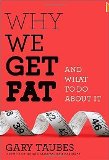 Journalist Gary Taubes created a stir in 2007 with his impressive but daunting 640-page tome Good Calories, Bad Calories. Now he has written a shorter, more accessible book Why We Get Fat: And What to Do About It to take his message to a wider audience. His basic thesis is that:
– The calories-in/calories-out model is wrong.
– Carbohydrates are the cause of obesity and are also important causes of heart disease, type 2 diabetes, cancer, Alzheimer’s, and most of the so-called diseases of civilization.
– A low-fat diet is not healthy.
– A low-carb diet is essential both for weight loss and for health.
– Dieters can satisfy their hunger pangs and eat as much as they want and still lose weight as long as they restrict carbohydrates.
He supports his thesis with data from the scientific literature and with persuasive theoretical arguments about insulin, blood sugar levels, glycemic index, insulin resistance, fat storage, inflammation, the metabolic syndrome, and other details of metabolism. Many readers will come away convinced that all we need to do to eliminate obesity, heart disease and many other diseases is to get people to limit carbohydrates in their diet. I’m not convinced, because I can see some flaws in his reasoning. Read more »
*This blog post was originally published at Science-Based Medicine*
February 1st, 2011 by DavedeBronkart in Better Health Network, Opinion
No Comments »

I have a Google alert for “e-patient,” and sometimes I’m surprised what it catches. [Recently] it was this:
3 Reasons Steve Jobs Will Be The Ultimate e-Patient
Steve Jobs’ medical leave sets the stage for the upcoming revolution in the production and delivery of medical information at time of diagnosis. 3 things you need to know.
So I’m thinking: “Oh, wow: Is the term ‘e-patient’ going mainstream?” That would be a hoot, because indeed the Society for Participatory Medicine is engaged in spreading the word.
*This blog post was originally published at e-Patients.net*
February 1st, 2011 by John Mandrola, M.D. in Health Tips, Opinion
No Comments »
I asked my age-matched colleague the other day: “Do you think we’ll know when it happens to us?” He responded: “I know. I worry about that, too…a lot. I’m getting out before it happens to me.”
We were talking about our fears of being labeled as an “old” doctor. Not just old in years — our children and bifocals remind of us of that — but old in our mindset. We fear becoming one of the dinosaur doctors who get known for their excessive attachment to old dogma, premature dismissiveness of novel new approaches, fear of social media, and of course the tell-tail (pathognomonic) sign of agedness, ranting mindlessly in front of Fox news about healthcare reform in the doctor’s lounge.
This transition can happen fast. One moment a doctor might be in their sweet spot — a period of time where the nearness of training meets with the treasure of experience in a capable mind, body and spirit. Sadly, and obviously this period is finite. It’s limited by aging. Getting older happens to all of us, but the pertinent fact for medical practice is that, like all humans, doctors age at different velocities. Read more »
*This blog post was originally published at Dr John M*
February 1st, 2011 by RyanDuBosar in News, Research
No Comments »

Real total direct medical costs of cardiovascular disease (CVD) could triple, from $273 billion to $818 billion (in 2008 dollars) by 2030. Real indirect costs, such as lost productivity among the employed and unpaid household work, could increase 61 percent, from $172 billion in 2010 to $276 billion.
Results appeared in a policy statement of the American Heart Association.
CVD is the leading cause of mortality and accounts for 17 percent of national health expenditures, according to the statement. How much so? U.S. medical expenditures rose from 10 percent of the Gross Domestic Product in 1985 to 15 percent in 2008. In the past decade, the medical costs of CVD have grown at an average annual rate of 6 percent and have accounted for about 15 percent of the increase in medical spending.
The spending is associated with greater life expectancy, “suggesting that this spending was of value,” the authors wrote. But as the population ages, direct treatment costs are expected to increase substantially, even though lost productivity won’t, since seniors are employed at lower rates.
If current prevention and treatment rates remain steady, CVD prevalence will increase by about 10 percent over the next 20 years. The estimate reflects an aging population, and one that is increasingly Hispanic. To prepare for future cardiovascular care needs, the American Heart Association projected future costs. By 2030, 40.5 percent (116 million) of the population is projected to have some form of CVD. Read more »
*This blog post was originally published at ACP Internist*
February 1st, 2011 by DrWes in Better Health Network, Opinion
No Comments »

 It came as a Twitter “follow” from @coldfeet65, a self-proclaimed “Nurse Practitioner Hospitalist.” I had never heard this term before. Does it mean a nurse practitioner who cares for hospitalists? Or is it a hospitalist who is a nurse practitioner? Or maybe it’s a nurse practitioner who helps hospitalists? (Honestly, I think I know which one she means, but you get my point.)
Perhaps this is a prescient glimpse to healthcare of the future, where our more typical nurse and doctor labels are supplanted by more and more monikers that serve to confuse, rather than clarify, each of our roles in healthcare delivery. As specialists in cardiology, we’ve seen a similar trend with cardiology hospitalists. But we should be clear what this means to the patients and doctors going forward.
No doubt most people in America still expect to see a doctor when they come to the hospital. Increasingly, it appears that might not be the case. Your doctor might be a robot while a nurse (aka, nurse practitioner) will be the one providing the hands-on care in the inpatient setting. Is that a good thing? Honestly, I’m not sure.
No one argues that the costs in healthcare need to be cut. No doubt the central authority has deemed that doctor salaries will be a big part of that effort. Already, 20 states have cut physician Medicaid payments for fiscal year 2010 and, given the current economic pressure on our states both now and after they start feeling the financial impact of the “Affordable” Care Act in 2019, this trend is not likely to improve anytime soon. As a result, we are seeing that the world is full of “creative solutions” to our healthcare access crisis and the evolution to “nurse practitioner hospitalists” might be one of these. Read more »
*This blog post was originally published at Dr. Wes*












