December 22nd, 2010 by John Mandrola, M.D. in Better Health Network, Health Tips, News, Opinion, Research
No Comments »
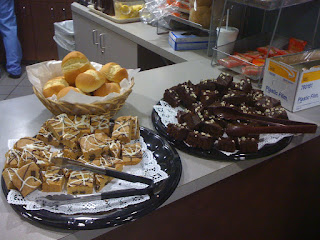 It’s the time of the year when dietary temptations lurk around every corner of the hospital. And since completely abstaining is not always possible, the best antidote for this holiday deluge of inflammation is obvious: Exercise.
No doubt, within the boundaries of common sense, all exercise is good. But is there a best time of day to exercise?
Tara Parker-Pope’s New York Times piece suggests that the most “productive” time of day to exercise is before breakfast. In concisely reviewing a Belgian exercise physiology study, Ms. Parker-Pope points out that, in blunting the undesirable effects of a high fat and sugar diet, pre-breakast (fasting) exercise was metabolically more efficient than was exercise later in the day. That’s really good news for the overweight middle-agers who consistently say: “I really don’t eat very much. I must have a slow metabolism.”
Scientific studies are one thing, but are they validated in the court of real life? Read more »
*This blog post was originally published at Dr John M*
December 22nd, 2010 by DrRob in Better Health Network, Opinion, True Stories
1 Comment »

 “I need you to do me a favor,” my nurse asked me at the end of our day on Friday.
“Sure,” I answered. “What do you want?”
“Please have a better week next week,” she said with a pained expression. “I don’t think I can handle another one like this week.”
It was a bad week. There was cancer, there was anxiety, there were family fights, there were very sick children. It’s not that it’s unusual to see tough things (I am a doctor), but the grouping of them had all of us trudging home drained of energy. Spent.
I think this is one of the toughest thing about being a doctor (and nurse, by my nurse’s question): The spending of emotional reserves. I’m not physically active at work, yet I come home tired. I don’t have to be busy to feel drained. It’s not the patients’ fault that I feel tired. They are coming to me to get the service I offer to them, and I think I do that job well. The real problem is in me. The real problem is that I care. Read more »
*This blog post was originally published at Musings of a Distractible Mind*
December 21st, 2010 by Michael Sevilla, M.D. in News, Opinion
No Comments »

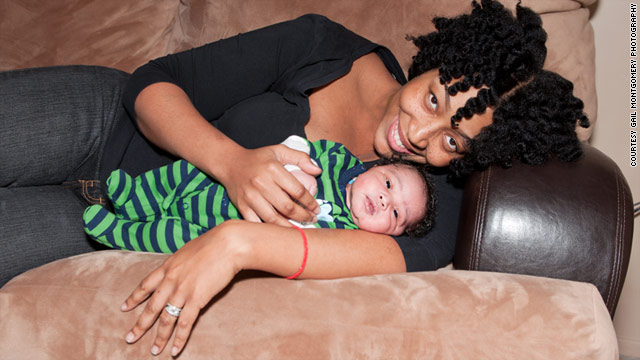 Every once I awhile a story catches my eye as I scan the news websites. There was one this morning on CNN with this catchy title: “Mom Defies Doctor, Has Baby Her Way.” The article describes a story where a mother was going to have her fourth baby. Her previous three were born via C-section. Mom did not want another C-section done, and “defied” her doctor’s order for the procedure. “You’re being irresponsible,” the patient was told.
The middle of the article talks about the current thinking and statement of the American College of Obstetrics and Gynecology saying that “it’s reasonable to consider allowing women who’ve had two C-sections to try to have a vaginal delivery.” Of course, there’s risks with proceeding with a vaginal delivery and risks of another C-section.
What’s always interesting to me are the comments following the article. I applaud the physicians who are fighting back the anti-physician sentiment and those who are pushing (no pun intended) the only home birth agenda.
In the article, this person is being held up as a hero — as someone who defied the paternalistic medical establishment and did it her way. Good for her — or is it? What if that 0.4-0.9 percent possibility of severe complication occurred and there was a problem with mom and/or the baby? What would happen then? Read more »
*This blog post was originally published at Doctor Anonymous*
December 21st, 2010 by DavedeBronkart in Better Health Network, Opinion
2 Comments »

 If you don’t truly understand how draining it can be to live with chronic illness, including chronic pain, go read The Spoon Theory right now. In five minutes it forever changed my own awareness of my wife’s arthritis and bone pain.
On Twitter I saw “spoonies” raving about this months ago, but I finally took time to read it: 2,100 words and worth every second. Also, on Twitter follow @bydls – “But you don’t look sick!” – and explore their smart website, where they’re wisely selling posters of the story for doctors’ waiting rooms, and everything else imaginable in modern outreach through social media.
These are smart people, and this is a powerful piece of writing.
*This blog post was originally published at e-Patients.net*
December 21st, 2010 by BarbaraFicarraRN in Better Health Network, Health Tips, Research
No Comments »

 Guest post submitted by MD Anderson Cancer Center*
When you raise your glass at this year’s holiday toast, choose your beverage wisely. Research shows that drinking even a small amount of alcohol increases your chances of developing cancer, including oral cancer, breast cancer and liver cancer.
Yet, other research shows that drinking small amounts of alcohol may protect the body against coronary heart disease and type 2 diabetes. Some evidence even suggests that red wine may help prevent cancer.
Researchers are still trying to learn more about how alcohol links to cancer. But, convincing evidence does support the fact that heavy drinking damages cells and contributes to cancer development.
Confused? Use our beverage guide to choose a drink with the lowest health risk, and learn your recommended drink limit and what alcoholic drinks to avoid. Read more »
*This blog post was originally published at Health in 30*


 It’s the time of the year when dietary temptations lurk around every corner of the hospital. And since completely abstaining is not always possible, the best antidote for this holiday deluge of inflammation is obvious: Exercise.