December 16th, 2010 by DrWes in Better Health Network, News, Opinion
No Comments »

In a desperate attempt to reach an even number it seems, hospital defibrillators were added to ECRI.org’s “Top 10 Health Technology Hazards” list of devices that threaten to kill or maim patients:
The Top 10 Health Technology Hazards list is updated each year based upon the prevalence and severity of incidents reported to ECRI Institute by healthcare facilities nationwide; information found in the Institute’s medical device problem reporting databases; and the judgment, analysis, and expertise of the organization’s multidisciplinary staff. Many of the items on this year’s list are well-recognized hazards with numerous reported incidents over the years.
If one honestly looks at the number of lives saved versus the number of deaths from defibrillators, I wonder how many of this highly-esteemed group of “multidisciplinary staff” of the ECRI might reconsider. Clearly, most of them have never been in a code situation.
– WesMusings of a cardiologist and cardiac electrophysiologist.
Hat tip: Wall Street Journal Health Blog
*This blog post was originally published at Dr. Wes*
December 16th, 2010 by Berci in Better Health Network, Health Tips, News
No Comments »

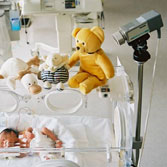 There are more and more premature babies, and the situation for their parents is dramatic. They would love to be with their newborn 24 hours a day, but in most cases they obviously can’t.
At the Dutch UMC Ultrecht, they’ve launched a project under the name Telebaby, in which cameras were installed at the incubators and parents can watch their child live 24 hours a day — even through a mobile device.
The system is password protected, of course, so only the parents can access the specific video channels. Isn’t it great? A very human but not that expensive idea — a really Dutch approach.
*This blog post was originally published at ScienceRoll*
December 16th, 2010 by Harriet Hall, M.D. in Better Health Network, Humor, Medical Art, Opinion, Research
No Comments »

In 1996, Alan Sokal got a bogus paper published in the journal Social Text. It was a parody full of meaningless statements in the jargon of postmodern philosophy and cultural studies. The editors couldn’t tell the difference between Sokal’s nonsense and the usual articles they publish.
Now a British professor of medical education, Dr. John McLachlan, has perpetrated a similar hoax on supporters of so-called “integrative” medicine. He reports his prank in an article in the British Medical Journal (BMJ).
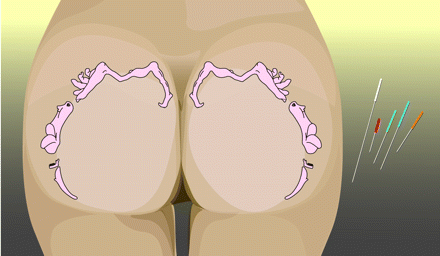
After receiving an invitation to submit papers to an International Conference on Integrative Medicine, he invented a ridiculous story about a new form of reflexology and acupuncture with points represented by a homunculus map on the buttocks. He claimed to have done studies showing that
responses are stronger and of more therapeutic value than those of auricular or conventional reflexology. In some cases, the map can be used for diagnostic purposes.
The organizers asked him to submit an abstract. He did. In the abstract he said he would present only case histories, testimonies, and positive outcomes, since his methods did not lend themselves to randomized controlled trials; and he suggested that his “novel paradigm” might lead to automatic rejection by closed minds. Read more »
*This blog post was originally published at Science-Based Medicine*
December 16th, 2010 by Medgadget in Better Health Network, Health Tips, News, Research
No Comments »

 Imagine a water bottle that knows how hard and how far you are running, how much you’re drinking, what’s the outside temperature, and, based on all these variables, the device calculates when you need to have a drink. Cambridge Consultants have developed the i-dration bottle that does just that.
From the press release:
Intelligent sensors in the i-dration bottle can be used to monitor the external temperature, drinking frequency and quantity, and this data is then sent via Bluetooth to its user’s smartphone. The phone’s inbuilt accelerometer and gyroscope can measure exercise levels, and by “fusing” the data from a heart rate chest-band and information pre-entered using the smartphone interface (such as height, age and weight), the application can perform an assessment of a user’s hydration levels. The i-dration bottle then responds accordingly by flashing a blue light if the athlete needs to drink more. Read more »
*This blog post was originally published at Medgadget*
December 15th, 2010 by Linda Burke-Galloway, M.D. in Better Health Network, Health Tips, News, Research
No Comments »


A recent medical study reported a fairly unique finding: Pregnant women who snore frequently are at an increased risk for developing gestational diabetes.
The Associated Professional Sleep Societies (TAPSS) reported that 24 percent of habitual snorers had an official diagnosis of gestational diabetes as opposed to 17 percent of nonsnorers. As gestational diabetes affects 4 to 6 percent of all pregnant women, this study is significant according to Louise O’Brien, Ph.D. who is associated with the department of neurology at the University of Michigan in Ann Arbor.
Snoring is nothing new among women but it becomes more pronounced with the onset of menopause or weight gain. Approximately one-third of all women in the U.S. are obese and at risk for snoring and sleep apnea. Being overweight can cause bulky throat tissue which then physically blocks air flow.
Up until the publication of the University of Michigan study, the health risks associated with snoring included greater than ten seconds of interruptions of breathing, frequent waking from sleep, potential strain on the heart which then results in hypertension, increased risk of heart attacks, and stroke. Now the tide has changed. Read more »
*This blog post was originally published at Dr. Linda Burke-Galloway*













