November 14th, 2010 by Edwin Leap, M.D. in Better Health Network, Opinion, True Stories
No Comments »

Here is a talk I gave last week to our hospital auxiliary association, mostly made up of retired volunteers. They give us so much, and this is my tribute to them.
Capacity, utility and volunteers
Thank you for letting me speak to you tonight. It is an honor. I have today been at two different ends of the medical world . Today at lunch, I spoke to a Christian Medical Student’s association at USC in Columbia, SC. And now, I am honored to speak to you, who do so much to keep the hospital functioning by your gift of volunteerism.
Tonight I want to talk about capacity and functionality. About utility and usefulness. In preparing to do so, I began to think about how I became the way I am, and my mind wandered to ancestry. I suppose that ancestry has much to do with who we are, though I doubt it is the sole determinant. Read more »
*This blog post was originally published at edwinleap.com*
November 14th, 2010 by Davis Liu, M.D. in Better Health Network, News, Opinion, Research
No Comments »

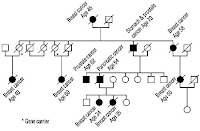 The Associated Press ran a provocatively-titled piece recently, “Family health history: ‘best kept secret’ in care”, which noted how a geneticist at the Cleveland Clinic discovered that asking about family members and their history of breast, colon, or prostate cancer was better than simply doing genetic blood testing.
Surprising? Hardly. This is what all medical students are taught. Talk to the patient. Get a detailed history and physical. Lab work and imaging studies are merely tools that can help support or refute a diagnosis. They provide a piece of the puzzle, but always must be considered in the full context of a patient. They alone do not provide the truth. Read more »
*This blog post was originally published at Saving Money and Surviving the Healthcare Crisis*
November 13th, 2010 by EvanFalchukJD in Better Health Network, Health Tips, Research
No Comments »

There are plenty of “survivalists” out there who stock their basements with canned goods, getting ready for some unexpected (and unlikely) apocalypse. Meanwhile there are things that are much more likely to happen to you — like getting sick — which many of us don’t prepare for at all. So to help you get started, here are five important tips on how you can become a healthcare survivalist:
1. Take care of your chronic conditions. Whether it’s high blood pressure, diabetes, high cholesterol, depression, asthma or any other kind of ailment, do what it takes to manage your own care. Take your medications and follow your doctors’ instructions. Why? Because if you don’t, your condition can get worse and lead to even more serious problems. As much of a pain as it may (literally) be, there’s a reason the old saying “an ounce of prevention” still resonates today — because it’s true.
2. Live a healthy lifestyle. Everyone gives you this advice, but with studies showing that 42% of Americans will be obese by 2050, it doesn’t seem to be getting through. Denial can wonderfully appealing; but when it comes to your health, it can also kill you. Stop smoking, exercise, and eat right. You may find that your employer has programs in place that will help you do all of those things, and many of them work. Why not give one of them a try? You can’t improve your life all at once, but you can start. Your life will be happier if you keep yourself healthy. So rather than whistling past the graveyard, jog past it. Read more »
*This blog post was originally published at See First Blog*
November 13th, 2010 by Shadowfax in Better Health Network, True Stories
No Comments »

 I wish I could say that every patient encounter worked out well, that all my patients went home happy and satisfied. It would be nice, but unfortunately that is not true at all.
There are many patients who present with unrealistic expectations or an agenda which is non-therapeutic, and I am relatively straightforward and unapologetic about correcting patient’s misconceptions about the care that is or is not appropriate in the ED. Unsurprisingly, this often though not always involves narcotic medications.
Which is not to say that I am a jerk. I try to be compassionate, and I try to find alternative solutions, and I have been told that I can turn away a drug seeker more nicely than any other doctor in the department. But when it is time to say “no,” I say “no” firmly and without evasions or excuses. People don’t like to hear that, and all the more so in this “the consumer is king” environment of customer-service culture we foster in the medical industry these days.
So when I do say “no,” as nice as I try to be, some people get upset. Sometimes they escalate. They hurl insults, spit, throw themselves on the floor and throw a fit or feign unconsciousness. Read more »
*This blog post was originally published at Movin' Meat*
November 13th, 2010 by KerriSparling in Better Health Network, True Stories
No Comments »

 “Brrrrr…it’s a little chilly outside today,” I said to BSparl as I tucked her blanket snug around her wiggly little self in the car seat. She waved at me and showed me her sock.
“Yes, that’s a nice sock, birdy. Okay, let’s get out of here and get you into the car so we can go home!”
The automatic doors parted and a brisk gust of wind came and skipped down my collar. With the baby’s car seat safely tucked into the belly of the carriage, I ventured out to find my car in the massive parking lot.
“Ha ha, where did Mommy leave the car?” I said out loud, walking up and down the parking lot aisles and pressing the alarm on my keys. Nothing. No flashing lights, no subtle little “beep” noise from my Honda. Nothing but a sea of cars and I had no idea which one was mine.
“Am I getting old?” I asked BSparl. “Mmmmmm!” she proclaimed, raising her teething toy into the air.
I walked for several minutes, combing the lot for my car. And the wind kept whipping, only this time it felt good because it kept whisking the sweat off the nape of my neck. I felt dizzy. Read more »
*This blog post was originally published at Six Until Me.*












