A Sure Sign Of Diabetes

You know you’re a diabetic when …

… a few blood stains on the computer power button are almost expected.
*This blog post was originally published at Six Until Me.*


You know you’re a diabetic when …
… a few blood stains on the computer power button are almost expected.
*This blog post was originally published at Six Until Me.*

I took care of an elderly man recently. He’d been dealing with multiple medical problems for almost 30 years. Despite being in some very significant pain, he still made eye contact, still said “please” and “thank you.”
He wasn’t faking the pain. He was very stoic, but I could tell he was hurting. That tight-lipped grimace, the tachycardia, not moving a muscle unless it was absolutely necessary. Still, manners prevailed.
My colleagues and I went above and beyond for him and his family. There’s just something about being polite to others that makes those others want to help you and help you and help you some more.
I’m not saying that we don’t want to help those that aren’t overly polite. It was just nice to be treated, well, so nicely. I wouldn’t expect everyone in severe pain to maintain such decorum. Every once in awhile you just click with a patient and it makes being a nurse so enjoyable. Read more »
*This blog post was originally published at code blog - tales of a nurse*

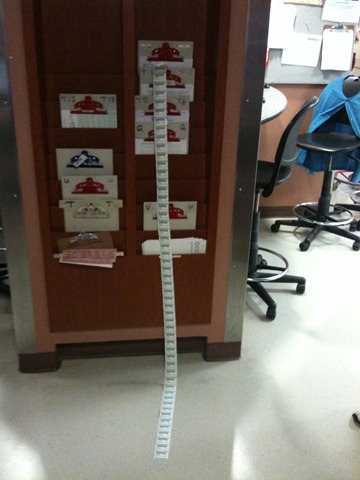
It’s going to take a while to draw all those labs. And the patient will probably need a transfusion at the end of it.
(Reportedly the printer engaged itself in a loop and printed out blood culture label sets 25 times, so don’t panic).
*This blog post was originally published at GruntDoc*
 Unless you’ve been living on another planet, you know that in mid-November, the US Preventive Services Task Force released new recommendations on screening mammography, in which they recommended against routine mammogram screening in women under age 50, and recommended that mammograms now be every two years in women ages 50-74.
What you may not have heard is that the Task Force has acknowledged that the mammogram guidelines were poorly worded, and have revised their original statement to clarify their intentions, mostly by removing those two little words “recommends against”. Read more »
*This blog post was originally published at The Blog that Ate Manhattan*


The How I Look Journal was designed for middle school girls in 2007 (revised in 2009), and has been used primarily in group settings, although girls can use it by themselves. Counselors and therapists tend to use the topics as a basis for discussions and teachers prefer using the journal in lesson formats. There is also a companion journal (2009) for mothers called “How I Look at my Daughter, Her World, and Her Future.”
Given I had the week off I decided to review the copies I was sent and am delighted to say that my teenage daughters and I thought the journals are a great idea. The journal prompts help girls identify and celebrate their inner strengths and attributes, manage stress, accept their bodies and dream!
I found myself thinking that the self-talk section was very important as parents cannot hear what teens are saying to themselves in their own heads. We would like to believe that our kids are affirming their healthy and positive decisions and characteristics, but the reality may be that they are using “bully talk” to themselves, saying things like “I am dumb, ugly inconsiderate, mean …” These negative statements undermine their self-confidence, but are difficult to change, especially if they are reinforced by comments parents (inadvertently) make when annoyed.. Read more »
This post, Teen Girls And The “How I Look Journal”, was originally published on Healthine.com by Nancy Brown, Ph.D..
It’s no secret that doctors are disappointed with the way that the U.S. healthcare system is evolving. Most feel helpless about improving their work conditions or solving technical problems in patient care. Fortunately one young medical student was undeterred by the mountain of disappointment carried by his senior clinician mentors…
I am proud to be a part of the American Resident Project an initiative that promotes the writing of medical students residents and new physicians as they explore ideas for transforming American health care delivery. I recently had the opportunity to interview three of the writing fellows about how to…
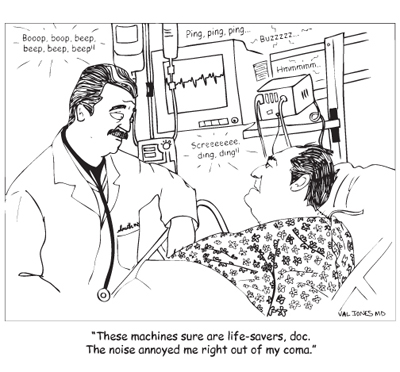
Book Review: Is Empathy Learned By Faking It Till It’s Real?
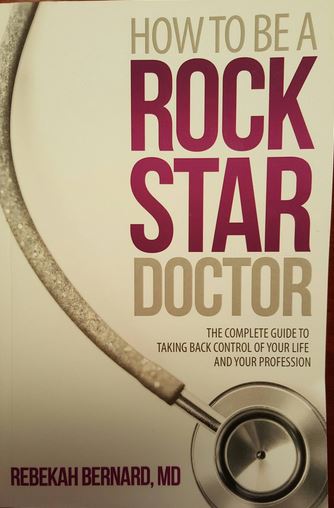
I m often asked to do book reviews on my blog and I rarely agree to them. This is because it takes me a long time to read a book and then if I don t enjoy it I figure the author would rather me remain silent than publish my…
The Spirit Of The Place: Samuel Shem’s New Book May Depress You

When I was in medical school I read Samuel Shem s House Of God as a right of passage. At the time I found it to be a cynical yet eerily accurate portrayal of the underbelly of academic medicine. I gained comfort from its gallows humor and it made me…
Eat To Save Your Life: Another Half-True Diet Book

I am hesitant to review diet books because they are so often a tangled mess of fact and fiction. Teasing out their truth from falsehood is about as exhausting as delousing a long-haired elementary school student. However after being approached by the authors’ PR agency with the promise of a…