September 20th, 2009 by Bongi in Better Health Network, True Stories
No Comments »

 Recently a plastic surgeon I know was called out to fix a lacerated ear. It is the domain of plastic surgeons pretty much all over the world. But in my neck of the woods it may be tricky to extricate a plastic surgeon from his warm bed on a cold night. Let me also say that back in those days all registrars of all disciplines earned the same overtime each month. Even opthalmologists and dermatologists and pathologists earned exactly the same overtime as surgeons. They weren’t complaining. We, however, were.
As calls went it was fairly standard for us general surgeons. I had found a moment to empty my bladder which was a nice change, but other than that one reprise there had not been a moment to even realise that I hadn’t eaten all day. At least there hadn’t been any lethal disasters…yet.
Somewhere in the madness the house doctor asked me to evaluate a patient with a lacerated ear. He had had half his ear detached in a bar brawl. It was hanging precariously from what still connected it to the body. Now at this time in that hospital there was a policy that once a patient had been referred by a casualty officer they would not take the patient back. If the referral was erroneous then we would be required to refer further as appropriate. So when I heard my house doctor had accepted the patient I was not impressed.
“You suture his ear.” I told him. Poor guy, he hadn’t studied at our university and therefore wasn’t used to our sink or swim approach to medical training. He freaked. My level of being impressed dropped even more. I’d have to phone the plastic surgeon myself.
The plastic surgeon was not keen. By that I mean he basically said he was not coming out. By the tone of his voice I assumed he was getting a back rub from his significant other under the warm duvet on his bed. Who could blame him. If you’re not in the trenches why would you want to go into them, even for a short while to suture an ear.
“Anyone can suture an ear. you’re there now. I’d have to come in to the hospital. You just do it.” I considered telling him that I’m at the hospital because I have so much bloody work to do and that he is drawing the same overtime that I am and that it is his bloody job and not mine. But I knew that at that stage, even if I walked on water and then turned it into wine he was not going to come out. I hung the phone up. my house doctor looked at me questioningly. He had already told me he couldn’t do it. But he was not from our neck of the woods. I needed a student. One walked past, unsuspectingly.
“You! have you ever sutured an ear back on?”
“No.”
“When I ask this same question tomorrow, you will answer yes. Come with me.”
He did quite well.

*This blog post was originally published at other things amanzi*
September 20th, 2009 by Medgadget in Better Health Network, News
No Comments »


Here is a project from the folks at the Department of Mechanical Engineering at Imperial College London, and its Mechatronics in Medicine Laboratory, who are bent on developing an “active robot designed to take blood samples from the ante-cubital fossa…”
The Bloodbot identifies the location of a suitable vein by pressing a probe against the surface tissue of the ante-cubital fossa and measuring the force on the probe. The difference in the characteristics of the tissue from its surroundings, in response to the applied force, indicates the presence of a vein.
Once a suitable vein has been found, it inserts a needle under force control. When the needle penetrates the vein (identified by its force/position profile), the control system prevents further insertion, thus avoiding overshooting the vein.
We think they need to combine this robot with VeinViewer for a more accurate, and probably spookier, experience.
The Bloodbot Project…
Flashbacks: VeinViewer Shipped!; First Hospital To Use The VeinViewer ; Video of VeinViewer; VeinViewer Off to Europe; Vein Contrast Enhancer
(hat tip: DVICE)
*This blog post was originally published at Medgadget*
September 19th, 2009 by Paul Auerbach, M.D. in Better Health Network, Health Tips
No Comments »

 This past month, I saw a couple of patients in the emergency department who suffered from gout. When I was a medical student at Duke in the early 1970s, we commonly encountered patients with this disease, because of epidemiological factors that clustered in the southeastern U.S. Today on the west coast, we don’t encounter it as commonly. However, for those persons who suffer from gout, it’s a big deal. An acute attack of gout, caused by uric acid crystal formation and the attendant inflammation and pain, can ruin a few days of activity, or even cause a trip to be terminated.
There are a few approaches to treating a person with an acute flare of gout. The current mainstays are administration of nonsteroidal antiinflammatory drugs (NSAIDs), such as naproxyn, or antiinflammatory drugs in the form of corticosteroids. Colchicine is less commonly used.
How does a person prevent gout? The basic tenet is to minimize uric acid production in the body, and/or to prevent its precipitation into crystals within the body’s tissues and fluids. There are risk factors associated with suffering from gout, so doing one’s best to mitigate these is the proper approach. Here are some of the commonly accepted risk factors:
1. Being obese or overweight
2. Eating purine-rich foods, although there is some controversy about this, since some researchers have identified certain purine-rich foods that, in their assessment, did not seem to be associated with an increased propensity to gout.
3. Drinking excessive quantities of alcohol. This has been recognized for centuries.
4. Elevated blood pressure
5. Lead poisoning. This is one of the reasons that we saw a certain form of gout, known as saturnine gout, when I was a medical student. Persons in the North Carolina region who manufactured moonshine whiskey using an apparatus (still) that included leaded radiators from cars suffered from gouty attacks.
6. Genetics – not much you can do about selecting your parents…
7. Kidney insufficiency or failure
8. Medication use that promotes increased uric acid in the bloodstream
9. Certain blood disorders, such as leukemia or lymphoma
10. Low thyroid function
There was recently a very interesting article that appeared in the Archives of Internal Medicine, entitled “Vitamin C Intake and the Risk of Gout in Men. A Prospective Study,” authored by Hyon K. Choi and colleagues (Arch Intern Med 2009;169(5):502-507). They sought to determine whether or not higher vitamin C intake significantly reduces serum uric acid levels, and therefore the risk of suffering from gout.
Adapted from the abstract to the article: We prospectively examined, from 1986 through 2006, the relation between vitamin C intake and risk of incidents of gout in 46,994 male participants with no history of gout at baseline. We used a supplementary questionnaire to ascertain the American College of Rheumatology criteria for gout. Vitamin C intake was assessed every 4 years through validated questionnaires. During the 20 years of follow-up, we documented 1317 confirmed incident cases of gout. Compared with men with vitamin C intake less than 250 milligrams per day (mg/d), the multivariate relative risk (RR) of gout was 0.83 for total vitamin C intake of 500 to 999 mg/d, 0.66 for 1000 to 1499 mg/d, and 0.55 for 1500 mg/d or greater.
The conclusion is that higher vitamin C intake is independently associated with a lower risk of gout. Supplemental vitamin C intake may be beneficial in the prevention of gout. This is, of course, only a single analysis, so warrants further investigation by others before the assumption can be completely made that this will bear out across a larger population. Vitamin C may not really do anything to prevent a “cold,” but perhaps it is useful to prevent gout.
This post, Gout Prevention And Vitamin C, was originally published on
Healthine.com by Paul Auerbach, M.D..
September 19th, 2009 by Joseph Scherger, M.D. in Better Health Network, Health Tips
No Comments »

I recently moved my work to the Palm Springs area of California. I am the Vice President for Primary Care at Eisenhower Medical Center in Rancho Mirage, California. My duties include starting a new primary care practice where I also work as a family physician. This week I developed a preventive medicine presentation I will be giving to groups of people, mostly seniors, in our area. I would like to share my key messages here.
Balance is the key to health in many ways. Our lifestyle choices play the major role in whether we are healthy or sick, outweighing our genetics and the bad luck of getting a disease for no apparent reason. There are four areas where lifestyle play a major role in our health. Do these four things and you are likely to be healthy:
Eat Right: We are what we eat, so what goes in our body is vital to our health. The mainstay of our nutrition should be vegetables and grains. We should avoid the saturated fats found in many animal meats and dairy, and the trans fats found in many fried foods and pastries. Eat healthy fats like those found in nuts and quality vegetable oils, such as canola and olive oil. We should avoid simple sugars that make us hungry and have protein at every meal (Nuts, low fat dairy, lean meats and fish). We should avoid excess salt. Do not eat many more than your body needs to maintain a healthy weight. See my other blogs since I write here about nutrition every month.
Be Active: Use it or lose it is a good rule for keeping our bodies healthy. Look for opportunities in your daily life to walk more, climb stairs and be active. Then, devote 5 of the of the 168 hours in a week to one or more physical activities of your choice. Being physically active is the best long term predictor of living a long and healthy life.
Sleep Well: We trained our children in how to sleep, but many of us forgot the lessons. Prepare for a good night’s sleep by winding down our daily activities, turn down the lights, and leave the problems of our day behind. Imagination is ok for adults to use to enter the world of sleep. As adults, 6 to 8 hours of refreshing sleep is usually enough to replenish our bodies.
Manage Stress: Stress can wear down even the healthiest body. Be aware of our stress levels at home and at work, and seek ways to reduce the stressors. Some of us thrive on a certain amount of stress, that is fine. We know when we are distressed because we are not at ease and not smiling as much. I like these three rules for handling stress: 1. Don’t sweat the small stuff, 2. Everything (just about) is small stuff, and 3. If you cannot fight, and you cannot flee, then flow.
Take a moment to reflect on these four “pillars” in your life and see what adjustments you can make to preserve your health.
*This blog post was originally published at eDocAmerica*
September 19th, 2009 by admin in Better Health Network, Health Tips
No Comments »
With news reports about the H1N1 flu all over the place, you may not think about the old “stomach flu” right now. Did you know that there really is no such thing as the stomach flu? If you have diarrhea or vomiting, it is usually not from influenza virus, but rather from another bug that got you. Often these bugs get us from not properly handling our food or from unsanitary conditions in our kitchens. Don’t go blaming the restaurant so quickly because studies show our homes are a breeding ground for bacteria that make us sick, too!
Top places germs reside
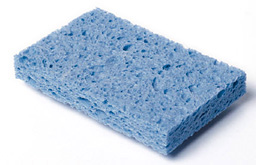
- The kitchen sponge and/or dishcloth is the number one place for nasty bugs to hang out. Replace your sponge every few weeks, or put it through the dishwasher so the heat can kill off some of the bacteria.
- The bottom of the sink is also very high in bacterial count. Just think about the conditions that germs love: Warm, moist environments. Your sink, sponges, and dishtowels are often wet and bacteria love it!
- Keyboards, computer mouse, remote controls, doorknobs, etc. I am guilty of this too: You are working on your computer and then you reach for a snack. There is a ton of bacteria on surfaces all over your office and home. Wash your hands every time you go to eat something. The toilet actually has less bacteria than many commonly touched surfaces around your office and home.
Tips to prevent getting sick
- WASH HANDS. I can’t emphasize this enough. Wash your hands before you go to prepare food or eat food. Wash your hands after you go to the bathroom. A good rule of thumb is to wash for at least 20 seconds using hot water and lots of soap. Use a hand sanitizer if you cannot always wash in a sink.
- Wash all surfaces food will touch before and after you prepare food. Wipe the counter clean before you get the food out, and wash it off after as well.
- Wash all produce well. Even if you don’t eat the outside of it (think watermelon, cantaloupe, oranges, etc) you still want to wash it. Once you cut into it or peel it, the outside is getting on the inside with the trail of the knife or your hands.
- Always cook meats to an internal temperature of 165 degrees. Use a food thermometer to be sure.
- Do not keep perishable food out for more than 2 hours at room temperature. Get all food back into the fridge in 2 hours or less to minimize bacteria multiplying.
- Keep your fridge at 40 degrees or less.
Check out this research from the USDA:
Best Ways To Clean Your Kitchen Sponge
Your microwave or dishwasher can make sponges safer to reuse in today’s kitchens.
Heating your used kitchen sponges in your microwave for one minute, or washing them in your dishwasher and leaving them there through a drying cycle, are the most effective household ways to inactivate harmful bacteria, yeasts and molds.
ARS food safety experts who specialize in research on foodborne pathogens, like E. coli O157:H7, looked at several simple, convenient and often-recommended ways of cleaning reusable kitchen sponges. Techniques included soaking sponges for three minutes in a 10-percent chlorine bleach solution, soaking in lemon juice or sterile water for one minute, heating in a microwave at full power for one minute, or washing in a dishwasher—including through a drying cycle.
At the outset of the experiment, they soaked all the sponges for 48 hours at room temperature in a slurry of ground beef and laboratory compounds which allow bacteria, yeasts and molds naturally present in the beef to grow on the sponges.
Microwaving and dishwashing each killed nearly 100 percent of the bacteria, with dishwashing being only slightly (0.0001 percent) less effective.
And, microwaving and dishwashing each killed nearly all yeasts and molds; less than 1 percent (only 0.00001 percent) survived.
This post, H1N1 Flu: Where Germs Are Hiding, was originally published on
Healthine.com by Brian Westphal.


 Recently a plastic surgeon I know was called out to fix a lacerated ear. It is the domain of plastic surgeons pretty much all over the world. But in my neck of the woods it may be tricky to extricate a plastic surgeon from his warm bed on a cold night. Let me also say that back in those days all registrars of all disciplines earned the same overtime each month. Even opthalmologists and dermatologists and pathologists earned exactly the same overtime as surgeons. They weren’t complaining. We, however, were.