This past December (2008), there was a report in Healthcare IT (Information Technology) News that got me thinking, of all things, about medical situations in outdoor wilderness environments. The substance of the report was that researchers at Vanderbilt University (I worked there in the late ’80s as Chief of the Division of Emergency Medicine) “found that physicians who receive training in a technology-rich environment, but go on to work in a less modern facility feel they can’t provide safe, efficient care.”
The study related to information technology, but is probably applicable to many other modes of technology. As it was reported, the Vanderbilt study included more than 300 medical training graduates. Of those who “were working in an environment with less IT,” some 80 percent reported “feeling less able…to work efficiently, to share and communicate information, and to work effectively within the local system.” The lead investigator Kevin Johnson, MD explained that “going from being a medical student where somebody is always watching after you to a role where you could potentially make a mistake that could actually harm a patient is already hard enough.” But “when you get there and realize that the systems they have are less functional and less pervasive…there is an entirely new set of challenges.”
To all medical students, residency graduates, or anyone else who moves from a highly supervised environment to one where you are on your own, welcome to the club. The whole point of learning how to be self-sufficient is to be able to go it alone when the need arises. What is most striking about wilderness medicine is the notion that one moves to a setting that is austere and resources (people, technology, supplies, communication, etc.) are frequently limited. This can be very unsettling for experienced practitioners, and is even more so for neophytes.
We live in an age of technological imperative. Doctors train in hospitals with large, complex intensive care units. The emergency department is equipped with all the latest gadgets, and specialists are on call 24 by 7 to help out when a difficult or puzzling situation arises. That is not the case in the wilderness, on the battlefield, or out at sea. Expectations change from perfection to doing enough to get the patient to a higher level of care, or just to make it through the hour, let alone the next day.
Think about it. Take your favorite medical instrument(s) and think about how you would practice if you didn’t have access to it. Could you diagnose heart failure without a stethoscope and pulse oximeter? High altitude cerebral edema without a CT scan? Septic shock without a blood pressure monitor, central venous catheter, arterial blood gas measurements, and a battery of laboratory tests? I think the answer is “yes” if you were properly trained.
Technology is good. In fact, it is great. Patients are better off for the ability of health care professionals to apply all manner of diagnostic and interventional devices and techniques. However, I believe that at the same time we are all taught how to do things in the city, we should learn how we must sometimes do them in the country.
I love the sliding baby and the smoking father. The X-ray tech is unfortunately dead now since he wore no protective shield for the high tech $25,000 machine . And who wouldn’t want the pneumatic tubes for sending records?
This hospital was $2 million. The cost of building a hospital in 2009 is $2.5 million per bed. And that doesn’t include electronic medical records. Bring back the pneumatic tube.
When DrRich left his medical practice nearly a decade ago, he spent much of the next few years as a consultant to certain companies that make implantable defibrillators.
Most of his work was in research and development, and had next to nothing to do with defibrillators themselves, or any aspect of treating cardiac arrhythmias. Rather, DrRich was interested in developing physiologic sensors that could be deployed in implantable devices, and the algorithms that could use these sensors to predict and detect various developing medical conditions (so as to enable early intervention, and potentially prevent said medical conditions from becoming manifest). DrRich considered this work a) interesting, and b) representative of a business model that could potentially flourish within a healthcare system whose chief concern is reducing costs.
And whenever the captains of industry who signed his checks would ask him something about implantable defibrillators, usually seeking his opinion on a proposed subtle variation in some unbelievably complicated programming feature, DrRich’s reply was likely to be something like this: “Sir (or Madam) – I will be happy to study the question you pose to me, as I am working on your dime. But it greatly saddens me to see all this time, energy and talent wasted on adding yet more irrelevant features to a mature technology, in pursuit of a business model that is fundamentally broken.”
To which they would smile indulgently, hand DrRich the document describing the proposed changes, and schedule a meeting to discuss them.
The indulgent smile was in recognition of the fact that DrRich never made a secret of his disdain for the business model embraced by implantable defibrillator companies. The fact that these captains of industry put up with DrRich’s disapproval was a clear indicator that they considered it to be “quaint,” and apparently not worth taking seriously, and that the value DrRich provided in other arenas at least counterbalanced the annoyance of having him criticize their core business every chance he got.
DrRich’s disdain for the implantable defibrillator business model was based on two factors.
First, their business model relies on the artificially high prices the system will pay for their devices. DrRich has discussed this before. While these high prices are not directly the fault of the companies themselves (rather, they are fundamentally the fault of Medicare processes that distort and destroy natural market forces), these companies have now come to rely entirely on this artificial price structure, and have established all their business practices around this high-margin enterprise. The problem is that this high-price model absolutely precludes any reasonable penetration of this life-saving technology into the vast population of patients who might benefit from it. Also, because the price structure is not only artificial but arbitrary, a few simple changes in Medicare processes could abruptly destroy their business overnight.
Second, nobody is really interested in preventing sudden death. It’s difficult to sell any product when there’s no demand for that product, and there is no demand for sudden death prevention. In contrast, most other medical problems have a built-in constituency Read more »
Because of obesity, this generation of children may be the first in US history to have a shorter lifespan than their parents. The CDC reports that teen obesity rates are growing exponentially, having tripled in the past 20 years. We also know that 70% of obese children become obese adults, and that 75% of our healthcare dollars are spent on chronic disease management – diseases that are 80% preventable with lifestyle modifications. Efforts to curb healthcare costs are unlikely to succeed without addressing America’s obesity epidemic.
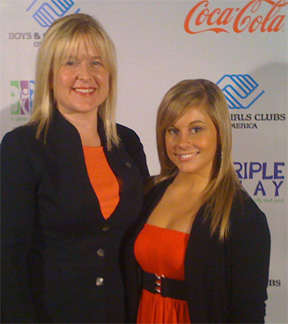
So who is addressing the obesity crisis now? One shining example is the Boys & Girls Clubs of America (BGCA). They recognized the impact of obesity on their club members and looked for ways to increase physical activity levels, encourage healthy eating, and repair self esteem in America’s underprivileged youth. After consulting with the Department of Health and Human Services (and obtaining funding from the Coca-Cola company), the BGCA created a multi-faceted initiative, called Triple Play, to combat overweight and obesity. The results are very encouraging.
After 2 years, an analysis of over 2,250 club members suggests that 90% of youth enrolled in the program met the daily, federal physical activity recommendations while a significant number improved their nutritional status, choosing to eat significantly more fruits and vegetables. Perhaps most interestingly, the participants also scored higher on tests of “self-mastery” which are correlated with self esteem and social skills. Overall, girls were impacted more strongly by the program than boys, though the reason for this is unclear.
I had the honor of moderating a panel of experts who discussed the impact of Triple Play on BGCA members. In attendance were Olympic gold medalists Shawn Johnson, Dominique Dawes, and Dr. Tenley Albright in addition to SVP of BGCA, Judith Pickens, former Club kid and Youth of the Year, Stacey Walker, and Chris Spain from the President’s Council on Physical Fitness and Sports. It was heartening to see that there are programs that can bend the obesity curve – because success in this area of disease prevention has been hard to come by.
I hope that healthcare reformers will carefully consider the impact of obesity-driven chronic disease, and look to program success stories like Triple Play as a means to affect long-term improvements of America’s health. Our kids’ lives and the future productivity of our country are dependent upon the implementation of prevention programs that work. Cheers to BGCA for leading the charge against childhood obesity!
The premier US cancer hospital and research center in Houston released a statement today distancing themselves from a Dallas company claiming an endorsement of their water product by The University of Texas M.D. Anderson Cancer Center:
Recently, you may have heard or read about a company that sells Evolv, a “nutraceutical beverage,” which is being promoted in part based upon testing done at The University of Texas M. D. Anderson Cancer Center, but also is being mistakenly viewed as endorsed by M. D. Anderson. M. D. Anderson conducted limited chemical analysis of the product to evaluate its anti-inflammatory activity for a fee at the request of the manufacturer. No efficacy or toxicity data were generated at M. D. Anderson nor was the product tested on humans. Moreover, M. D. Anderson does not have any involvement with the company, the product is not produced by M. D. Anderson, and M. D. Anderson does not endorse the product or recommend its use.
Evolv’s nutraceutical beverage with Archaea Active is tested by M.D. Anderson Cancer Center in Houston, Texas.
The statement as listed is not exactly wrong; it’s just not complete. Nothing there about what the product was tested for, but the implication is that it gained some healing power by passing through the hallowed halls of M.D. Anderson. I also have no clue as to whether it was tested for archaea (formerly archaebacteria) or if it has the capacity to amplify DNA.
Of course, my blogging about this is going to give the company publicity (a very, very small amount). Evolv is not just water but it is sold by a multi-level marketing company. I already knew to put one hand on my wallet when I dialed up their website. The header has the quote from Mary Kay Ash, “Nothing happens until somebody sells something,” which rotates with others from her and Zig Ziglar who, no doubt, did not authorize their association with the company.
Note added 10 September 2009: This comment from EvolvHealth’s Chief Marketing Officer, Mr Jonathan Gilliam, brought to my attention that I had the incorrect website for the company (as corrected above). The actual website should be http://evolvhealth.com. Currently, their product page lists the M.D. Anderson claim as follows:
Our active ingredient has been tested by the MD Anderson Cancer Center of the University of Texas. Evolv will be released in Fall 2009
*This blog post was originally published at Terra Sigillata*
It’s no secret that doctors are disappointed with the way that the U.S. healthcare system is evolving. Most feel helpless about improving their work conditions or solving technical problems in patient care. Fortunately one young medical student was undeterred by the mountain of disappointment carried by his senior clinician mentors…
I am proud to be a part of the American Resident Project an initiative that promotes the writing of medical students residents and new physicians as they explore ideas for transforming American health care delivery. I recently had the opportunity to interview three of the writing fellows about how to…
I m often asked to do book reviews on my blog and I rarely agree to them. This is because it takes me a long time to read a book and then if I don t enjoy it I figure the author would rather me remain silent than publish my…
When I was in medical school I read Samuel Shem s House Of God as a right of passage. At the time I found it to be a cynical yet eerily accurate portrayal of the underbelly of academic medicine. I gained comfort from its gallows humor and it made me…
I am hesitant to review diet books because they are so often a tangled mess of fact and fiction. Teasing out their truth from falsehood is about as exhausting as delousing a long-haired elementary school student. However after being approached by the authors’ PR agency with the promise of a…



 This past December (2008), there was a report in Healthcare IT (Information Technology) News that got me thinking, of all things, about medical situations in outdoor wilderness environments. The substance of the report was that researchers at Vanderbilt University (I worked there in the late ’80s as Chief of the Division of Emergency Medicine) “found that physicians who receive training in a technology-rich environment, but go on to work in a less modern facility feel they can’t provide safe, efficient care.”