June 21st, 2009 by Dr. Val Jones in True Stories
4 Comments »
 As many DC residents know, the local subway system has launched an etiquette campaign to insure that priority seating is given to the elderly and people with disabilities. The four seats nearest the center doors are clearly marked with “priority seating” signs, including “You don’t have to stand for this” posters. Conductors even read scripted reminders to riders at various stops.
So how is this campaign working out? I snapped a photo of this guy sitting in the priority section (and taking up 2 seats with his bags) – just after an elderly man with a cane limped by.
I gave him the evil eye… he returned the glare.
So I decided to feature him on my blog.
As a physician who works with people with disabilities this really gets my goat.
June 20th, 2009 by Paul Auerbach, M.D. in Better Health Network
No Comments »

 Snakebite continues to be a significant public health issue worldwide. In the current issue of Wilderness and Environmental Medicine (2009;20:43-56), Ian Simpson and Robert Norris have published an article entitled, “The Global Snakebite Crisis – A Public Health Issue Misunderstood, Not Neglected.” In this very well thought out concept paper, the authors introduce a marketing model to examine global snakebite and to identify if the current approach to treatment (specifically, with antivenom) is relevant and effective. They use a model to examine if the correct products are available, whether sufficient information exists concerning estimated market size, whether the assumptions frequently made about the costs of the product are correct and fully understood, if the product is promoted properly, and whether the method by which the product reaches the end user is optimum.
By their reasoning, the authors present the case that perhaps the current approach to antivenom issues is not adequate, and compounded by a lack of implementation of key solutions, such as training doctors in developing countries with relevant protocols.
Multiple flaws in snake antivenom (ASV) production and distribution are revealed, including selection of venoms against which to create ASVs, unscrupulous behavior by certain manufacturers, assumptions about the epidemiology of snakebites, definition of envenomation syndromes, estimations of mortality, sustainability of the current economic model, and others. The authors do not merely sit back and take shots at what they perceive to be flaws. They offer a practical model for how it might be possible to achieve solutions for most of these issues.
This paper has already stimulated a great deal of discussion, and will undoubtedly be viewed by some readers as provocative. The topic of snake bite, and therefore ASV production, distribution, and use, is on the agenda of the World Health Organization. Anyone interested in venomous snakebite and the medical-economic-social-political issues related to antivenom and other medical interventions for envenomation, would be interested in reading this paper carefully, and considering how best to determine if there is a need to validate the contentions and suggestions.
image courtesy of www.itsnature.org
This post, Snakebite: Global Public Health Menace, was originally published on
Healthine.com by Paul Auerbach, M.D..
June 19th, 2009 by Berci in Better Health Network, News
No Comments »

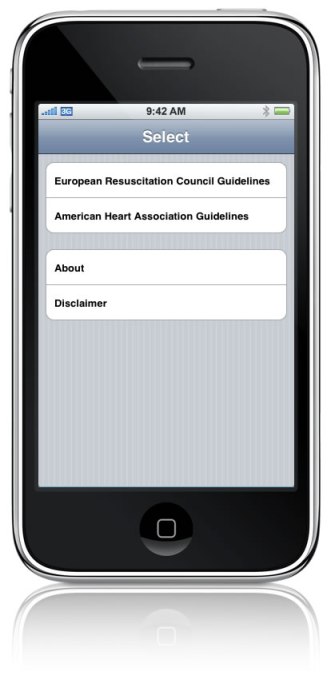
Federico Semeraro shared iCPR Lite, a great iPhone application, with me. Cardiopulmonary resuscitation is a crucial procedure and everyone, I mean everyone, should be trained to be able to perform CPR any time when needed. This iPhone application helps you how to do it.


More about it on D-Sign…
*This blog post was originally published at ScienceRoll*
June 19th, 2009 by KerriSparling in Better Health Network, True Stories
No Comments »

There’s stuff that’s bolus-worthy. New York style cheesecake. Chai tea on a snowy winter day. Wedding cake made out of red velvet with butter cream frosting. These indulgences are worth draining my pump reservoir for, and almost worth the spike I try to, but don’t always, avoid.
I’ve been very, very attentive to my diabetes lately. Logging all these numbers, sporting the Dexcom, trying to manage stress levels, exercising … whatever it takes to make me as healthy as I can be for the baby I want to have someday. But that wagon is hard to stay on all the time, and I have taken a risk or two in the last month. Like a trip on the Connecticut Wine Trail with some friends. And some pasta at Carmine’s last weekend with my sister-in-law.
And blueberry swirl cupcakes from Crumbs Bakery.
My diabetes control isn’t made or broken in one bite of a fluffy, delicious cupcake. Usually when I’m having a high sugar indulgence, I’m right on top of things, diabetes-wise. I bolus aggressively to avoid the high and I watch that Dexcom like a hawk for any subsequent lows. My management problems come more in the form of letting my numbers go untracked and pinging all over the place, letting highs creep up without corrections, then stacking boluses until I hit a nasty low, which I over-treat and rebound into a high … you know the cycle. It’s not the “one thing” but more my inability to care for more than an hour or two. The last few weeks of intensive management have been about keeping an eye on everything and not letting the cycle spin out of control.
And it’s hopefully working. My machine averages are down, I’m seeing many hours straight of flat-lines on the CGM, and knowing my Joslin appointment is at the end of July keeps my mind on task.
Besides, it’s not like I ate the whole cupcake. I split it with Chris and I asked for the estimated carb count before I took a bite.
But I did take the first, awkward bite.
And I did enjoy every other bite of it, too. Go ahead and judge! 🙂
*This blog post was originally published at Six Until Me.*