July 5th, 2010 by Shadowfax in Better Health Network, Health Policy, Opinion, True Stories
Tags: ACEP, American College of Emergency Physicians, Angela Gardner, Anoxic Brain Injury, Appropriate Care, Combat Veteran, Diversion Of Narcotics, Doctor-Patient Trust, Drug Abuse, Drug Addiction, Drug Databases, Drug Overdose, Drug Seekers, Drug-Seeking Patients, ED, Emergency Department, Emergency Medicine, Emergency Room, ER, Medication Refills, Micropopulation, Narcotic Dependence, Op-Ed, Opiates, Pain Killers, Pain Police, Patient Safety, Patient-Physician Relationship, Permanent Vegetative State, Prescription Drug Abuse, Trust But Verify, U.S. Navy, USA Today
No Comments »

I don’t know what’s going on with American College of Emergency Physicians (ACEP) lately, but it’s disheartening. Their abdication of responsibility and engagement during the healthcare reform debate was depressing. Then there was a rigged poll designed to elicit a predetermined result. Now I see a bizarre op-ed piece in USA Today entitled “Opposing view on drug addiction: Don’t make us ‘pain police'” and authored by ACEP President Angela Gardener. An excerpt:
The patient-physician relationship is sacrosanct, demanding candor and trust. In the emergency department, trust is built in nanoseconds because patients and doctors do not have prior relationships. Knowing that any pain prescription will be entered into a large, public database might prevent patients from being truthful, or in the worst case, from seeking needed care. … As an emergency physician, I can assure you that the drug abusers who use the emergency room simply to get a prescription drug fix represent a micropopulation of the 120 million patients who seek emergency care every year in the USA. … Put bluntly, if legislators have money to spend, they should spend it where it will do the most good for our patients, and that is not on drug databases.
I really don’t know what to say, other than to wonder whether Dr. Gardner and I practice in the same United States in which abuse of prescription drugs is growing exponentially and in which “drug-seeking” patients are a part of each and every shift worked in the ER, where deaths due to overdoses of prescription medications are on the rise, and where diversion of narcotics is a serious and growing problem. Read more »
*This blog post was originally published at Movin' Meat*
July 4th, 2010 by RamonaBatesMD in Better Health Network, Health Tips, News, True Stories
Tags: Daily News, ED, Emergency Department, Emergency Medicine, Emergency Room, ER, Fireworks Safety, Fireworks-Related Injuries, July 4th, Lauren Johnston, Preventive Medicine, Safe Fireworks Use, Shannon Elliott
No Comments »

 Time for a reminder about safe fireworks use. This Daily News article by Lauren Johnston — Doctors replace woman’s missing thumb with big toe transplant –- shows and tells you why. An excerpt:
A Long Island woman’s big toe will adapt to function as a thumb after doctors performed a rare transplant operation to replace the vital missing digit.
Shannon Elliott, 25, lost the thumb and two fingers from her left hand in November when a firework exploded in her palm…
Have a safe and happy July 4th — and stay out of the ER. Please follow these fireworks safety tips:
- Never allow children to play with or ignite fireworks.
- Read and follow all warnings and instructions.
- Fireworks should be unpacked from any paper packing out-of-doors and away from any open flames.
- Be sure other people are out-of-range before lighting fireworks. Small children should be kept a safe distance from the fireworks; older children that use fireworks need to be carefully supervised.
- Do not smoke when handling any type of “live” firecracker, rocket, or aerial display.
- Keep all fireworks away from any flammable liquids, dry grassy areas, or open bonfires.
- Keep a bucket of water or working garden hose nearby in case of a malfunction or fire.
- Take note of any sudden wind change that could cause sparks or debris to fall on a car, house, or person.
- Never attempt to pick up and relight a “fizzled” firework device that has failed to light or “go off”
- Do not use any aluminum or metal soda/beer can or glass bottle to stage or hold fireworks before lighting.
- Do not use any tightly closed container for these lighted devices to add to the exploding effect or to increase noise.
- Never attempt to make your own exploding device from raw gunpowder or similar flammable substance. The results are too unpredictable.
- Never use mail-order fireworks kits. These do-it-yourself kits are simply unsafe.
For more information on injuries that can occur from unsafe use of fireworks, see:
Fireworks-Related Injuries (CDC)
Facts About Fireworks Injuries (Prevent Blindness America)
*This blog post was originally published at Suture for a Living*
July 2nd, 2010 by DrRob in Better Health Network, Humor, Opinion, True Stories
Tags: Ask Dr. Rob, EHR, Electronic Health Record, Electronic Medical Record, EMR, General Medicine, health care, healthcare, Medical Humor, Medical Terminology, Musings of a Distractible Mind, Oprah, Politically Correct
No Comments »

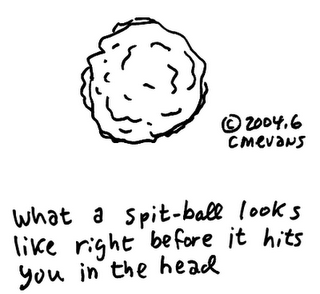 It’s been a very long time since I did an “Ask Dr. Rob” post. It’s also been a long time since I shot a spitball out of a straw and hit someone behind the ear during social studies class. I realize that just because it’s been a long time since I’ve done something, it doesn’t mean the world is better off with me doing it again.
Still, there have been some interesting questions that have come up and I think it’s time they should be answered. They’re both along the same line:
Question 1: What’s the difference between health care and healthcare? I see that you contribute to the Health Care Blog, but you write about healthcare all of the time. What’s the deal?
Question 2: What’s the difference between EMR and EHR? It seems that some people feel that it’s vile and uncouth to call it “EMR,” only accepting people who call it “EHR” into their secret societies of people who are smarter than everyone else. What’s the deal? Read more »
*This blog post was originally published at Musings of a Distractible Mind*
June 29th, 2010 by DrWes in Better Health Network, Health Policy, News, Opinion, True Stories
Tags: 3-For-1 Doctor Swap, Augusta Health, Cardiologists, Cardiology, Community-Based Program, Complicated Surgical Cases, Doctors Under Contract, Exporting Clinical Expertise, Finding A Doctor, Fishersville, Health System Consolidation, Imbedded Specialists, Loss Of Hospital Privileges, Physician-Employees, University Health System, University Hospitals, University of Virginia, University Specialists
No Comments »

As doctors increasingly become physician-employees, there’s no longer a need to share resources with university specialists:
Three University of Virginia cardiologists have been told by the Augusta Health board they will lose their hospital privileges next week, impacting the 2,500 patients the doctors serve.
Augusta Health officials [Crow] told the doctors in a letter that they won’t be able to treat their patients in emergencies or otherwise at the hospital in Fishersville. Crow’s statement said the board is limiting cardiology department participation to doctors “under contract to Augusta Health.”
Augusta Health has four cardiologists on staff, and will soon have a fifth, he said. Limiting cardiology participation to the hospital’s own doctors will allow Augusta Health “to build a strong and financially viable community-based cardiology program,” Crow said.
Universities have a long history of exporting their clinical expertise in the hopes of capturing more complicated surgical cases from their imbedded specialists. With more and more health systems consolidating (note the 3-for-1 swap above), the days of collaboration and shared resources between health systems are ending and patients are finding access to doctors more challenging.
-WesMusings of a cardiologist and cardiac electrophysiologist.
*This blog post was originally published at Dr. Wes*
June 29th, 2010 by JessicaBerthold in Better Health Network, Humor, Opinion, True Stories
Tags: Aleksandra Lachut, Attending Physicians, Bonified Doctors, Clinician-Educator, Doctor-Doctor Relationship, General Medicine, Kimberly Manning, Life At Grady, Life Happens, Long Term Relationships, Medical Colleagues, Medical Education, Medical Interns, Medical Residents, Medical School, Medical Students, Nature Of Time, Physician Transition, Professional Contact, Reason-Season-Lifetime, Reflections Of A Grady Doctor, Relationships Fostered In Medicine, Remembering Others, Staying Connected, Teaching Hospitals, Uncertified, Untrained
No Comments »

A version of the following post by Kimberly Manning appeared on the blog Reflections of a Grady Doctor:
May and June mark the end of our academic year in medical education. The medical students either advance to the next level or become sho’ nuff and bonified doctors — albeit uncertified and untrained — but doctors nonetheless. The interns exit the novice stage and become residents — one week asking someone senior what to do, the next telling someone junior what to do. And of course, the senior residents and fellows finally get the stamp of approval that officially releases them from the nest. It’s kind of bittersweet for folks like me — the surrogate mommies and daddies that helped guide them along this path to becoming full-fledged physicians. Read more »
*This blog post was originally published at ACP Hospitalist*