October 7th, 2011 by Paul Auerbach, M.D. in News
No Comments »

 Isolated environments combined with austere circumstances sometimes call for extraordinary measures, and in particular call for planning in advance for situations of multi-casualty incidents. Many, if not most, austere settings are in outdoor or frankly wilderness settings. Anyone who spends considerable time in the outdoors is going to sooner or later encounter a group of individuals in need of assistance in a setting of limited resources. This could be a scout troop suffering sunburn, multiple persons stung by a swarm of bees, a group of people struck by lightning, or a carful of people in a vehicle swamped and trapped in a flood. A winter camping expedition might be overcome by an unanticipated storm that generates victims of hypothermia. At the ends of the earth, the risks may be greater and multiplied by the very difficult logistics of rescue and evacuation.
Christopher Mills, MD and colleagues recently published a very interesting article entitled “Mass Casualty Incident Response and Aeromedical Evacuation in Antarctica” (Western Journal of Medicine 2011;12(1):37-42). This excellent review addresses the complications of multiple environmental and operational challenges, and highlights that Read more »
This post, Complications Associated With The Rescue Of Injured Persons In Isolated Environments, was originally published on
Healthine.com by Paul Auerbach, M.D..
October 7th, 2011 by KennyLinMD in Health Policy
1 Comment »

A New York Times Magazine story published on the newspaper’s website on Wednesday details the complicated history of screening for prostate cancer in the U.S. and revisits the related story of the U.S. Preventive Services Task Force meeting that was abruptly cancelled for political reasons on November 1, 2010, the day before the midterm Congressional elections. I was interviewed several times for this story, starting shortly after my resignation from my position at the Agency for Healthcare Research and Quality, where for 4 years I had supported the USPSTF’s scientific activities on a wide range of topics.
I commend science journalists Shannon Brownlee and Jeanne Lenzer for their tireless reporting efforts and dogged persistence in pursuing the real reason for the meeting’s cancellation, despite repeated and vigorous denials of senior government officials. Former USPSTF Chairman Ned Calonge confirms in the Times story that politics played a role: “In November 2010, just before midterm elections, the task force was again set to review its [prostate screening] recommendation when Calonge canceled the meeting. He says that word leaked out that if the November meeting was held, it could jeopardize the task force’s financing.” It’s true that several members of Congress had threatened to cut off funding for the Task Force after it recommended against routine mammography for women in their 40s. To the best of my knowledge, however, the order to cancel the meeting came directly from the White House, not Congress. And according to my superiors at the time, Dr. Calonge had no choice in the matter. Read more »
*This blog post was originally published at Common Sense Family Doctor*
October 6th, 2011 by GarySchwitzer in News, Opinion
1 Comment »

Some breast cancer voices raise questions about simply raising “awareness” about breast cancer in October.
Some of them believe that raising awareness about screening, for example, should not be the only message or even the main message of the month.
 Katherine O’Brien, who has metastatic breast cancer (MBC), and who publishes the ihatebreastcancer blog refers to being caught in “October’s pink undertow.”
Plunked down in the middle of breast cancer awareness month is National Metastatic Breast Cancer Awareness Day on October 13.
O’Brien says that people like her with MBC have different concerns from those with early stage cancer. She wrote to me: “The day is not about general cancer awareness; it’s about acknowledging the distinct needs of people who have the advanced, incurable form of breast cancer.
She quotes Ellen Moskowitz, past president of the Metastatic Breast Cancer Network (MBCN): Read more »
*This blog post was originally published at Gary Schwitzer's HealthNewsReview Blog*
October 6th, 2011 by Elaine Schattner, M.D. in Opinion
No Comments »

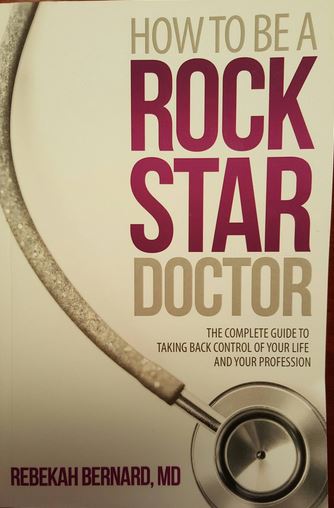
Monday’s New Yorker has a story, Personal Best, by Atul Gawande. It’s about coaching, and the seemingly novel idea that doctors might engage coaches – individuals with relevant expertise and experience — to help them improve their usual work, i.e. how they practice medicine.
Dr. Gawande is a surgeon, now of eight years according to his article. His specialty is endocrine surgery – when he operates it’s most often on problematic glands like the thyroid, parathyroid or appendix. Results, and complications, are tracked. For a while after he completed his training he got better and better, in comparison to nation stats, by his accounting. And then things leveled off.
The surgeon-writer considered how coaches can help individuals get better at whatever they do, like playing a sport or singing. He writes:
The coaching model is different from the traditional conception of pedagogy, where there’s a presumption that, after a certain point, the student no longer needs instruction. You graduate. You’re done. You can go the rest of the way yourself…
He wonders about how this might apply in medicine: Read more »
*This blog post was originally published at Medical Lessons*
October 6th, 2011 by KerriSparling in Opinion
2 Comments »

 Two weeks ago, I attended my third year at Kru Research’s ePatient Connections conference, and every year, I’m amazed at how many different industry people show up and showcase their impressive efforts … but how few patients. But this year, there were a lot of patients. Lots as in “more than five.”
For a conference with “ePatient” in the title, it was good to finally see more than just a handful of ePatients in the audience. (And this is thanks, largely in part, to the ePatient Bill of Rights project that took place on September 19th, across the hall from the SXSH event). And it wasn’t just a handful of diabetes patients – there were many health conditions well-represented at these events. For me, it was nice to talk about the universal issues that people with chronic illnesses face, instead of drifting around in the bubble of diabetes. I like stepping outside of our comfortable space and learning about what others are living with. I need that exposure to other types of patients … keeps me thinking globally.
Part of the panel discussion Read more »
*This blog post was originally published at Six Until Me.*