August 20th, 2011 by BobDoherty in Health Policy, Research
No Comments »

If you ask internists and their patients what makes them bonkers about the U.S. health care system, paperwork will top the list. Many will point to the federal government as the culprit, citing the many forms, RAC audits, pre-and post-payment reviews, documentation and coding guidelines, HIPAA privacy rules, quality measurement and reporting, Part D drug formularies, and HIT meaningful use requirements imposed by Medicare and other federal programs. (Some put more of the blame on private insurers and pharmacy benefit managers.)
But if paperwork is associated with the degree of government involvement in health care, then Canada–a single payer system–should have more of it than the United States, right? Think again.
A new Health Affairs survey of U.S. physicians and practice administrators found that U.S. physicians spend Read more »
*This blog post was originally published at The ACP Advocate Blog by Bob Doherty*
August 20th, 2011 by RyanDuBosar in Health Tips, Research
No Comments »

 The Mediterranean diet has a new competitor, the spicy diet. Antioxidant spices may reduce the triglyceride response of a high-fat meal by 30% compared to the same meal without them, concluded a study.
The antioxidant potential of spices stems from their phenolic compounds, the authors wrote. Also, some spices increase the blood plasma concentrations of others, and spices are typically eaten as blends, making them good targets to study. Turmeric, cinnamon, rosemary, oregano, black pepper, cloves, garlic powder and paprika were on the short list that researchers examined.
The study compared results in Read more »
*This blog post was originally published at ACP Internist*
August 19th, 2011 by John Mandrola, M.D. in Health Tips
No Comments »

The “normal” number of heartbeats per minute is very much a frequently asked question. People, especially medical people, like well-defined lows and highs. Parameters which can be assigned an ‘L’ or ‘H’ makes life easier.

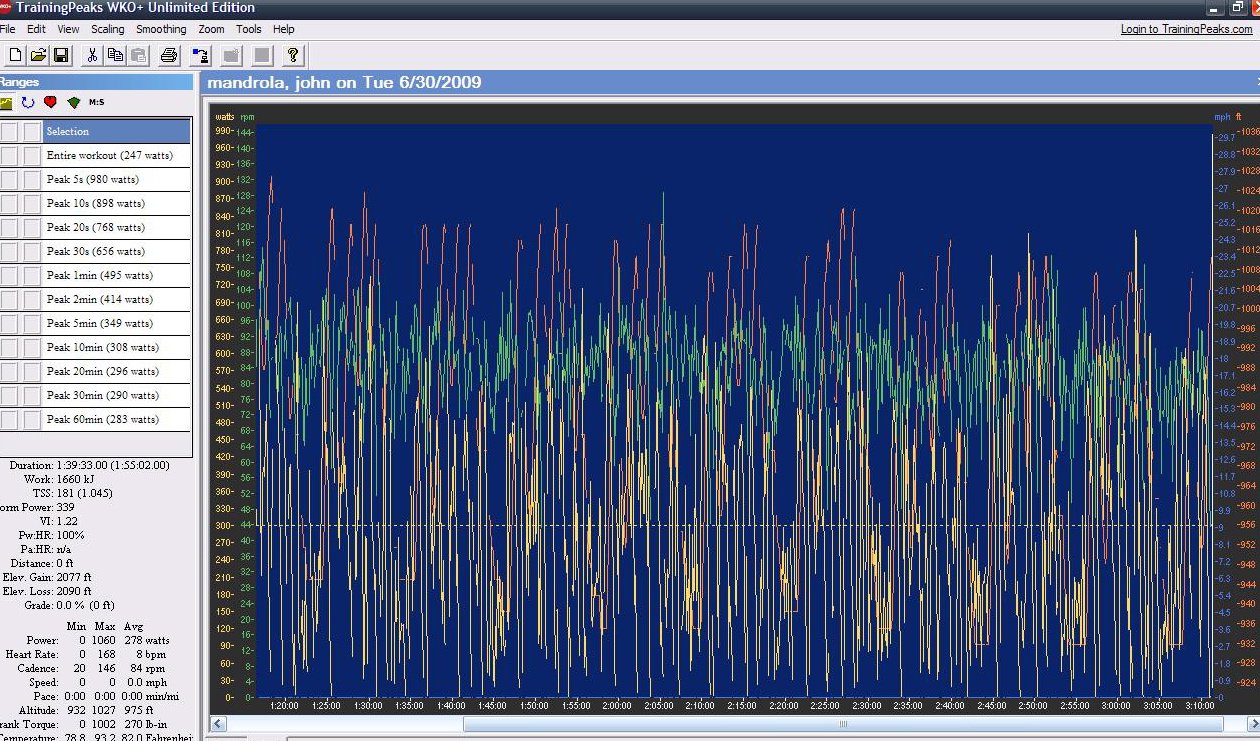
2009 National Championship Masters (45-49) Road Race
As a modern-day competitive cyclist, I am immersed in a sea of information. In our quest for weekend glory, minutia like speed, wattage outputs, RPMs, torque, elevation gain and of course, heart rates (highs, lows, and averages) get recorded, downloaded, and then studied intensively.
As a heart rhythm specialist, it is a frequent occurrence to see patients referred for low or high heart rates. More often than not, heart doctors are called upon to adjudicate patients who fall outside the “normal” values.
The old school teaching holds that the normal resting heart rate is greater than 55 and less than 100 beats per minute (bpm). Maximal heart rates are estimated by the Read more »
*This blog post was originally published at Dr John M*
August 19th, 2011 by Bryan Vartabedian, M.D. in Opinion
No Comments »

 As self-quantification tools becomes more accessible, we’re able to monitor and collect all that’s coming, going and happening with our bodies. Some are beginning to think of this aggregate data as something of a health code, a repository of personal information which can be opened up to others – an API for your body. Once opened and tapped, others can create tools for manipulating and analyzing the data. Aggregated information that’s presented in the right way can give us and our providers valuable information about our physical status.
Loic Le Meur, the founder of Europe’s biggest Internet conference, raised the dialog here. It’s a fascinating concept and one that plays on the themes of personalization, measurement, and mobility.
This has implications in pediatrics, of course. Read more »
*This blog post was originally published at 33 Charts*
August 19th, 2011 by RyanDuBosar in Research
No Comments »

There’s a strong association between daily servings of red meat, especially processed meat, and a nearly 20% increased risk of type 2 diabetes, researchers found.
Replacing red meat with healthier proteins, such as low-fat dairy, nuts, or whole grains, can significantly lower the risk, according to a study was published online at the American Journal of Clinical Nutrition.
Researchers reviewed questionnaire responses from 37,083 men followed for 20 years in the Health Professionals Follow-Up Study, from 79,570 women followed for 28 years in the Nurses’ Health Study I, and from 87,504 women followed for 14 years in the Nurses’ Health Study II. Diet was assessed by validated food-frequency questionnaires, and data were updated every four years. Diabetes was confirmed Read more »
*This blog post was originally published at ACP Internist*