June 30th, 2011 by admin in Health Policy, Opinion
No Comments »

According to Kendra Blackmon at FierceEMR.com and a new study published by the National Institute of Standards and Technology (NIST), the answer is maybe.
Earlier this year, NIST published a report – Human Factors Guidance to Prevent Health care Disparities with the Adoption of EHRs – which declares that “wide adoption and Meaningful Use of EHR systems” by providers and patients could impact health care disparities.
Making this happen, however, will require a different way of thinking about electronic health records (EHRs). While the report notes that EHRs primarily are used by health care workers, patients still interact with these systems both directly – such as through shared use of a display in an exam room – and indirectly. For patients to obtain the intended benefits of this technology, EHR systems should display or deliver information in a way that is suitable for their needs and preferences, the report says. Read more »
*This blog post was originally published at Prepared Patient Forum: What It Takes Blog*
June 30th, 2011 by admin in Opinion
1 Comment »

 Pediatric Emergency Drugs is designed to be a quick med list calculator for pediatric emergencies. For folks who deal with pediatric emergencies have the challenge of not only determining the proper drugs to use, but also to get the dosage right by age.
At the first page you are met with a screen to enter the age of the child and either allow the program to pick the estimated weight or put your own weight in. This is a nice feature as often in pediatric emergencies patients arrive through the door needing immediate care and a weight is unavailable. The estimated weight it appears to pick is the 50% for a boy of the selected age. Allowing you to pick the gender of the child would be helpful in narrowing down the weight a little further since girls of a given age would weigh a little less. Another option would be to allow the use of Broselow colors. These days the standard for most ERs is the Broselow tape which is a plastic foldable tape that doses based on length.
Once you select your patient you have a section of drugs broken down into: cardiac arrest meds, infusions, and bolus drugs. The cardiac arrest meds are short a few drugs. There are no drugs for treating ventricular fibrillation (amiodarone) and they do not make mention of the dose of electricity for synchronized cardioversion (only for defibrillation). The infusion list assumes you are mixing all drugs in 50mL bags which is not usually the case. (we usually use 100 or 250mL bags for drips). Also, in America thanks to JCAHO regs medicated infusions need to be have standardized concentrations and not use the “rule of 6” employed by this program. The list of bolus drugs is missing a few key drugs as well such as midazolam and hydrocortisone for sepsis. Read more »
*This blog post was originally published at iMedicalApps*
June 30th, 2011 by Dr. Val Jones in Announcements
10 Comments »

It is with great pleasure that I welcome our CDC colleagues to the Better Health blog team. Going forward, Better Health will feature content from the CDC blogs on a weekly basis, and our collaborative efforts will be highlighted on the CDC blog pages as appropriate.
Better Health and the CDC share a common mission: to reach as many Americans as possible with scientifically accurate, trustworthy, and helpful medical information. As social media platforms (such as blogs, Twitter, and Facebook) become a gathering place for people seeking health information – it is important for experts to be able to provide content through these channels. The CDC’s relationship with Better Health is an excellent example of a public-private partnership that can magnify reach and relevance.
By becoming a content partner with Better Health, the CDC joins a prestigious international team of physicians, nurses, health experts and patient advocates, including notable organizations such as the American College of Physicians blogs, Harvard Health Publications, Diario Medico, Healthline, the Center For Advancing Health, and the Columbia University Department of Surgery. Read more »
June 30th, 2011 by Bryan Vartabedian, M.D. in Opinion
No Comments »

There’s a temptation to think of Twitter as it once was. As recently as 3 years ago there were very few physicians using Twitter. Early physician adopters enjoyed a tighter experience than today. Everyone followed everyone and actually finding another doctor was cause for celebration. It was a cocktail party – less a tool as much as a place to goof off. It was easier in many respects.
But Twitter seems to be evolving from a curious toy to a more focused space of sharing among the like-minded. I see new docs play out this broader evolution of Twitter: near obsessive early preoccupation gives way to the question of how it can actually work for them. Experimentation with relationships gives way to connections that are more likely to give us what we really need.
We’ve hit a point where many physicians on Twitter are looking beyond the cocktail party. There are simply too many of us. As a consequence of nothing other than our numbers, we’re increasingly divergent. Values, interests, and motivations vary – we gravitate to the like-minded. In some respects Twitter’s evolving practicality is a good thing. But it comes with a cost. I don’t know how and if it can be countered.
As much as Twitter is different now compared to 3 years ago, don’t get used to it. Things never stay the same.
*This blog post was originally published at 33 Charts*
June 30th, 2011 by Paul Auerbach, M.D. in Health Tips
No Comments »

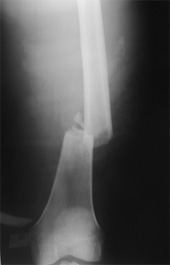 My 86 year-old mother, who is generally in good health, slipped and fell recently and suffered a fractured femur. She was unfortunate to have suffered the accident, but had the good fortune to be discovered quickly, treated promptly and well by the paramedics who responded to her, and then to have a swift and skillful operation by an orthopedic surgeon to repair the fracture. Almost miraculously, she was standing upright (with a considerable amount of pain) the next day and had begun the rehabilitation process.
At her age—indeed at any age—a fractured femur is a very significant injury. This past year, I have learned of friends and others who have suffered falls and broken their legs, ankles, or backs, as well as others who suffered “pathological fractures.” The latter group had the bones break from normal daily stresses, without a traumatic incident, because the bones were weak and/or osteoporotic. More than a few of these injuries occurred outdoors, associated with stumbles on the trail or falls.
All of this highlights features of an excellent review article that was published this past year in the New England Journal of Medicine. Authored by Murray Favus, MD, it is entitled “Biphosphonates for Osteoporosis” (New England Journal of Medicine 2010;363:2027-35). Anyone who is contemplating taking or administering this therapy would benefit from reading this article. Read more »
This post, Osteoporosis Treatment With Bisphosphonates: Is Exercise Good Or Dangerous?, was originally published on
Healthine.com by Paul Auerbach, M.D..