June 26th, 2011 by ChristopherChangMD in News
1 Comment »

 Meda Pharmaceuticals has announced a new nasal spray “Dymista” that contains both a steroid and an anti-histamine active ingredient. Why is this significant? It’s because it’s the first and only one to do so. Of course, it’s not available yet until the FDA approves it, but at least it has shown effectiveness in Phase 3 clinical trials.
At this time, nasal sprays as it relates to nasal allergies come in two separate flavors:
1) Steroid Nasal Spray (flonase, nasonex, nasacort, rhinocort, veramyst, omnaris, etc, etc)
2) Anti-Histamine Nasal Spray (patanase, astepro, astelin)
This new combo nasal spray “Dymista” contains Read more »
*This blog post was originally published at Fauquier ENT Blog*
June 25th, 2011 by AnnMacDonald in Health Tips, Research
No Comments »


On Saturday, while thousands of Boston Bruins fans gathered at Government Center to celebrate the team’s recent Stanley Cup victory, a hundred or so true die-hards met a few blocks away at a Massachusetts General Hospital conference to talk about complementary and alternative medicine for psychiatric disorders. While I hated to miss the Bruins parade, I’m glad I attended the MGH conference.
I’ve always been a bit of a skeptic about so-called natural therapies for one simple reason: they don’t have to go through the same rigorous testing in clinical trials that medications do. At the same time, I realize that FDA-approved drugs don’t work for everyone. One in three adults with major depression, for example, can’t completely improve their mood and other symptoms even after trying multiple antidepressants.
Clearly, we need better options for treating mental health disorders. The MGH conference convinced me that some types of complementary and alternative medicine—or CAM, for short—might be worth trying. The presenters, all psychiatrists who treat patients at MGH, backed up their recommendations with scientific evidence. Several of them also contributed to the American Psychiatric Association’s recent report on CAM therapies.
We’ll be doing a story on CAM therapies for psychiatric disorders in an upcoming issue of the Harvard Mental Health Letter. For now, here are some things I learned on Saturday: Read more »
*This blog post was originally published at Harvard Health Blog*
June 25th, 2011 by Paul Auerbach, M.D. in Health Tips
No Comments »

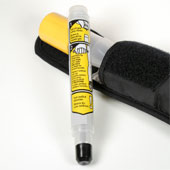 An allergic reaction in an outdoor setting can rapidly become a life-threatening emergency. While most of us think of food allergies as annoyances, they can be quite serious or even life threatening. Itchy skin rashes can progress to breathing difficulty, swollen soft tissues (e.g., lips, tongue, throat) that compromise the airway, and low blood pressure or even shock. Therefore, it’s important to be familiar with the signs and symptoms of severe allergy and to be prepared to respond rapidly in the event of an emergency.
An EpiPen (an epinephrine auto-injector)
The National Institute of Allergy and Infectious Diseases has released Food Allergy Guidelines for healthcare professionals to help guide the care of patients with life-threatening food allergies. The full guidelines can be found at http://www.niaid.nih.gov/topics/foodallergy/clinical/Pages/default.aspx. Here are some key points: Read more »
This post, Food Allergies: Treating Severe Allergic Reactions, was originally published on
Healthine.com by Paul Auerbach, M.D..
June 25th, 2011 by Michael Kirsch, M.D. in Opinion
No Comments »

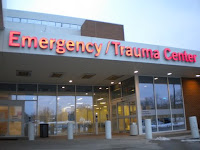 I received a call recently from an emergency room (ER) physician about a patient who presented there with rectal bleeding. Does this sound blogworthy? Hardly. We gastro physicians get this call routinely. Here’s the twist. The emergency room physician presented the case and recommended that the patient be discharged home. He was calling me to verify that our office would provide this patient with an office appointment in the near term, which we would. We had an actual dialogue.
This was a refreshing experience since the typical emergency room conversation of a rectal bleeder ends differently. Here’s what usually occurs. We are contacted and are notified that the patient has been admitted to the hospital and our in-patient consultative services are being requested. In other words, we are not called to discuss whether hospitalization is necessary, but are simply being informed that a decision has already been made.
There is a tension between emergency room physicians and the rest of us over what constitutes a reasonable threshold to hospitalize a patient. I have found that many ER docs pull the hospitalization trigger a little faster than I do. What’s my explanation for this? Here are some possibilities. Read more »
*This blog post was originally published at MD Whistleblower*
June 25th, 2011 by RyanDuBosar in Health Policy, Research
No Comments »

Primary care physicians are getting paid more, two surveys agree, while hospital employment is rising.
Internists earned $205,379 in median compensation in 2010, an increase of 4.21% over the previous year, reported the Medical Group Management Association’s (MGMA’s) Physician Compensation and Production Survey: 2011 Report Based on 2010 Data. Family practitioners (without obstetrics) reported median compensation of $189,402. Pediatric/adolescent medicine physicians earned $192,148 in median compensation, an increase of 0.39% since 2009.
Among specialists, anesthesiologists reported decreased compensation, as did gastroenterologists and radiologists. Psychiatrists, dermatologists, neurologists and general surgeons reported an increase in median compensation since 2009.
Regional data reveals primary and specialty physicians in the South reported the highest earnings at $216,170 and $404,000 respectively. Primary and specialty-care physicians in the Eastern section reported the lowest median compensation at $194,409 and $305,575. This year’s report provides data on nearly 60,000 providers.
Recruiting firm Merritt Hawkins reported that general internal medicine was one of its top two most requested searches for the sixth consecutive year. Family physicians were the firm’s most requested type of doctor, followed by internists, hospitalists, psychiatrists, and orthopedic surgeons.
Average compensation for internists Read more »
*This blog post was originally published at ACP Hospitalist*