June 15th, 2011 by RyanDuBosar in News
No Comments »

Drug labels warn about a mean of 70 adverse events per medication, leading researchers to conclude that the glut of information is confusing patients.
Jon Duke, MD, an ACP Member, and other researchers extracted 534,125 adverse drug events from 5,602 product labels. There was a mean of nearly 70 events per label. They found 588 with more than 150 adverse drug events and 84 with more than 300, with the top offender having 525 events listed. This top group included selective serotonin reuptake inhibitors, anti-virals, and restless leg syndrome drugs.
Labels for the 200 most commonly dispensed medications contained significantly more adverse drug events than others (median, 79 vs. 47; P<.001). By specialty, there were more adverse drug events listed in the fields of neurology (n=168), psychiatry (n=116), and rheumatology (n=111).
Drugs approved during the 1980s and 1990s had the highest overall number of adverse drug events, while newer medications had significantly more labeled adverse drug events than older medications.
“The findings aren’t unexpected,” wrote Dr. Duke and colleagues in the Archives of Internal Medicine. Newer drugs face more rigorous clinical trials and postmarketing surveillance than older medications. More commonly prescribed drugs are more likely to generate more reports of adverse events. The high volume of events in neuropsychiatric medications “may relate as much to patient population as to the effects of the drugs themselves.”
But, Dr. Duke and colleagues concluded, “The presence of such excess data still may induce information overload and reduce physician comprehension of important safety warnings.”
While the Food and Drug Administration tried to revamp warning labels in 2006, labels have grown more complex since then. “This finding underscores the tremendous challenge faced by the FDA in reversing the long-standing trend toward overwarning.”
*This blog post was originally published at ACP Internist*
June 14th, 2011 by admin in News
No Comments »

 SHL Telemedicine has announced the release of SmartHeart, a lightweight and portable device that they claim can take “hospital-grade” ECGs by “anyone, anywhere, anytime.” The device connects wirelessly to smartphones and can transmit the ECG to a physician for a preliminary diagnosis. The possibilities for a device like this are endless – but so are the questions it raises.
The device greatly streamlines the process of obtaining an ECG as it avoids the need to actually come in to a clinic and can be used to monitor high risk patients from their own homes. The smartphone can then transmit the ECG to an office or a hospital where health care professionals can examine them instantly. As cardiovascular disease is the leading cause of death in the US, a low-cost and easily used cardiovascular diagnostic device could have a huge impact on a sizeable part of the population. SmartHeart is set to cost $500, which is less than an iPhone itself.
However, a portable ECG device that anyone can supposedly use raises some major concerns. The first question is its practical application. For a patient to just have this at home implies that they are at high risk for cardiovascular events. Arrhythmias typically require continuous cardiac monitoring rather than a 10-second ECG, which this device does not appear to provide. So, is this device intended to Read more »
*This blog post was originally published at iMedicalApps*
June 14th, 2011 by ChristopherChangMD in Health Tips
2 Comments »

It is a big bummer to be an asthmatic. Not only is breathing a problem, but even the treatment for asthma can cause problems.
Take for example steroid inhalers like advair, symbicort, fluticasone, etc.
All asthma patients know to rinse their mouth out after inhaler use due to risk of oral thrush, but what about from the back of the mouth down to the vocal cords??? This nether region can’t be gargled very easily. One can swallow water to rinse this area out, but the vocal cord region would still not be addressed (otherwise aspiration would occur).
And that leads to potential vocal problems… like fungal laryngitis (or thrush of the voicebox). Here’s a picture of what that looks like. To compare, normal is shown in the smaller picture.

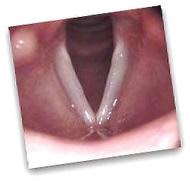
Note the white patches indicative of fungal growth. This fungal infection can lead to symptoms of a mild (if any) sore throat, but most patients complain of hoarseness as their only symptom. Read more »
*This blog post was originally published at Fauquier ENT Blog*
June 14th, 2011 by DavidHarlow in Health Policy, Opinion
No Comments »

 There has been a significant outcry against the proposed ACO regs: everything’s wrong and nothing’s right about them, or so some would have us believe. (The comment period is still open, and CMS is still soliciting input; much of the outcry is a form of posturing and negotiation … not that there’s anything wrong with that.)
Today’s “nattering nabobs of negativism” focus on: the estimated price tag for complying with the regulatory requirements (IT and other infrastructure incuded), the slim chance of success by ACOs in righting the wrongs of decades of bloat in the health care system, the premature pledging of allegiance to an idea only partly proven through the PGP demo, the likelihood of failure due to the whole endeavor’s being tied to FFS reimbursement, on the one hand, and due to exposure of ACOs to downside risk, on the other, the unreasonable reliance on dozens and dozens of quality measures . . . and the list goes on. For further detail, see, e.g., David Dranove’s recent post decrying unproven theories baked into the ACO program (with a link to info on the PGP demo’s results, and differing interpretations of those results; check out the lively discussion in the comments to Dranove’s post on The Health Care Blog), Jeff Goldsmith’s opposition to ACOs as conceived in the ACA (and alternative proposal discussed in the linked post), and Mark Browne’s search for a few good quality measures. (This has been a recurring theme for me as well; I would love to find six or eight meta-measures that predict all others; Mark links to the AHA’s comments on the ACO rule, which are worth a read). Read more »
*This blog post was originally published at HealthBlawg :: David Harlow's Health Care Law Blog*
June 14th, 2011 by Berci in Research
No Comments »

While 23andMe brings down the price of consumer genetic tests and builds up relations with big pharma (doesn’t share individual data though), it seems the DTC genetic testing is neither accurate in predictions nor beneficial to individuals according to a study described on Medical News Today.
Working under the supervision of Associate Professor Cecile Janssens, together with researchers from Leiden, The Netherlands, and Boston, USA, Ms Kalf examined the risk predictions supplied by two large DTC companies, deCODEme (Iceland) and 23andMe (USA). They simulated genotype data for 100,000 individuals based on established genotype frequencies and then used the formulas and risk data provided by the companies to obtain predicted risks for eight common multi-factorial diseases – age-related macular degeneration (AMD), atrial fibrillation, celiac disease, Crohn’s disease, heart attack, prostate cancer, and Type 1 and Type 2 diabetes (T2D). Read more »
*This blog post was originally published at ScienceRoll*