June 14th, 2011 by IsisTheScientist in Health Tips
1 Comment »

I think one of the greatest public safety advances of the last 15 years has been the widespread installation of automated external defibrillators (AEDs). Automated external defibrillators are medical devices designed to deliver an electrical shock to the heart in ventricular fibrillation – a cardiac rhythm that is commonly associated with cardiac arrest.

Figure 1: ECG of a heart devolving into ventricular fibrillation.
I was working in emergency medicine when medical device companies first began to advocate for the placement of AEDs in public places and worked closely with many companies, organizations, and government agencies to incorporate AEDs into their emergency response plans. This wasn’t an easy sell in the late 1990s. People were worried about safety, liability, and cost. But, AED programs have been a great success. AEDs are most effective when they are used within 3-5 minutes of arrest. For example, if you have a cardiac arrest with ventricular fibrillation in New York City, Read more »
*This blog post was originally published at On Becoming a Domestic and Laboratory Goddess*
June 14th, 2011 by Mark Crislip, M.D. in Opinion, Quackery Exposed
No Comments »

Ambiguity. Medicine, like art, is filled with ambiguity, at least the way I practice it. Most of my practice is in the hospital. I am sometimes called to see patients that other physicians cannot figure out. And that puts me at a disadvantage, because the doctors who were referring patients to me are all bright, excellent doctors. Often the question is ‘Why does the patient have a fever?’ or ‘Why is the patient ill?’ Sometimes I have an answer. Most of the time I do not.
I am happy, however, to be able to tell the patient what they don’t have. I can often inform the patient and their family that whatever they have is probably not life-threatening or life-damaging, just life-inconveniencing, and most acute illnesses go away with no diagnosis. I always put the ‘just’ in air quotes, because illnesses that require hospitalization are rarely ‘just.’ Just without quotes is reserved for the antivaccine crowd and applied to the small number of deaths from vaccine preventable diseases in unvaccinated children. John Donne they ain’t.
We are excellent, I tell them, at diagnosing life-threatening problems that we can treat, and terrible at diagnosing processes that are self-limited. Of course diagnostic testing is always variable. No test is 100% in making a diagnosis, and often with infections I cannot grow the organism that I suspect is causing the patient’s disease. So for hospitalized patients, ambiguity and uncertainty are the rule of the day. Read more »
*This blog post was originally published at Science-Based Medicine*
June 13th, 2011 by admin in Health Tips
No Comments »


In today’s fast-paced world, waiting — whether it’s at the doctor’s office, in line at the grocery store or for an Internet connection — is rarely considered a good thing.
But when it comes to certain medical conditions, delaying treatment while regularly monitoring the progress of disease — a strategy doctors refer to as “watchful waiting,” active surveillance or expectant management — may benefit some patients more than a rush to pharmaceutical or surgical options.
Patients want to know what they’re waiting for, says urologic oncologist E. David Crawford, MD, chairman of the Prostate Conditions Education Council and associate director of the University of Colorado Comprehensive Cancer Center.
The purpose is to watch in order to see whether a condition progresses. That way, patients and physicians know what kind of threat a disorder poses and they can make a better decision about how urgently treatment is needed. Some people might never need treatment, for instance with a slow-growing cancer. Other people can delay treatment for months or years.
Precancerous conditions may also be monitored with active surveillance. One example is Read more »
*This blog post was originally published at Prepared Patient Forum: What It Takes Blog*
June 13th, 2011 by Elaine Schattner, M.D. in Health Tips, Opinion
No Comments »

The June issue of Wired carries a feature on the Booming Market for Human Breast Milk. You can read about the under-the-counter and over-the-Internet sale of “liquid gold” with a typical asking price in the range of $1 to $2.50 an ounce.
Here’s a taste, from the article:
…“rich, creamy breast milk!” “fresh and fatty!”… Some ship coolers of frozen milk packed in dry ice. Others deal locally, meeting in cafés to exchange cash for commodity…
Late last year, the FDA issued a warning about feeding your child human milk from strangers. Still, the stuff’s barely regulated.

milk containers, Wired Magazine, June 2011
As much as I think it’s a good idea for women to breast feed their babies as best they can, I was pretty shocked to learn about this unregulated industry. Mainly because if a woman who donates milk is infected with a virus, like HIV or HTLV-1, the milk often contains the virus. The infant can absorb the virus and become infected. Feeding human breast milk from an unknown donor is kind of like giving a child a blood transfusion from a stranger, unchecked by any blood bank.
I’m not sure why Wired ran this story, which is admittedly interesting. Maybe it’ll push the FDA to take a more aggressive stance on this matter, as it should.
*This blog post was originally published at Medical Lessons*
June 13th, 2011 by Dryden Epstein in Opinion, True Stories
2 Comments »
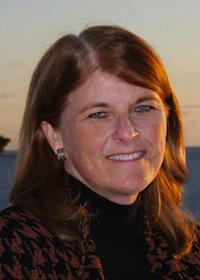 I graduated from medical school in 1985, am board certified in EM and practiced 25 years—mainly inner city/trauma/teaching centers. However, the last 5 years were in a rural 25-bed hospital, 60 miles from a shopping mall or hospital with higher capabilities and specialists. My hourly rate was competitive and the hospital provided benefits included: malpractice, health, dental, & vision insurance, prescription coverage, paid vacation/CME allowance, and pension contribution.
Palliative Medicine (intensive symptom management for chronic or serious illness, coordination of care and clarification of patient/family treatment & life goals) is a subspecialty in urban settings but is lacking and most needed in the rural community setting. The chronically ill patient who is also typically elderly may present to the ED and be denied hospital admission after an ED physician evaluation. The doctor can “request” admission from an at-home Utilization Review nurse who checks the admission guidelines and if not met, reports the patient is to be sent home—even if it is over the objections of the physician who has evaluated the patient. There is no systematic follow-up of these patients, and they are told to “contact your primary care physician.” No one is making sure this happens. Some do not have primary care physicians and may be unable to obtain a timely appointment. The hospital does not have a social worker to coordinate care or provide assistance in the confusing navigation of insurance/appointments/outpatient testing, etc. There is no 24-hour pharmacy. Many of these patients do not have transportation or no longer drive and often live many, many miles from the hospital relying on neighbors, church folk, or county ambulance when they become ill.
In 2010, I opened Read more »