May 23rd, 2011 by DavedeBronkart in Health Policy, Opinion
4 Comments »

*Editor’s note: Dave would like readers to check out the comments section in the original post for his full views.*
A lot of people are intrigued with using “cloud” applications and storage for personal health data. This week we’re seeing what I think is the final nail in the coffin of “cloud only” for anything important. You gotta have offline backups: two huge cloud vendors – Amazon and now Google – have demonstrated that even they can go down, leaving their users absolutely powerless.

Cloud computing (Wikipedia) is hugely attractive to software developers and businesses. As shown in this diagram from Wikipedia, the idea is that you do your computing using storage or tools that are on some computer somewhere out there “in the cloud.” You don’t know or care where, because somebody out there takes care of things. As your business or database grows, “they” take care of it.
And it’s real – it works.
But when “they” screw up, you could be screwed.
Last month Amazon Web Services went down for a couple of days. PC Magazine posted a good summary, and many of us learned that well known companies like Hootsuite and Foursquare don’t actually own the computers that deliver their product: they rent services from Amazon Web Services (AWS). So when AWS went down, there was nothing they could do to help their customers. Read more »
*This blog post was originally published at e-Patients.net*
May 23rd, 2011 by Paul Auerbach, M.D. in Health Tips
1 Comment »


The Combat Application Tourniquet Dr. Brad Bennett provided an excellent workshop at the 2010 Wilderness Medical Society annual meeting in Snowmass, Colorado on how to manage severe bleeding, based on his work with the Committee on Tactical Combat Casualty Care. From time to time,
wilderness medicine practitioners encounter situations of severe bleeding, so this information is essential for anyone responsible for the health and safety of outdoor explorers and adventurers.
In a simple algorithm, we learned that the first attempt to control bleeding is almost always direct hand pressure. This is followed by application of a pressure bandage. If that is successful, the victim then is evacuated. If the pressure bandage does not adequately control bleeding on the torso of the victim, then a hemostatic (stops bleeding) substance is applied prior to evacuation. If bleeding from an arm or leg threatens the victim’s life, a tourniquet may be required. A hemostatic agent that is being used with increasing frequency is QuikClot Combat Gauze. Tourniquets include the Combat
Application Tourniquet (“C-A-T”). Using any of these modalities requires instruction and preparation. Read more »
This post, How To Stop Bleeding: The Combat Application Tourniquet And QuikClot, was originally published on
Healthine.com by Paul Auerbach, M.D..
May 23rd, 2011 by John Mandrola, M.D. in Opinion
1 Comment »

“Perfectionism is the voice of the oppressor, the enemy of the people. It will keep you cramped and insane your whole life…
…I think perfectionism is based on the obsessive belief that if you run carefully enough, hitting each stepping stone just right, you won’t have to die. The truth is that you will die anyway and that a lot of people who aren’t even looking at their feet are going to do a whole lot better than you, and have a lot more fun while they’re doing it.”
—Anne Lamott, Bird by Bird
Wow.
This paragraph hit me between the eyes. I’ve now read it about ten times in the past 24 hours. Ms Lamott was talking about the first draft of a manuscript. Just get it down on paper, willy-nilly, free lance, she said. Let loose and enjoy yourself she goes on to advise.
But these words spoke to me about so many other things in life. Read more »
*This blog post was originally published at Dr John M*
May 23rd, 2011 by Michael Kirsch, M.D. in True Stories
No Comments »

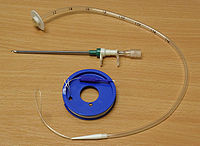 Photo Credit
I barely escaped from an embarrassing situation recently in the hospital. I was consulted to place a feeding tube, called a PEG, in an ICU patient. We gastroenterologists are rarely consulted for our opinion on whether these tubes make sense, which they often don’t. We are recruited to these patients simply to perform the technical function of inserting the tubes, so that Granny, or Great-Granny, or Great-Great… , won’t starve. Multiple medical studies have demonstrated that providing this nutrition to individuals with advanced dementia doesn’t benefit them. In addition, while it may seem intuitive that artificial feeding provides comfort, this may not be the case. It may provide more comfort to the physicians and family than it does to the patient. Read more »
*This blog post was originally published at MD Whistleblower*
May 22nd, 2011 by Dinah Miller, M.D. in Announcements
No Comments »


Aloha from the American Psychiatric Association’s Annual Meeting in Honolulu! The weather is gorgeous here and it’s been a great meeting. Yesterday, I heard Archbishop Desmond Tutu speak, and today, I listened to “Conversations” with Lorraine Bracco–also known as Dr. Melfi from The Sopranos. The beach is nice, too, and Clink has been scuba diving. Should I tell you she just learned to swim this past winter? She is amazing!
In a few hours, we will be giving our workshop, The Accessible Psychiatry Project: The Public Face of Psychiatry in New Media. We are telling the audience that the survey we did was not validated, was not statistically analyzed, and is not real science. Mostly, it was about how cool it is that we can even do this at all (ask questions, interact with readers, have an impact). I thought I’d share the survey results with everyone here. If you took the survey, thank you, again.
702 responses Summary See complete responses Read more »
*This blog post was originally published at Shrink Rap*













