May 17th, 2011 by DrCharles in Health Tips
No Comments »

 A fever in an infant can be the first sign of an illness. While a rise in body temperature above 100.4 degrees Fahrenheit is part of a healthy immune system response, it does signal potential danger and need for further evaluation. Since a reading may lead to a call or visit to the child’s doctor or emergency room, accuracy is key. What is the best type of infant thermometer?
A digital rectal thermometer.
This is according to such authorities as the American Academy of Pediatrics, Consumer Reports, and the American Academy of Family Physicians.
The definition of a fever is important as well. According to the AAFP:
A normal temperature is about 98.6°F (37°C) when taken orally (in your child’s mouth) and 99.6°F (37.5°C) when taken rectally (in your child’s bottom). Many doctors define a fever as an oral temperature above 99.5°F (37.5°C) or a rectal temperature above 100.4°F (38°C). Read more »
*This blog post was originally published at The Examining Room of Dr. Charles*
May 17th, 2011 by Toni Brayer, M.D. in Health Tips, Research
No Comments »

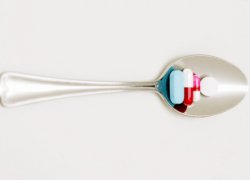 New information published in Circulation advises against using any nonsteroidal anti-inflammatory drugs (NSAIDs) in patients who have had a prior heart attack. These over-the-counter drugs are commonly used like Advil, Aleeve, Diclofenac, Ibuprofen. Using NSAIDs for even as little as one week was associated with a 45% increase for death or recurrent myocardial infarction (MI). The researchers could not identify a period that seemed to be safe, no matter how short.
The study used the Danish National Patient Registry and identified 83,675 patients who had a first MI between 1997 and 2006. The average age was 68 years and 65% were men. All the NSAIDs (except Naprosyn) used during the observation period were associated with an increased risk for death or new heart attack. Diclofenac (brand name Voltaren) was the worst.
 Readers should not go away thinking NSAIDs cause heart attacks. This study looked at patients who had already had an MI. But for those patients, the over-the-counter pain relievers should be avoided. Many patients with heart disease also have arthritis or other pain syndromes. We need to come up with safe treatments for pain or use “safer” NSAIDs like low dose Naprosyn or Ibuprofen only when the benefit is weighed with the risk.
Just because something is sold without a prescription does not mean it is without risk. Tell your doctor every medication you take.
*This blog post was originally published at EverythingHealth*
May 16th, 2011 by Dinah Miller, M.D. in Expert Interviews
No Comments »




 When Roy and I were on Talk of the Nation this past week, a called phoned in to ask about her sister. The question was about care in the Emergency Room/Department, so it was a perfect Roy question and he fielded it. I’ve been playing with it since, and wanted to talk more about this particular scenario, because the scenario was very common, and the question was more complicated than it seems.
From the transcript of the show:
ANN (Caller): Hi, thank you very much. I would like to ask Dr. Roy (oh, I gave him his blog name here) a question: My sister was admitted to emergency when she cut her wrists, and the doctor on call pulled me aside and said, do you think she was trying to kill herself?
And I said – because my sister is very intelligent – I said, if my sister really wanted to kill herself, she would have done it. I think she’s asking for help.
And so he said – and so he had her see the psychiatrist who was on call, or on duty. And she spoke with him for a while. And he sent her home, saying: Well, if you need me, I’m here.
What I would like to ask Dr. Roy is, what protocol was going on there? Why did they allow that to happen? And what would you change, if you could? Read more »
*This blog post was originally published at Shrink Rap*
May 16th, 2011 by Michael Sevilla, M.D. in Opinion
No Comments »


I wasn’t able to attend the Annual Leadership Forum (ALF) and the National Conference of Special Constituencies (NCSC) meetings in person this year. This is an annual meeting in Kansas City put on by the American Academy of Family Physicians (AAFP). I know that it can be hard to believe that someone actually likes going to a meeting. However, for me, these meetings always re-energize me and connect me with people with a passion for Family Medicine.
In 2010, there were only a few of us utilizing social media tools like twitter and facebook (including my blog posts from Thursday & Friday). However, just a year later, there seems to have been an explosion of people utilizing these platforms to a point yesterday when I saw a bunch of people signing up for the first time during the meeting. Even members of the AAFP Board of Directors were creating twitter accounts yesterday. Wow!
I really believe that this year, 2011, is when the Family Medicine community will more fully embrace social media, not only as a means of socialization, but also as a means of advocacy for our specialty. Here are some other reasons why I believe that Family Medicine needs social media: Read more »
*This blog post was originally published at Family Medicine Rocks Blog - Mike Sevilla, MD*
May 16th, 2011 by Lucy Hornstein, M.D. in Health Policy, True Stories
No Comments »

Insurance companies are supposed to pay for health care, although they do everything they can think of to avoid doing so. One company in particular (a small player here though a much bigger gorilla in other markets) does so by playing with words, even when another behemoth lost a lawsuit over the same issue.
The topic involves paying for preventive services while a patient is in the office for care of an acute illness or management of a chronic condition. The way we communicate with insurance companies about what we do in the office is by way of codes; CPT codes, to be precise. There are separate codes to differentiate between preventive services and the so-called Evaluation and Management (E/M) services. The latter are your basic office visit codes covering all the “cognitive” services I offer — as opposed to procedural codes, where I actually do something to you other than talk with and examine you. Read more »
*This blog post was originally published at Musings of a Dinosaur*


 A fever in an infant can be the first sign of an illness. While a rise in body temperature above 100.4 degrees Fahrenheit is part of a healthy immune system response, it does signal potential danger and need for further evaluation. Since a reading may lead to a call or visit to the child’s doctor or emergency room, accuracy is key. What is the best type of infant thermometer?










