April 12th, 2011 by DrCharles in Medical Art
No Comments »

We are living incarnations of a love that preceded us.
Vibrant, with ailing petals that should fall.
A knot in the throat, a conjuring of another’s quintessence,
as music brightens the void.
As we love others perhaps we can feel the face
of eternity shining down upon us.
If we could but hold on to love,
to be mindful of its primacy,
we might never grow dim again.
*This blog post was originally published at The Examining Room of Dr. Charles*
April 12th, 2011 by Michael Kirsch, M.D. in Health Policy, Opinion
No Comments »

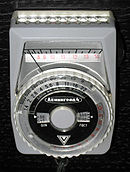 Prototype ‘BS’ meter.
So many folks express views that are obviously self-serving, but they try to masquerade them as altruistic positions that benefit some other constituency. These attempts usually fool no one, but yet these performances are common and ongoing. They are potent fertilizer for cynicism.
Teachers’ unions have been performing for us for decades. Their positions on charter schools, school vouchers, merit pay and the tenure system are clear examples of professional advocacy to protect teachers’ jobs and benefits; yet the stated reasons are to protect our kids. Yeah, right. While our kids are not receiving a top flight education, the public has gotten smart in a hurry on what’s really needed to reform our public educational system. This is why these unions are now retreating and regrouping, grudgingly ‘welcoming’ some reform proposals that have been on the table for decades. This was no epiphany on their part. They were exposed and vulnerable. They wisely sensed that the public lost faith in their arguments and was turning against them. Once the public walked away, or became adversaries, established and entrenched teachers’ union views and policies would be aggressively targeted. Those of us in the medical profession have learned the risk of alienating the public. Teachers have been smarter than we were.
The medical profession is full of ‘performances’ where the stated view is mere camouflage. For example, Read more »
*This blog post was originally published at MD Whistleblower*
April 11th, 2011 by Lucy Hornstein, M.D. in Humor, True Stories
1 Comment »

Like many offices, we have a policy of calling patients to remind them of upcoming appointments, usually one to two days ahead of time. With the advent of our new EMR, we have the option of having the system send them email reminders. The vast majority of folks who’ve received these just love them. But there are still several patients a day who get phone calls.
The other recent change in the office, cutting the staff by 50%, means that my one remaining staffer is the one who makes the calls. She has other stuff to do, though — lots of other stuff, actually — so that she may not get around to these calls until later in the day.
Thank goodness our patients are right on the ball: Read more »
*This blog post was originally published at Musings of a Dinosaur*
April 11th, 2011 by Michael Craig Miller, M.D. in Better Health Network
No Comments »


As many who were children before the era of cell phones will remember, contacting a friend by phone often involved mastering at least the following script: “Hi, Mrs. Doe. Is Johnny home?” Not so today, in the world of cell phones, texting, email, Facebook, and Twitter.
If you are a parent and don’t use or understand the new technologies, the American Academy of Pediatrics (AAP) has just issued a guideline saying that you probably should. More than half of teens connect to a social media site at least daily. Three-quarters have cell phones that they can use for social networking as well as texting. In a guideline published in March, the AAP makes the important (if obvious) point that today’s children are growing up on the Internet. Since children and adolescents now spend a great deal of time there, parents have good reasons to know what the place is like. Read more »
*This blog post was originally published at Harvard Health Blog*
April 11th, 2011 by Nicholas Genes, M.D., Ph.D. in Medical Art, Opinion
No Comments »

I made my first PowerPoint presentation in 1997, and actually used Microsoft’s application to prepare 35mm Kodachrome slides for a carousel projector. Since then, I’ve seen thousands of PowerPoint presentations (and a few dozen Keynotes), and had a hand in creating many, myself.
Not since a conference a decade ago have I needed to make Kodachrome slides. Yet almost everyone still uses software built around printing slides, making a linear progression of topics. The impact of this format on human thought is substantial — PowerPoint was fingered as contributing to the Columbia disaster and has spawned a lot of discussion and linkage, even here, regarding effective communication (probably all conceived of during dull PowerPoint presentations).
While compelling presentations are possible with Powerpoint (using the Lessig Method, for example) those kinds of talks require planning, and a mastery of the material. And some great stock photos. My experience in school and training is that the PowerPoint is often made as the presenter is learning the content and so is bound to lack the organization and expertise necessary for a Lessig-style presentation. People procrastinate about public speaking, and when crunch time comes it’s just too easy to flip through a a textbook, call up a Pubmed abstract, and churn out another verbose PowerPoint slide. With practice, it’s possible to whittle down the number of words and bullets per slide — but who has time for that? Much easier to read the talk from the slide itself. Read more »
*This blog post was originally published at Blogborygmi*












