March 15th, 2011 by Elaine Schattner, M.D. in Opinion, Research
No Comments »

Lupus, an autoimmune disease, [recently] turned up on the front page of the Wall Street Journal (WSJ). It cropped up, also, on the first page of the New York Times business section, and elsewhere. Scientific American published a nice online review just now. The reason is that the FDA has approved a new monoclonal antibody for treatment of this condition.
The drug belimumab (Benlysta), targets a molecule called BlyS (B-lymphocyte Stimulator). The newspapers uniformly emphasize that this drug marks some sort of triumph for Human Genome Sciences, a biotech company that first reported on BlyS in the journal Science way back in 1999. BlyS triggers B cells to produce antibodies that in patients with lupus tend to bind and destroy their own cells’ needed machinery, causing various joint, lung, liver, kidney, brain, blood vessel and other sometimes life-threatening problems. So if and when Benlysta works, it probably does so by blocking aberrant autoimmune B-cell activity.
The newspapers don’t give a lot of details on the drug’s effectiveness, except that it appears to help roughly one in 11 patients, and the main benefit may be that some lupus patients on Benlysta can reduce their use of steroids, which have long-term and toxic effects on many organs. The most recent major medical publication on a trial on the drug came out in the Lancet two weeks ago.
Some reported caveats are that the drug has not been adequately tested or approved for patients with severe kidney or neurological manifestations of the disease, and that its activity, marginal as it is, appears to be less in patients of African heritage based on trials completed thus far. Additional trials are in the works.
The drug is expensive, to the updated tune of $35,000 per year. According to the WSJ: “Estimates of how many Americans are affected range from 161,000 to 1.5 million.” (How’s that for a wide ballpark figure? Likely a function of how hard it is to define and establish diagnosis for this disease, which anticipates how hard it will be to measure this drug’s effects — see below.) The same WSJ piece says analysts expect the drug to become a blockbuster, with annual sales eventually topping $1 billion. Read more »
*This blog post was originally published at Medical Lessons*
March 15th, 2011 by Berci in Better Health Network, Research
No Comments »

I’ve recently come across a great guide about using social media in science. I cover this issue in my university course, Internet in Medicine, and I’ll definitely update my materials with these suggestions. From the Research Information Network:
This guide has been produced by the [University of Derby] International Centre for Guidance Studies (iCeGS), and aims to provide the information needed to make an informed decision about using social media and select from the vast range of tools that are available.
One of the most important things that researchers do is to find, use and disseminate information, and social media offers a range of tools which can facilitate this. The guide discusses the use of social media for research and academic purposes and will not be examining the many other uses that social media is put to across society.
*This blog post was originally published at ScienceRoll*
March 15th, 2011 by Maria Gifford in Announcements, Medblogger Shout Outs
No Comments »
 Grand Rounds will be hosted right here at “home” at Better Health on Tuesday, March 22th, 2011.
Please send your blog-post submissions via e-mail by 12:00AM midnight CT on Saturday, March 19th, to: maria.gifford@getbetterhealth.com.
Please include:
- “Submission for Grand Rounds” in the subject line of your e-mail.
- Your name (blog author), the name of your blog, and the URL of your specific blog-post submission.
- A short summary (1 to 3 sentences) of your blog post.
There’s no specific theme for this edition of Grand Rounds — just send us something really smart or deep or profound that will move us and make us all think harder about health and medicine.
For more information, please see the Grand Rounds Submissions Guidelines. We look forward to receiving your submissions and featuring them here next week. Thank you!
– Maria Gifford, Director of Content, Better Health
March 14th, 2011 by Dinah Miller, M.D. in Better Health Network, Opinion
No Comments »



Gardiner Harris had a [recent] article in the New York Times called “Talk Doesn’t Pay So Psychiatrists Turn to Drug Therapy.” The article is a twist on an old Shrink Rap topic, “Why your Shrink Doesn’t Take Your Insurance.” Only in this article the shrink does take your insurance, he just doesn’t talk to you.
With his life and second marriage falling apart, a man said he needed help. But the psychiatrist, Dr. Donald Levin, stopped him and said: “Hold it. I’m not your therapist. I could adjust your medications, but I don’t think that’s appropriate.”
Dr. Levin sees 40 patients a day. And he’ss 68 years old. This guy is amazing. There’s no way I could see 40 patients a day for even one day. He’s worried about his retirement, but I wouldn’t make it to retirement at that pace. (Should we make a bet on whether Dr. Levin has a blog?)
The article has a whimsical, oh-but-for-the-good-old-days tone. In-and-out psychiatry based on prescribing medications for psychiatric disorders is bad, but the article doesn’t say why. In the vignettes, the patients get better and they like the psychiatrist. Maybe medications work and psychotherapy was overemphasized in the days of old? The patients don’t complain of being short-changed, and if Dr. Levin can get 40 patients a day better for — your guess is as good as mine, but let’s say — $60 a pop, and they only have to come every one to three months, and there’s a shortage of psychiatrists, then what’s the problem? Why in the world would anyone pay to have regular psychotherapy sessions? Read more »
*This blog post was originally published at Shrink Rap*
March 14th, 2011 by DrWes in Health Policy, Opinion
No Comments »

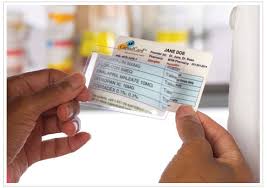 Give me your medication list and I’ll tell you your health problems. It happens every day in emergency rooms across the country as confused elderly patients present for an acute problem unable to describe their past medical history, but equipped with a list of medications in their wallet:
Metformin = Type-2 diabetes
Synthroid = Hypothyroidism
Lipitor + Altace + Lasix + Slo-K = Ischemic cardiomyopathy
Lexapro = A little anxious or depressed
Viagra = Well, you know…
I bet I’d be right better than 90 percent of the time. Now, imagine you’re a pharmaceutical company wanting to target people with those chronic diseases. Where might you find them?
No problem. Just pay the insurers to provide you patients’ drug lists. No names need be exchanged in keeping with HIPAA requirements. But the drugs list attached to folks’ cable TV box? Perfect. You’re in — with no legal strings attached. Then, according to the Wall Street Journal, just fire away with that targeted direct-to-consumer advertising on TV, courtesy of your local healthcare insurance provider.
No wonder our healthcare industry movers and shakers love the electronic medical record. Healthcare privacy? What healthcare privacy?
-WesMusings of a cardiologist and cardiac electrophysiologist.
*This blog post was originally published at Dr. Wes*













