We all know that using a cell phone can stimulate the brain to work a bit harder. “Mr. Skerrett? This is Dr. LeWine’s office. Do you have a minute to talk about your test results?” or “Dad, a bunch of kids are going to Casey’s house after the dance. Can I go?” But a new study published in JAMA is making me wonder what the energy emitted by the phone itself — not just the information it delivers — is doing to my brain.
Here’s the study in a nutshell. Dr. Nora Volkow and her colleagues recruited 47 volunteers to have their brain activity measured twice by a PET scanner. Both times the volunteer had a cell phone strapped to each ear. During one measurement, both phones were turned off. During the other, one phone was turned on but muted so the volunteer didn’t know it was on; the other was left off. Each session lasted about an hour. The scans showed a small increase in the brain’s use of glucose (blood sugar) when the phone was on, but only in parts of the brain close to the antenna.
It was an elegant study. The researchers took pains to anticipate sources of error. They used a control (both phones off) against which to compare the effect of a “live” cell phone. They used cell phones on each ear, one on and one off, to see if the effect was localized. They muted the phone that was on to eliminate the possibility that any brain activation was due to listening to the sound of a voice coming through the phone’s speaker. So the result is probably a real one, not an artifact or measurement error.
What does this brain activation mean? No one really knows. As Dr. Volkow told NPR, “I cannot say if it is bad that they [cell phones] are increasing glucose metabolism, or if it could be good.” Read more »
I read today that Eastern Ontario has started a bed registry to keep track of where open psychiatric beds are available. This is something I’ve long advocated. The United States now has less than 10 percent of the beds it used to have 50 years ago. Granted, treatment has improved and community resources are enhanced. But there are still areas that often do not have a sufficient number of hospital beds for folks needing acute inpatient psychiatric care.
The Ontario story described in the Ottawa Citizen states that six of the area hospitals have been connected to a computerized “bed board” that provides real-time information on who has an appropriate bed available. This saves time in the ER and gets patients to needed treatment more quickly. Otherwise calls need to be made to each individual hospital, which is very time-consuming.
And it’s not uncommon for all the beds to be full. Last July there was an EMTALA complaint against a hospital in Maryland because a patient sat in the ER all weekend, and this hospital said they had no beds to admit the patient to. The Department of Health and Mental Hygiene (DHMH) investigated the complaint and found that indeed the hospital was full that weekend. The ER’s record indicated that all the hospitals (except the state hospitals) were called that weekend and all indicated their beds were full. So DHMH visited every hospital (about 28, I think) thinking that surely one of them had an empty bed they were hiding. What they discovered was that every single psychiatric bed in the state was full.
Unfortunately, we have no way of determining how often this happens, but we know if happens often enough. A “bed board” like this would be very helpful in quickly finding beds when needed and keeping track of the extent of this problem. Having patients wait in ER for days is unsafe and is even discriminatory. How many people with stroke or uncontrolled diabetes sit in ER for days waiting to find a bed for treatment? I’d like to hear others’ thoughts on how this problem can be addressed.
*This blog post was originally published at Shrink Rap*
I had breakfast this morning in Las Vegas with my friend, Dave Garcia. Dave is a pit boss on the graveyard shift at the Belagio Hotel where they made the modern-day “Ocean’s 11” buddy movie from 1960. Dave is also a 52-year-old chronic lymphocytic leukemia survivor. He reached out to me online and we have been friends since soon after his diagnosis in 2002.
Dave is a father of two young kids. He dreams of seeing them grow up. But, understandably, he worries. Some days more than others. Today was his day to see his oncologist and get the latest blood test results. Would his white blood count (WBC) be in the normal range? If so, his third round of treatment was still working. If not, he might be headed to a stem cell transplant, short-term disability, and living in another city for weeks or months.
As you can imagine, Dave was on pins and needles today. He would be against more chemo because he worries about the toxic drugs killing cancer cells but weakening him in the long run. Dave admits his blood pressure goes up on these days.
Dave is not alone in his fear. For millions of cancer survivors, while each day is special, some days are anxiety producing. For me it’s when I have a strange ache or pain. I rarely tell Esther, but I worry. For almost everyone it’s on days when we are having a “checkup.” The worry is, is this the day another shoe will drop? Fortunately, that hasn’t come for me yet and I hope it never will. I am happy to say Dave just texted me. His worry today was unfounded. The WBC was normal. He was given a pass at least for a few more months. We hope forever!
At another meeting today in Las Vegas there was a discussion about information for cancer patients. Nurses ticking off all sorts of facts and admonishments to patients. The nurses feel they are doing their job of education quite well. Some patients would say maybe not so well. How come? Fear. For us it is not clinical routine. It is our lives on the line at diagnosis or at a checkup. We often don’t hear so well in those moments. Dave may not have heard so well today. Only one word counted: “Normal.” Read more »
*This blog post was originally published at Andrew's Blog*
Want to try to avoid a visit to the doctor for that cough or cold? Why not go to the pharmacy to get an over-the-counter (OTC) medicine? In this video from local TV news, I talk about the good and bad of OTC cough and cold meds. Will that medicine from the pharmacy actually help you get better faster?
A minor firestorm has erupted regarding those doctors in Wisconsin this week who were handing out fake “sick excuses” to demonstrating teachers, Fox news producers, Andrew Breitbart, and, apparently, anyone else who had some use for one.
Indeed, there has been more outrage about this episode than DrRich would have thought. Conservative commentators, of course, were predictably apoplectic about the sight of these callow youths, preening in their white coats, abusing and debasing the sacred trust which has been granted to them by virtue of their profession. There’s nothing surprising about that. But even most of the more mainstream commentators expressed at least a slight bit of discomfort about the actions these doctors were taking, even if they were doing it for a very good and noble cause.
Only a very few seemed to endorse their actions completely, explaining that these doctors are engaging in classic civil disobedience, and that, by standing on street corners in their white coats repeatedly committing felonies with the cameras whirring, their behavior is every bit as deserving of our approbation as the actions we admire so much of Thoreau or Gandhi. DrRich is open to this explanation.
Civil disobedience, of course, is to a) openly and non-violently disobey a certain law that you consider unjust, b) to admit to the operative authority, upon apprehension, that you intentionally broke the law specifically because you consider it unjust, and finally c) to passively accept whatever punishment the authority hands out to you. These doctors have executed step “a” flawlessly, and DrRich waits with interest to see whether they will successfully complete steps “b” and “c.” Read more »
It’s no secret that doctors are disappointed with the way that the U.S. healthcare system is evolving. Most feel helpless about improving their work conditions or solving technical problems in patient care. Fortunately one young medical student was undeterred by the mountain of disappointment carried by his senior clinician mentors…
I am proud to be a part of the American Resident Project an initiative that promotes the writing of medical students residents and new physicians as they explore ideas for transforming American health care delivery. I recently had the opportunity to interview three of the writing fellows about how to…
I m often asked to do book reviews on my blog and I rarely agree to them. This is because it takes me a long time to read a book and then if I don t enjoy it I figure the author would rather me remain silent than publish my…
When I was in medical school I read Samuel Shem s House Of God as a right of passage. At the time I found it to be a cynical yet eerily accurate portrayal of the underbelly of academic medicine. I gained comfort from its gallows humor and it made me…
I am hesitant to review diet books because they are so often a tangled mess of fact and fiction. Teasing out their truth from falsehood is about as exhausting as delousing a long-haired elementary school student. However after being approached by the authors’ PR agency with the promise of a…



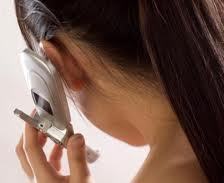 We all know that using a cell phone can stimulate the brain to work a bit harder. “Mr. Skerrett? This is Dr. LeWine’s office. Do you have a minute to talk about your test results?” or “Dad, a bunch of kids are going to Casey’s house after the dance. Can I go?” But a new study published in JAMA is making me wonder what the energy emitted by the phone itself — not just the information it delivers — is doing to my brain.