February 25th, 2011 by admin in Book Reviews, True Stories
No Comments »

This is a guest post by Dr. John Schumann.
**********
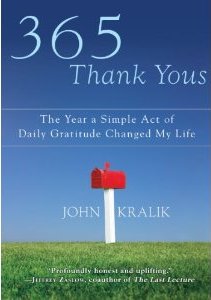
I just read the book “365 Thank Yous” by John Kralik. I heard an interview with the author on NPR and it caught my attention.
Kralik had been down on his luck in 2007: Divorced twice, overweight, with a struggling law firm that he’d started, he was also failing in a new romantic relationship. He was worried about losing his seven-year-old daughter, too, in a custody dispute.
He made a momentous decision: Instead of feeling sorry for himself (easy to do given his predicaments), he decided to be grateful for what he had. To show it, he vowed to write a thank-you note every day for the next year. What do you think happened?
His life changed for the better. His relationship improved. His clients started paying their bills and his firm’s financial footing solidified. His health improved. He eventually achieved his lifelong dream of becoming a judge. To top it off, he turned his personal quest into a writing project. Within minutes of writing a book proposal, he received responses from agents who hoped to shepherd his project. Every writer’s dream.
I’ll grant you that it sounds hokey. But there are a couple of things the book demonstrated to me. Read more »
*This blog post was originally published at ACP Internist*
February 25th, 2011 by Medgadget in Better Health Network, Health Tips
No Comments »

 Getting around a city can be hard when you’re in a wheelchair because some places simply aren’t designed for wheels. Wheelmap is an iPhone app for wheelchair users which tells you about the accessibility of nearby restaurants, cafes, clubs, museums, and other locations.
Locations are color-coded on a map to show how accessible they are. The current location, but also any place around the world, can be viewed. Maps are based on OpenStreetMap data, and accessibility data about locations can be modified and sent back to the servers by users from within the app. There is also a corresponding website showing the same information online.
As with any other crowd-sourced initiative, success depends on the number of contributors, but we have good hopes for this one to succeed. Because the app was created by a German, coverage is most extensive in Germany, particularly Berlin, but other large cities worldwide are starting to catch up.
More from AP: German iPhone app guides handicapped around cities…
iTunes link: Wheelmap…
Homepage: Wheelmap…
*This blog post was originally published at Medgadget*
February 25th, 2011 by Peggy Polaneczky, M.D. in Opinion, True Stories
No Comments »

A pathologist uses the EMR to find out just a little more about the patient whose cerebro-spinal fluid she has under her microscope — and changes her diagnosis:
This patient had a diagnosis of plasma cell myeloma with recent acute mental status changes. So the lone plasma cell or two I was seeing, among the lymphs and monos, could indicate leptomeningeal spread of the patient’s disease process. I reversed the tech diagnosis to atypical and added a lengthy comment – unfortunately there weren’t enough cells to attempt flow cytometry to assess for clonality of the plasma cells to cinch the diagnosis. But with the information in the EMR I was able to get a more holistic picture on a couple of cells and provide better care for the patient. I cringe to wonder if I might have blown them off as lymphs without my crutch.
The much-hoped-for improvement in quality due to the adoption of EMRs has been elusive to date, so anecdotal experiences like this will be important evidence to consider in judging the impact of the EMR on healthcare outcomes.
Kudos to pathologist Gizabeth Shyner, who writes over at Mothers in Medicine and her own blog, Methodical Madness, for “thinking outside the box.”
*This blog post was originally published at The Blog That Ate Manhattan*
February 24th, 2011 by Linda Burke-Galloway, M.D. in Health Tips, Research
No Comments »

 Birth defects, particularly those of the blood vessels, account for the majority of infant deaths, especially after the first week of life. Congenital heart disease (CHD) — meaning defects of the heart — is responsible for one-third of deaths between birth and the first year of life. Therefore, the diagnosis of CHD is critical in order to plan life-saving treatments, such as the proper place for the delivery, the type of delivery, and its timing. If it’s known in advance that an unborn baby has a heart problem and is delivered in a hospital that provides special care, its survival and future health will increase dramatically.
Who’s at risk for having CHD and which expectant moms should have further evaluation? Families who have a history of CHD — especially mothers, fathers, and siblings — should receive genetic counseling. Multiple medical studies over the past fifteen years have demonstrated the significance of genetics as a main culprit of CHD. Parents of a child with CHD have a two percent to three percent chance of having another affected child. If a mother or father has CHD, a fetal cardiac echo (an ultrasound of the heart) is definitely warranted.
Because the treatment of CHD in many cases is surgical, there’s an increasing number of patients who have survived into adulthood and have ultimately become parents. Research has documented that 4.1 percent of their children will have CHD. Children with mothers who have CHD are at a greater risk of inheriting the disease than if they have fathers with CHD. Mothers with cyanotic heart disease — that is, blood that is without oxygen that bypasses the lungs and goes directly to the blood vessels — also have a greater risk of having a baby with CHD. Read more »
*This blog post was originally published at Dr. Linda Burke-Galloway*
February 24th, 2011 by Jeffrey Benabio, M.D. in Better Health Network, Health Tips
No Comments »

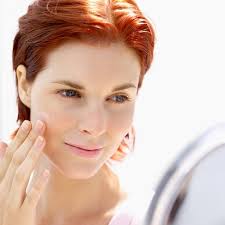 Step-by-step skin care? It’s complicated. You have a cabinet full of toners, creams, and serums and you don’t know what goes on when. Using products in the wrong order could mean you’re not getting the most for your money. Here’s a guide to make it easier for you:
1. Toners
Toners are astringents, which means they contract tissue like pores, making your face feel tighter. They often contain alcohols and are used to remove oil from the skin as well as tightening. Therefore, you should use them first. If you have dry or sensitive skin, however, you might skip them completely because they can make dryness worse.
2. Serums
Serums are liquid cosmetics. They usually have antioxidants or peptides to minimize the day’s damage done to your skin and to give you a more youthful appearance. Serums are applied first so that there’s nothing between their expensive ingredients and your skin. The exceptions are serums that contain silicone or dimethicone. Silicone helps lock moisture in your skin, but it also acts as a barrier hindering anything above it from getting to your skin. Silicone serums should be applied last. Like expensive serums, any prescription medications should also be applied first to ensure that their active ingredients penetrate the skin unhindered. If you have both, then apply the prescription first and the serum second.
3. Eye cream and face cream
Face and eye creams can be simple moisturizers or complex anti-aging products. Eye creams usually have antioxidants to help restore this most delicate skin. If you have one, then apply it before your face cream. Otherwise, by applying your face cream first, you risk rubbing it into your eyes. Once your prescription medications (if any) serums, and eye creams have absorbed, then apply your face cream last. If your serum has silicone or dimethicone, then apply it last, so its protective ingredients are the outermost barrier.
*This blog post was originally published at The Dermatology Blog*