February 5th, 2011 by Veronica Sikka, M.D., Ph.D. in Health Policy, Opinion
No Comments »
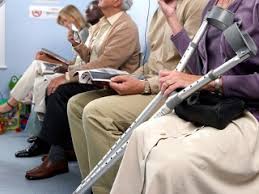 In 1986, when Congress passed the Emergency Medical Treatment and Active Labor Act (EMTALA), hospitals and ambulance services were mandated by law to stabilize anyone needing emergency healthcare services regardless of citizenship, legal status, and/or insurance status.
This was instituted at the time to prevent the prevalent practice of “dumping” — refusing to treat patients because of insufficient insurance or transferring or discharging patients on the basis of anticipating high diagnosis and treatment costs. While the implications of this law are indeed very noble in providing undifferentiated care to all patients based solely on healthcare needs and not financial status, it has unfortunately led to many patients presenting to the emergency department (ED) for primary care issues.
The misconception is that the care in the ED is similar if not better (because of increased access to consult services and imaging) and quicker than waiting to see your primary care physician (PCP). A 2010 study published in Health Affairs found that 14 percent to 27 percent of visits to hospital EDs are nonemergent, such as minor infections, strains, fractures, and lacerations. The study found that all of these cases could have been appropriately triaged in urgent care centers or retails clinics.
England has a model that may be a potential solution. The healthcare goal of the National Health Services (NHS) is to “treat the right patients in the right place at the right time.” The NHS employs nurses and paramedics to handle 999 (their equivalent of our 911) triage calls with more appropriate triaging of patients based on acuity. Read more »
February 5th, 2011 by Felasfa Wodajo, M.D. in Opinion, Research
No Comments »

The cost of managing chronic diseases is the largest portion of healthcare expenditures in developed countries. For example, the prevalence of adult acquired diabetes has been rising in the United States, in concert with increasing rates obesity. The CDC has termed it an “epidemic,” especially in light of the massive costs incurred by the healthcare system due to diabetes.
The deleterious health effects of many chronic conditions can be diminished by behavior modifications. While few would underestimate the difficulty of having patients lose weight or exercise more, good management of blood sugar in diabetes is both objectively measurable and strongly correlated with reduced end-organ damage.
This is among the reasons why Research2Guidance has recently nominated diabetes as the condition most likely to be most targeted by mobile medical software and devices (mHealth). This finding is part of their recently published Global Mobile Health Market Report 2010-2015. This is the same report that also predicted that, in the future, medical apps are likely to be distributed by physicians and healthcare institutions.

This time Research2Guidance is highlighting the portion of the survey where they looked into where mobile devices have the most potential to affect health outcomes. While other chronic conditions such as hypertension and obesity have larger populations, the market researchers felt diabetes had the largest market potential due to the huge cost saving potential, the demographic and geographic overlap between smartphone users and people with diabetes, and the real potential to improve blood sugar management using mobile devices. Read more »
*This blog post was originally published at iMedicalApps*
February 4th, 2011 by Dr. Val Jones in Health Tips, True Stories
1 Comment »
 I’m a physician trained in sports medicine, and a chronic back pain sufferer. I first injured my back in 2001 when lifting a heavy bag and trying to sling it onto my shoulder. The pain was so severe that I couldn’t get off the floor for three days. I eventually ended up in the ER with an “unremarkable” MRI. The cause of my pain was never explained — all I knew is that I hadn’t herniated any disks.
Years later my back pain still flares up occasionally, and I’ve never really understood how to prevent it or treat it effectively. This has been very embarrassing for me, since I’m supposed to be an expert in this field. But today I finally got some insight into the real cause of my pain — not from a physician or physical therapist, but from a yoga instructor. Read more »
February 4th, 2011 by AnnMacDonald in Better Health Network, Health Tips
No Comments »

When I was growing up, my parents had a simple rule when it came to food: “Finish everything on your plate.” We had to sit at the table until we did.
They meant well. They wanted us to understand that food should not go to waste. The problem with this advice — and I’m sure I’m not the only American who grew up with it — is that we learned early on to eat everything put in front of us when we sat down to meals. Then the size of the plates grew — and so did the amount of food we consumed.
 It’s called portion inflation. Take a look at the illustration at left. It’s based on an analysis published in the Journal of the American Dietetic Association which found that typical restaurant portion sizes today are two to eight times as large as those in 1955. Back then, people who consumed a typical American meal (a hamburger, French fries, and a soda) had only one portion size to pick from. Today we can choose from multiple portion sizes: reasonable, big, bigger, and ridiculous (as I’ve come to think of the sizes listed in that last column).
Portion size matters. The bigger the portion, the more calories you can consume. An example using a table of calorie information available online in the nutrition section at McDonald’s: By choosing the largest size in each category, you’ll end up consuming nearly triple the number of calories in a meal as you would if you chose the smallest portions.
| Food |
Smallest size/calories |
Largest size/calories |
| Hamburger |
3.5 oz/250 calories |
11.1 oz/750 calories |
| French fries |
2.5 oz/230 calories |
5.4 oz/500 calories |
| Coca Cola |
12 oz/110 calories |
32 oz/310 calories |
| Total calories |
590 calories |
1,560 calories |
Partly as a result of portion inflation, we’re eating more. Dietary surveys indicate that, on a per capita basis, Americans consumed 200 calories more per day in the 1990s than they did in the 1970s. That may not sound like a lot, but over time extra calories translate into extra pounds. Some experts calculate that people who add 150 calories a day to their diets, without increasing physical activity to burn those calories off, will gain as many as 15 pounds in a year. Read more »
*This blog post was originally published at Harvard Health Blog*
February 4th, 2011 by Glenn Laffel, M.D., Ph.D. in Better Health Network, Research
1 Comment »

 Drunk driving continues to be a serious problem. In 2009 for example, alcohol was a factor in more than 10,000 highway deaths. The same year, a stunning 10 percent of respondents to a survey of U.S. adults said they had operated an automobile while drunk during the previous year. Nearly 6 percent said they had done it more than once.
So how would you feel about a car that can instantly detect whether a driver is drunk and prevent that person from starting the car? You better make up your mind quickly, because scientists are close to perfecting this technology.
“We’re five to seven years away from being able to integrate this into cars,” Robert Strassburger, the VP for safety at the Alliance of Automobile Manufacturers (AAM) told the Washington Post. The AAM, an automotive trade group, is on the development team for the new technology which is being spearheaded by the Automotive Coalition for Traffic Safety and National Highway Traffic Safety Administration.
The anticipated sensing device will look nothing like the breathalyzer machines currently used by police in the field. Instead it will be comprised of tiny, passive, touch-sensitive sensors that are permanently affixed to a key fob or a starter button. The sensors can determine blood alcohol levels in seconds. Read more »
*This blog post was originally published at Pizaazz*














