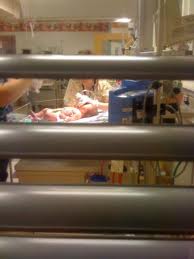
The current New Yorker unfolds an engaging story on childhood food allergies. As related by Dr. Jerome Groopman, there’s a shift in how some doctors think about how these conditions are best managed and, even better — might be prevented. The article feeds into recent discussion that medical science, and even dogma, too-often turns out to be incorrect.
Groopman interviews Dr. Hugh Sampson, director of the Jae Food Allergy Institute at Mount Sinai Medical Center in New York:
…“This increase in the incidence of food allergy is real,” Sampson said when we spoke recently. He cannot say what is causing the increase, but he now thinks the conventional approach to preventing food allergies is misconceived. For most of his career, he believed, like most allergists, that children are far less likely to become allergic to problematic foods if they are not exposed to them as infants. But now Sampson and other specialists believe that early exposure may actually help prevent food allergies.”
I recommend the full read if you can get it: Groopman probes potential causes of discordant food allergy rates in children of different geographic regions. I learned a number of details on how some doctors in the U.S. use protein-breakdown methods to desensitize children to food allergies, how in Israel newly-speaking infants are said to ask eagerly for Bamba, a manufactured, peanut-containing snack (which, for the record, I don’t particularly endorse), and how in some cultures parents chew their young children’s food in a manner that might that might facilitate breakdown of complex proteins by enzymes in saliva.
All interesting. Of course it’s hard to know exactly what’s true in this, and the causes of allergies are likely to vary among children. There’s a randomized LEAP study (Learning Early About Peanut Allergy) in the U.K. that may provide some hard evidence on this, one way or another.
*This blog post was originally published at Medical Lessons*
I have gushed praise for the Milwaukee Journal Sentinel for a long time. (Disclosure: I cut my teeth in journalism as a Journal Company employee way back in 1973. No ties since 1976.) As a mid-market newspaper facing all of the same hurdles as other newspapers, it consistently demonstrates tenacity and creativity in tackling vital healthcare issues in this country. The latest: A project called “Empty Cradles: Confronting Our Infant Mortality Crisis.”
While there is a great health/medicine/science team in place at the Journal Sentinel, I believe that much of the credit goes to the top — to editor Marty Kaiser, who clearly understands that healthcare issues are among the most important his paper can report on in serving public needs. Kaiser writes:
“The Journal Sentinel today takes on an issue we have too long ignored — the death of children before their first birthday. Infant mortality is a crisis not just of public health, but of ethics and morality. The rate at which infants die in our city is unacceptable. In 2011 we will examine the problem and point to solutions.”
The project is off to a great start, taking a global picture and focusing it locally. Read more »
A Florida’s judge’s ruling that the Accountable Care Act (ACA) is unconstitutional doesn’t resolve the underlying constitutional issue (which will ultimately have to be decided by the U.S. Supreme Court) but it has introduced new uncertainty for the $2.3 trillion health care industry, and emboldened the law’s critics to push even harder for repeal (not that they weren’t trying already).
The Wall Street Journal’s (WSJ) health blog reports that “states and companies that are supposed to be implementing the law trying to figure out what to do next. The WSJ reports that the 26 states that are parties to the suit are considering whether to ask the Supreme Court to take up the case now, before it has fully wended its way through the legal system. The New York Times (NYT) quotes the governor of Florida as saying that until the fate of the law is clear, “we’re not going to spend a lot of time and money” to implement it. Other states, even if part of the suit, will move ahead,” the NYT says. The WSJ also reports that most health care companies plan to “stay the course” and continue to plan for the law’s implementation. Meanwhile, the Obama administration says that the judge’s ruling will have no effect on the implementation of the law or the requirement that states (including those who brought the suit) comply with its mandates and claims that most constitutional experts agree with the administration.
Now, I am not a lawyer, so I don’t have any expertise on the legal arguments over the ACA’s constitutionality. For those of you who want to hear more about the constitutional questions from people who might actually know what they are talking about, I recommend this Health Care Blog post from attorney Mark Hall, a critic of the Florida judge’s ruling. He notes that “at least half of the relevant part of the opinion is devoted to discussing what Hamilton, Madison, Jefferson and other Founding Fathers would have thought about the individual mandate” (Judge Vinson concluded that they would not have approved of it) but “the same Founders wrote a Constitution that allowed the federal government to take property from unwilling sellers and passive owners, when needed to construct highways, bridges and canals.” The Washington Post’s Ezra Klein — a supporter of the Affordable Care Act — has posted an excellent overview of what legal experts are saying about the ruling, pro and con, including a link to a posting that argues Judge Vinson ruled correctly. Read more »
Most of our posts here deal with gadgets physicians or other medical professionals would use, but the New York Times has published an article about issues stemming from the patient or the family bringing cameras into the delivery room.
Now, as anyone who’s been made to watch a video of a friend’s delivery during a party can attest, this isn’t a new phenomenon. However, since almost any device can record video now and it’s easiest to share the video online, medical-legal considerations are leading some hospitals to restrict any and all recordings of live births.
We’d be interested to know what our readers think. Do you let patients film you while you work?
Partners in Health is building a state-of-the-art teaching medical facility in Mirebalais in Haiti’s underserved Central Plateau.
My niece Annie helped design the waste and water treatment systems of the project as part of her engineering internship with Northeastern University, and will be joining the Partners in Health group upon graduation. It’s so inspiring to see this wonderful project coming to fruition and to know that she’ll be part of it.
It’s no secret that doctors are disappointed with the way that the U.S. healthcare system is evolving. Most feel helpless about improving their work conditions or solving technical problems in patient care. Fortunately one young medical student was undeterred by the mountain of disappointment carried by his senior clinician mentors…
I am proud to be a part of the American Resident Project an initiative that promotes the writing of medical students residents and new physicians as they explore ideas for transforming American health care delivery. I recently had the opportunity to interview three of the writing fellows about how to…
I m often asked to do book reviews on my blog and I rarely agree to them. This is because it takes me a long time to read a book and then if I don t enjoy it I figure the author would rather me remain silent than publish my…
When I was in medical school I read Samuel Shem s House Of God as a right of passage. At the time I found it to be a cynical yet eerily accurate portrayal of the underbelly of academic medicine. I gained comfort from its gallows humor and it made me…
I am hesitant to review diet books because they are so often a tangled mess of fact and fiction. Teasing out their truth from falsehood is about as exhausting as delousing a long-haired elementary school student. However after being approached by the authors’ PR agency with the promise of a…



 I recommend the full read if you can get it: Groopman probes potential causes of discordant food allergy rates in children of different geographic regions. I learned a number of details on how some doctors in the U.S. use protein-breakdown methods to desensitize children to food allergies, how in Israel newly-speaking infants are said to ask eagerly for Bamba, a manufactured, peanut-containing snack (which, for the record, I don’t particularly endorse), and how in some cultures parents chew their young children’s food in a manner that might that might facilitate breakdown of complex proteins by enzymes in saliva.
 I have gushed praise for the Milwaukee Journal Sentinel for a long time. (Disclosure: I cut my teeth in journalism as a Journal Company employee way back in 1973. No ties since 1976.) As a mid-market newspaper facing all of the same hurdles as other newspapers, it consistently demonstrates tenacity and creativity in tackling vital healthcare issues in this country. The latest: A project called “