November 25th, 2010 by Edwin Leap, M.D. in Better Health Network, Health Tips, True Stories
No Comments »

Here is my column in [the November 21st] Greenville News:
This Thanksgiving we will have 32 guests at the table. Rather, at the tables we scatter about the dining room…and living room…and kitchen. At our house, food is practically a sacrament. And obviously Thanksgiving is the high holiday of American eating. So we will be honoring the tradition by feeding everyone as much as we can.
Because the guests are all beloved to us, we will also have a variety of foods, in a variety of presentations. For instance, there will be fresh cranberries for organic purists, as well as a maroon gelatinous mass of cranberries for those who feel that cranberries indeed spring from aluminum. The turkeys will be divided perfectly among dark and light meat lovers. And for the carb-loving, there will be sweet potatoes, mashed potatoes, and potatoes soft, but cut into chunks. (In deference to the texture-challenged.)
We will have assorted dressings, casseroles and vegetables. And more types of sweets than any of us really need. All of it because we love one another, friends, family, young and old. And we want everyone to have something that they love. The sheer pleasure of eating is one (but not the only) reason that we love the holiday so much.
I think we also love it for a few other reasons. For instance, we (and I mean all Americans) love it because it slows us down, just a bit, before the Christmas madness sets in. Yes, the day after Thanksgiving it’s “game on.” But on Turkey Thursday we stop, if only because we are too full to move. So much of our lives involve rushing, hurrying, competing. Thanksgiving is a food-stuffed, sleep-inducing speed bump in the frantic activity of the season.
We also love it because it is tangible. Today so much is virtual. So much of our lives are borne on the airwaves, across cell-towers or satellites. Our pleasures are so often intangible, insubstantial — distant sounds and images on movies, television shows, or the Internet. Even our work is often virtual. Thanksgiving is a time when we can touch and taste, listen and embrace. Read more »
*This blog post was originally published at edwinleap.com*
November 24th, 2010 by GarySchwitzer in Better Health Network, Health Policy, News, Research, True Stories
1 Comment »

Dr. Carl Elliott writes about ghostwriting in the December issue of The Atlantic magazine, “Playing Doctor: How to spin pharmaceutical research.” He profiles a young scientist (“David”) who became a ghostwriter about 10 years ago.
Excerpts:
“Ghostwritten articles surface again and again in litigation (in cases concerning Vioxx, Fen-Phen, Zyprexa, Premarin, Neurontin, and Zoloft, to mention just a few). Years before the Avandia scandal, GlaxoSmithKline paid $2.5 million to the State of New York to settle a lawsuit alleging that it had concealed studies suggesting an increased risk of suicidal behavior in children and teenagers taking Paxil, most notoriously in an article “authored” by Dr. Martin Keller of Brown University. One 2003 study in The British Journal of Psychiatry found that ghostwriters working for a single medical-communications agency had produced more than half of all medical-journal articles published on Zoloft over a three-year period.
To many critics, the moral outrage of ghostwriting is like that of plagiarism: academic physicians are getting credit for articles they didn’t actually write. To David, letting someone else take the credit for his work is a minor humiliation. The real problem, of course, is much worse: spinning data perverts science. It also downplays risks that can lead to serious injuries, and deaths. As David puts it, “The moral crime I was being asked to commit was to do with truthfulness.” Read more »
*This blog post was originally published at Gary Schwitzer's HealthNewsReview Blog*
November 24th, 2010 by Toni Brayer, M.D. in Better Health Network, Health Tips, News, Research
No Comments »

New clinical trials and published research are giving us information on how to improve health in elderly patients. Here are some brief points from the Cleveland Journal of Medicine that were surprising to me:
— Each year 30 percent of people age 65 or older fall and sustain serious injuries so preventing falls and fractures is important. Vitamin D prevents both falls and fractures, but mega doses of Vitamin D (50,000 mg) might cause more falls. A better dose is 1,000mg a day in people who consume a low-calcium diet.
— Exercise boosts the effect of influenza vaccine.
— The benefits of dialysis in older patients is uncertain, as it does not improve function in people over age 80. We don’t even know if it improves survival. Older patients who receive dialysis for kidney failure had a decline in function (eating, bed mobility, ambulation, toileting, hygiene, and dressing) after starting treatment.
— Colinesterase inhibitors (Aricept, Razadyne and Exelon) are commonly used to treat Alzheimer disease, but they all can have serious side effects. Syncope (fainting), hip fractures, slow heart rate, and the need for permanent pacemaker insertion were more frequent in people taking these drugs. The benefits of these drugs on cognition is modest.
— A new drug called Pradaxa (dabigatran) will likely prove to be safer than Coumadin (warfarin). Over two million adults have atrial fibrillation and the median age is 75. The blood thinner warfarin is critical for prevention of strokes but it caries a high risk of bleeding and drug levels have to be monitored frequently. Dabigatran will probably replace warfarin, but it will probably also be a lot more expensive.
As I often say, medicine and science are constantly changing and evolving. As new evidence comes forth, physicians and patients need to re-evaluate they way we do things.
*This blog post was originally published at EverythingHealth*
November 24th, 2010 by Shantanu Nundy, M.D. in Better Health Network, Health Policy, Opinion, True Stories
No Comments »

This past September, a group of medical residents at my institution began seeing primary care patients at a free clinic down the street from our tertiary academic medical center (“hospital clinic”). Far from my expectations, the care we are able to provide at our free clinic is in many ways better than our hospital clinic. Somewhat paradoxically, the experience has given me a taste of what the practice of medicine is like in single-payer healthcare systems like Canada’s.
When I volunteered to start seeing patients at a nearby free clinic, I had little idea what I was signing up for. The term “free clinic” conjured up memories as a medical student in East Baltimore tending to patients at a local homeless shelter with severe frostbite or at a student-run clinic rummaging through the storage room for anti-hypertensive medications. I expected our patients to be terribly poor, the clinic to be little more than a warehouse, for supplies and medications to be few and far between, and for the care we provided to be more about putting out fires than delivering high-quality primary care.
But the place I have come to cherish working at is none of these things. A surprising number of our patients have stable lives and regular jobs — it’s just that their jobs don’t offer health insurance (including some who work in healthcare!) Patients call for appointments. When they arrive they are triaged by a nurse who takes their vitals and asks about their chief complaint before putting them in an exam room. We provide comprehensive primary care complete with routine lab tests for cholesterol and diabetes, age appropriate vaccinations, and referrals for mammograms and colon cancer screening. Read more »
*This blog post was originally published at BeyondApples.Org*
November 24th, 2010 by Davis Liu, M.D. in Better Health Network, Health Policy, News, Opinion, True Stories
1 Comment »

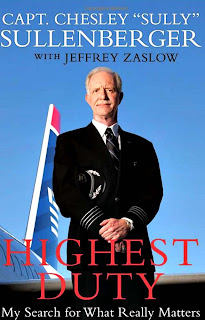 A recent medical error of a wrong-site surgery that occurred in one of the country’s best hospitals, Massachusetts General, reminded me why doctors need to be less like Chuck Yeager and more like Captain Sullenberger.
Growing up, I always wanted to be a fighter pilot, years before the movie “Top Gun” became a part of the American lexicon. My hero was World War II pilot Chuck Yeager, who later became one of the country’s premier test pilots flying experimental jet and rocket propelled planes in a time when they were dangerous, unpredictable, and unreliable.
Much like the astronauts in the movie “The Right Stuff,” Yeager and his colleagues literally flew by the seat of their pants, made it up as they went along, and never really knew if their maiden flight in a new aircraft might be their last. They were cowboys in the sky wrangling and taming the heavens.
Fast forward to January 2009, when shortly after takeoff, a one-in-a-million chance, a double-bird strike completely disabled a US Airways jetliner. Captain Chesley Sullenberger, with the help of his co-pilot Jeff Skiles, ditches the aircraft in the Hudson River in under four minutes even as the nation surely expected a tragedy. But not on that day. Not with that pilot. Read more »
*This blog post was originally published at Saving Money and Surviving the Healthcare Crisis*