September 28th, 2010 by DavidHarlow in Better Health Network, Health Policy, News, Opinion
No Comments »

The Office of Inspector General (OIG) of the U.S. Department of Health and Human Services scrapped its old self-referral voluntary disclosure program in 2009 (it dated back to 1998, and was revisited in 2008), and the Patient Protection and Affordable Care Act (PPACA) mandated that it be replaced. Just like clockwork, on the deadline for its promulgation the OIG obliged, and the new Self-Referral Disclosure Protocol is now posted and effective.
The new protocol could be clearer and offer more comfort, but it doesn’t. Makes one pine for the old policy’s clarity: In the old days, voluntary disclosure bought you a discounted fine for Stark violations — not like the new protocol’s wishy-washy, maybe-we’ll-give-you-a-discount language. The new protocol also fails to help a provider seeking to disclose past wrongs voluntarily in dealing with the Federales on a number of fronts simultaneously (e.g., for false claims violations, anti-kickback violations, etc., all arising from the same set of facts). We can perhaps blame Congress for that failure, rather than the OIG — the OIG is just implementing the statute as written.
Keep your eyes peeled for some tinkering on this front as the OIG gains some experience working under the new regime.
*This blog post was originally published at HealthBlawg :: David Harlow's Health Care Law Blog*
September 28th, 2010 by EvanFalchukJD in Announcements, Better Health Network, Health Policy, Health Tips, Opinion, Research
No Comments »

I’m speaking [today] at the 23rd Annual Benefits Forum and Expo. This is one of the premier events in the health care benefits industry, and it’s a thrill for me to be the opening speaker on the “Health Care” track.
I’m presenting along with Charlie Salter, the VP of Benefits of ConAgra, one of our customers at Best Doctors. The talk Charlie and I will give is called “Real Results: When Individuals are in Control of their Health Care.”
As regular readers know, good things happen when people are in control of their care. They have a chance to make sure they’re not one of the 20 percent of people that end up with an incorrect diagnosis, or the more than 60 percent of people that end up with the wrong treatment. It’s the single most powerful thing you can do to make sure your health care experience is as good as it can possibly be. Read more »
*This blog post was originally published at See First Blog*
September 28th, 2010 by DavedeBronkart in Better Health Network, Health Tips, News, Opinion
No Comments »

You can’t be well-empowered if you hear advice wrong. That’s why in a participatory relationship, an essential skill is accurate handoff of information.
The Foundation for Informed Medical Decision Making (FIMDM), catchily pronounced “fimdim,” has been working for years to improve patients’ knowledge of options and alternatives. In [the September 20th] Boston Globe Liz Cooney talks with people from FIMDM about the issue. An excerpt:
What doctors explain and what patients understand might be two very different things, recent research suggests.
Ideally, patients talk with their doctors about the pros and cons of a particular treatment, weighing the risks and benefits, exploring alternatives — including doing nothing — and then come to a conclusion. That’s the goal of the informed consent process, best known by the paperwork patients sign at the end saying they heard doctors describe what they may be getting into.
If only it were that simple.
[This] article springboards off Cooney’s piece two weeks ago on heart stents, reported here by Dr. John Grohol as Doctors Say One Thing, Patients Hear Another.
A Boston non-profit, FIMDM is the force behind Gary Schwitzer’s excellent Health News Review service, which analyzes health news in the media, teaching e-patients and policy people to sift the gold from the garbage.
*This blog post was originally published at e-Patients.net*
September 28th, 2010 by Toni Brayer, M.D. in Better Health Network, Humor, Medical Art
No Comments »

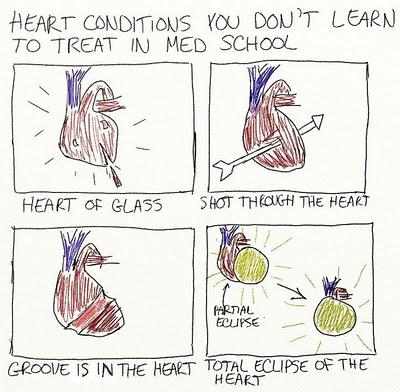
This gave me a chuckle from Doc Cartoon:

*This blog post was originally published at EverythingHealth*
September 28th, 2010 by Davis Liu, M.D. in Better Health Network, Health Policy, Health Tips, News, Opinion
No Comments »

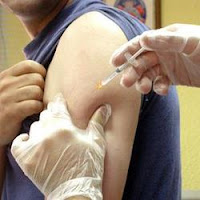 It’s that time of year again. Children back at school. Football season is underway and baseball playoffs to start soon. The television networks are rolling out their new shows.
And it’s also time to think about getting flu shots. I just got mine today as I have done annually since going to medical school.
Compared to last year, there isn’t as much news about the flu or the flu vaccine. This year the Centers for Disease Control and Prevention (CDC) gives clear guidelines that everyone aged 6 months and older should get the influenza vaccine.
This month the American Academy of Pediatrics recommends that all healthcare providers should be required to get the influenza vaccine.
And one fact that hasn’t gotten much attention is whether the 2009 H1N1 virus is included in the 2010-2011 vaccine: Is it? Yes, it is. This year’s vaccine will be as safe as vaccines in past years as the production process is unchanged. Inclusion of the 2009 H1N1 virus will not be a problem. Read more »
*This blog post was originally published at Saving Money and Surviving the Healthcare Crisis*












