April 11th, 2010 by Harriet Hall, M.D. in Better Health Network, Health Policy, News, Opinion, Quackery Exposed, Research, True Stories
No Comments »

A new product, Dream Water, is designed to help one relax, fall asleep and improve the quality of sleep using the “perfect blend” of all-natural ingredients melatonin, GABA and 5-HTP (tryptophan).
A single-dose 2.5-ounce bottle retails for $2.99. They also offer a more dilute formulation in an 8-ounce bottle. They suggest drinking half a bottle, keeping it at your bedside, and drinking more if you wake up during the night.
What dosage will you get from half a bottle? From a whole bottle? There’s no way to know. They offer a money-back guarantee, free shipping, free samples, and lots of testimonials. But they refuse to disclose how much of what is in their product. Read more »
*This blog post was originally published at Science-Based Medicine*
April 11th, 2010 by DrWes in Better Health Network, Health Policy, News, Opinion
No Comments »

Is the need for cookbook medicine being used as a ploy to bar cardiologists from practicing at competing hospital systems in Colorado? An excerpt from the Reporter Herald:
Banner Health, the owner of McKee Medical Center in Loveland and the operator of North Colorado Medical Center in Greeley, soon will bar cardiologists who are not on the Banner payroll from practicing at the Greeley hospital. The denial of hospital privileges to cardiologists outside the Phoenix-based Banner system is the latest step in carving up the heart of the Northern Colorado health care market, where two dominant hospital groups — Banner and Poudre Valley Health System — vie for shares. Read more »
*This blog post was originally published at Dr. Wes*
April 11th, 2010 by KevinMD in Better Health Network, News, Opinion
No Comments »

A version of this op-ed was published on March 15, 2010 in USA Today:
If you recently saw a doctor, you might subsequently receive a survey in the mail asking whether your physician was friendly, spent enough time with you, or showed the appropriate level of concern for your medical issues.
Read the rest of article here: Op-ed: Patient satisfaction doesn’t mean the best medical care
*This blog post was originally published at KevinMD.com*
April 11th, 2010 by Happy Hospitalist in Better Health Network, Health Tips, Humor, Opinion, True Stories
No Comments »

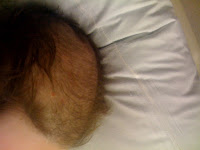 A reader sent me this really sad story that got me thinking about hair restoration for women
 :
:
Happy, I wanted to share with you this picture of a woman who’s lost all hope. I saw her a few years back during my psychiatry rotation. As you can see, it looks like she’s going bald, but in fact, during her fits of rage and depression she’s actually pulling out her own hair. How sad is that? Just another example of what we docs take care of on a daily basis.
Man, that’s unbelievable. I don’t know much about classic female pattern baldness. From what I’ve read it’s usually a diffuse loss of hair everywhere or a central expansion of hair loss but rarely does it encompass the entire scalp. It’s usually caused by hormones, aging and genes. In advanced age, I’ve seen more than my fair share of elderly women who have more hair on their chin then they do on their head. Read more »
*This blog post was originally published at The Happy Hospitalist*
April 10th, 2010 by DaveMunger in Better Health Network, Health Tips, Humor, Opinion, Research, True Stories
No Comments »

 If you follow me on Twitter or read my personal blog, you probably know by now that I bought myself an iPad this week. The main reason I got it is because I’m a sucker for shiny new technology, but I also wanted to see if I could use it to help myself become a little less sedentary.
As I mentioned in my first two posts about fitness this month, there’s a growing body of research suggesting that a sedentary lifestyle is harmful to your health. I was interviewed about one such study a few months ago on the PRI show “The Takeaway,” and the evidence is fairly convincing: People who spend more hours watching TV also have a higher mortality rate than those who watch it less, even after accounting for exercise. Granted, it’s only a correlation, but the evidence converges quite well with several other studies.
But what am I supposed to do about it? My job requires me to spend long hours in front of a computer screen. If exercising a 30 or 40 minutes a day can’t prevent me from getting heart disease or cancer, what will? Some researchers, including David Dunstan, the lead researcher on the TV-watching study, suggest that just standing periodically, rather than sitting all day, can help a lot. That’s where the iPad comes in. Read more »
*This blog post was originally published at The Daily Monthly*












