March 1st, 2010 by David Kroll, Ph.D. in Better Health Network, News
2 Comments »

A year ago we wrote about a death of a San Jose teenager from poisoning by hydrogen sulfide gas, or H2S. At the time, I had hypothesized that the death might have been from an attempt at synthesizing methamphetamine gone awry.
But while one can mistakenly generate hydrogen sulfide gas from improper meth synthesis, I soon learned that intentional suicides with H2S is an increasing US trend imported from Japan. One can easily mix commonly-available consumer products to generate the gas and high enough concentrations can cause death. The gas acts in a manner similar to cyanide by binding to the heme in cytochrome c oxidase and inhibiting electron transport and ATP production by oxidative phosphorylation in the mitochondria. (Interestingly, small amounts of H2S are made in the body and is being investigated as a neurotransmitter and biological modulator.) Read more »
*This blog post was originally published at Terra Sigillata*
March 1st, 2010 by DrWes in Better Health Network, Opinion
No Comments »


It’s out there. It makes a cool picture, but I wonder how many medical students realize how unimportant apps like this have become to today’s cardiovascular care. Don’t get me wrong, it’s good to hear the difference between a systolic and diastolic murmur, or for the really talented, a diastolic rumble on physical exam. Recognizing the difference between mild and severe aortic stenosis is also very helpful. After all, the physical exam remains the most cost-effective instrument in medicine. Read more »
*This blog post was originally published at Dr. Wes*
March 1st, 2010 by Toni Brayer, M.D. in Better Health Network, Health Tips
No Comments »

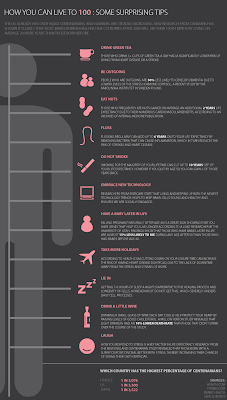 Research from Denmark shows that life expectancy is increasing steadily and there is a good possibility that by controlling life factors, most everyone can live to be 100. Of course, living in a high income, first world country is the first factor. The Danish experts report that since the 20th century, people in developed countries are living about three decades longer than in the past.
Check out the list (click on it for a better read) to see what factors you can control.
Tip: Don’t eat the nuts if you have an allergy. That would definitely lower your chances! And having a baby “later in life” does not mean with IVF or infertility drugs. And a “little” wine doesn’t mean a bottle a day.
*This blog post was originally published at EverythingHealth*
March 1st, 2010 by JessicaBerthold in Better Health Network, Health Tips
No Comments »

Some quick tips about medically managing patients with acute intracerebral hemorrhage, courtesy of a talk at Stroke 2010 by Craig Anderson, MD, George Institute for International Health in Sydney NSW, Australia:
–avoid excess elevation of variables like blood pressure, glucose levels and body temperature
–maintain hydration; many of these patients present dehydrated
–elevate the head
–abandon intensive insulin therapy
–In terms of lowering blood pressure, going from 220 mm Hg systolic to 140 mm Hg over one hour appears safe, but it’s still unknown whether more rapid lowering is better, or if it would be better to achieve a lower systolic level.

*This blog post was originally published at ACP Hospitalist*
March 1st, 2010 by Shadowfax in Better Health Network, Health Policy, Opinion
No Comments »

The Senate, which was supposed to pass an omnibus bill including an extension of uninsurance benefits, an extension of COBRA benefits, and (not incidentally) yet another temporary patch on the 21% cuts in Medicare physician reimbursement, failed to do so on Friday before it adjourned early for the weekend. At least that’s the top-line headline, and most people never read further than that when it comes to wonky policy/process articles like this.
The real reason that the bill is stalled (and that the cuts which are deadlined at 2/28 will go into effect) is, as they say, the Gentlman from Kentucky, Senator Jim Bunning. Read more »
*This blog post was originally published at Movin' Meat*