November 19th, 2009 by Steve Novella, M.D. in Better Health Network, Quackery Exposed
4 Comments »

Homeopathy, as a cultural phenomenon, remains an enigma. In the two centuries since its invention it has failed to garner significant scientific support. In fact, developments in physics, chemistry, biology, and medicine have shown the underlying concepts of homeopathy to be wrong – guesswork and speculation that lept in the wrong direction.
It turns out, like does not cure like. This is nothing more than sympathetic magic – popular at the time but now considered nothing more than superstition without any scientific basis.
It also turns out that diluting a substance does not make it more potent – this nonsensical idea (ridiculed even in the 19th century) violates the laws of thermodynamics, and the chemical principle of mass action. This is especially true when you dilute a substance beyond the point where chance would have even a single molecule of active ingredient left behind. The background noise of chemicals in homeopathic water is orders of magnitude greater than the signal of whatever had previously been diluted in it. Read more »
*This blog post was originally published at Science-Based Medicine*
November 18th, 2009 by Toni Brayer, M.D. in Better Health Network, Health Policy
No Comments »


A new study conducted by the Commonwealth Fund was published by Health Affairs and it showed that the U.S. lagged behind other nations in some very important ways that affect health and access to quality health care. The study surveryed over 10,000 primary care physicians in Australia, Canada, France, Germany, Italy, the Netherlands, New Zealand, Norway, Sweden, the United Kingdom, and the United States. The study found that:
- The vast majority (69 percent) of U.S. respondents report that their practices have no provisions for after-hours care, leaving their patients no choice but the emergency room. The U.S. was behind every other country surveyed on this finding.
Read more »
*This blog post was originally published at EverythingHealth*
November 18th, 2009 by Joshua Schwimmer, M.D. in Better Health Network
No Comments »

 Image by luc legay via Flickr
A little over a year ago, before Twitter was the tech/pop culture phenomenon it is today, doctors like myself had a problem: how do you identify other health professionals on Twitter? (At the time, there must have been at least dozens. Dozens.)
This was the first solution. In retrospect, it was hilariously cobbled-together:
This is a feed containing the conversations of all known doctors and medical students who use Twitter: http://feeds.feedburner.com/doctorsontwitter. (If that doesn’t work, you can try the original feed from Yahoo Pipes instead.) Technical details, for those interested: I used this list of doctors/medical students on Kidney Notes, ran each person’s Twitter feed through Yahoo Pipes, then burned a FeedBurner feed.
When FriendFeed debuted, I created “The Doctor’s Room,” which was populated by both Twitter feeds and RSS feeds of physicians. Unfortunately, the “room” feature was poorly designed by FriendFeed (which has since been acquired by Facebook). Like the Yahoo Pipes experiment, the FriendFeed room was an educational failure. Read more »
This post, Finding Health Care Professionals on Twitter, was originally published on
Healthine.com by Joshua Schwimmer, M.D..
November 18th, 2009 by Shadowfax in Better Health Network, Opinion
2 Comments »

In a comment on my last post, faithful reader and frequent commenter Anonymous asked, “How do you get a good reading on interpersonal skills in a brief interview?”
That’s a good question. I suppose the simplest answer is, you don’t, at least not in any sort of comprehensive way. In some cases you can — a person who is warm, engaging, and able to hold up their end of a lively conversation in an interview setting is always going to be near the top of my list. But I make a lot of allowances for people in their interviews — they are nervous, know they are being watched and judged, it is a high-stakes encounter for them, and most people are a lot more constrained in an interview than they are in their day-to-day lives. Read more »
*This blog post was originally published at Movin' Meat*
November 18th, 2009 by AlanDappenMD in Primary Care Wednesdays
No Comments »
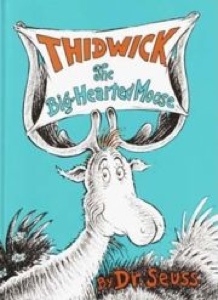 When I think of the plight of primary care practitioners, particularly in the light of today’s discussion of healthcare reform, I often think of a Dr. Seuss book. My mother read it to me as a child recovering from the chicken pox. I read it to my two sons when they were young. And I encourage you to read it too, even if you’re an adult. The book is entitled Thidwick The Big-Hearted Moose. To me, this 1948 story almost perfectly mimics the overburdened lives of primary care physicians and the innumerable squabblers who’ve come along for the ride in the misguided world of healthcare.
For those who haven’t read Thidwick, here’s a recap of the story: Thidwick is a kind “big hearted” moose blissfully grazing with the rest of his herd on Lake Winna-Bango, minding his on business. One day a Bingle Bug asks if he can ride upon Thidwick’s enormous antler rack for free. Read more »













